

Sample 01 · Literary fiction · short story
The Ferry at Dusk
Hindi → English
An atmospheric riverbank story where dialogue, memory and an impossible image keep their quiet ambiguity in translation.
Original — Hindi · original excerpt
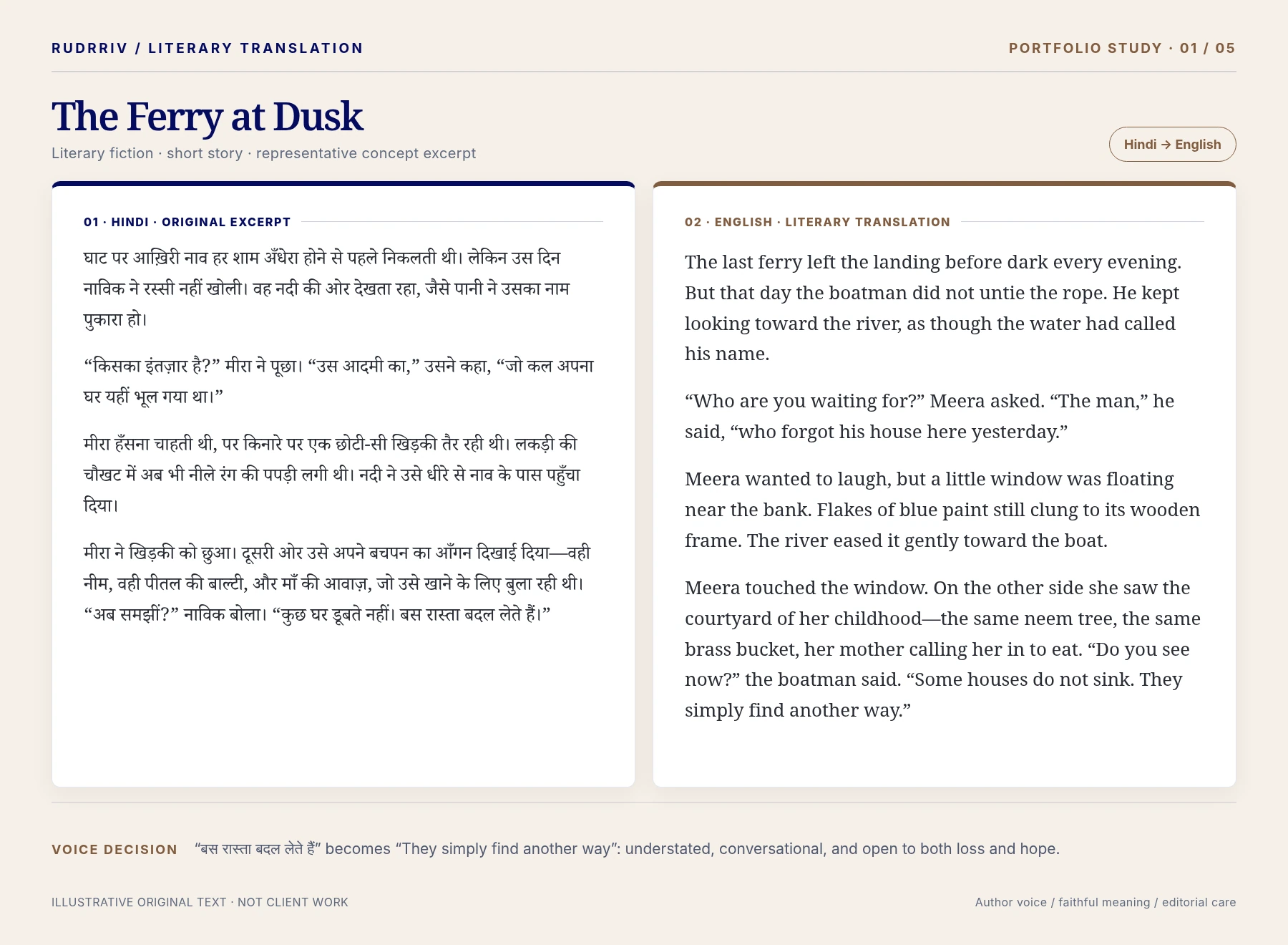
घाट पर आख़िरी नाव हर शाम अँधेरा होने से पहले निकलती थी। लेकिन उस दिन नाविक ने रस्सी नहीं खोली। वह नदी की ओर देखता रहा, जैसे पानी ने उसका नाम पुकारा हो।
“किसका इंतज़ार है?” मीरा ने पूछा। “उस आदमी का,” उसने कहा, “जो कल अपना घर यहीं भूल गया था।”
मीरा हँसना चाहती थी, पर किनारे पर एक छोटी-सी खिड़की तैर रही थी। लकड़ी की चौखट में अब भी नीले रंग की पपड़ी लगी थी। नदी ने उसे धीरे से नाव के पास पहुँचा दिया।
मीरा ने खिड़की को छुआ। दूसरी ओर उसे अपने बचपन का आँगन दिखाई दिया—वही नीम, वही पीतल की बाल्टी, और माँ की आवाज़, जो उसे खाने के लिए बुला रही थी। “अब समझीं?” नाविक बोला। “कुछ घर डूबते नहीं। बस रास्ता बदल लेते हैं।”
Translation — English · literary translation
The last ferry left the landing before dark every evening. But that day the boatman did not untie the rope. He kept looking toward the river, as though the water had called his name.
“Who are you waiting for?” Meera asked. “The man,” he said, “who forgot his house here yesterday.”
Meera wanted to laugh, but a little window was floating near the bank. Flakes of blue paint still clung to its wooden frame. The river eased it gently toward the boat.
Meera touched the window. On the other side she saw the courtyard of her childhood—the same neem tree, the same brass bucket, her mother calling her in to eat. “Do you see now?” the boatman said. “Some houses do not sink. They simply find another way.”
VOICE DECISION: “बस रास्ता बदल लेते हैं” becomes “They simply find another way”: understated, conversational, and open to both loss and hope.