
Choosing the Right Project Management Approach
How to choose the right project management approach for business, technology, marketing, and operations projects begins with the nature of the work, not with a preferred methodology. Use a predictive approach when the result, sequence, budget, and approval path are substantially known. Use an adaptive or agile approach when the team must learn through frequent delivery and stakeholder feedback. Use Kanban when work arrives continuously and flow matters more than fixed iterations. Use a deliberate hybrid when one project contains both stable and uncertain work.
The main caution is that labels can conceal poor fit. A team may call itself agile while approvals still take a month, or adopt Scrum for operational requests that cannot be protected from daily interruption. A predictive plan can also fail when decision-makers assume that an early specification will remain valid despite changing customer, market, or technical evidence.
A practical starting point is to assess seven conditions: requirement stability, cost of change, feedback speed, release cadence, dependency complexity, governance obligations, and team readiness. Select the lightest approach that controls the real risks, then test it on a representative workstream before standardising it across the organization.
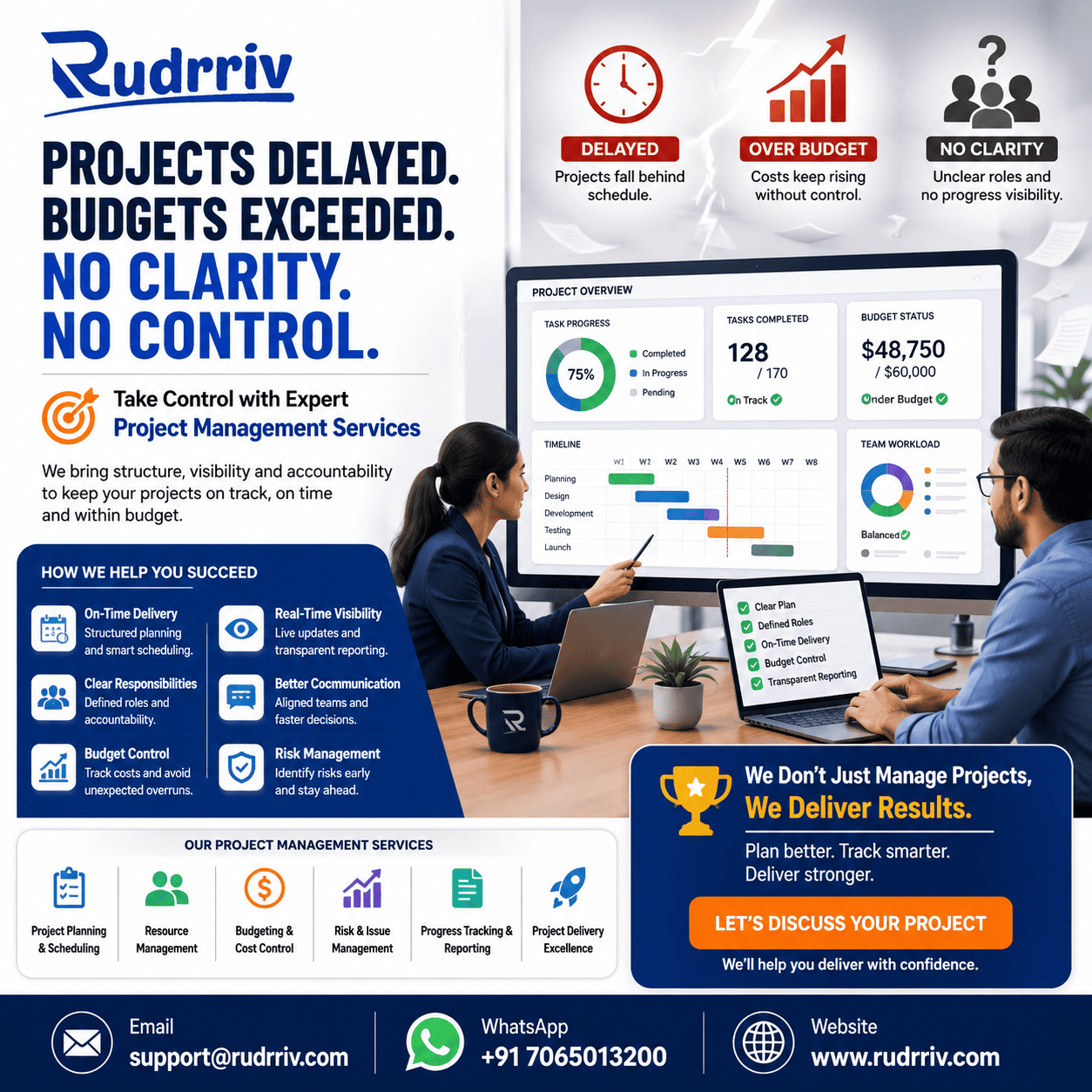
Quick Answer: Which Project Approach Fits?
Choose predictive delivery for work with a stable output, measurable acceptance criteria, sequential dependencies, and formal control points. This can suit office openings, regulatory implementations, infrastructure changes, fixed-date launches, and projects governed by contracts or procurement gates.
Choose an adaptive approach, including Scrum where appropriate, when the team is developing a product or solution whose requirements will improve through short learning cycles. Choose Kanban when requests, incidents, campaign tasks, or operational improvements arrive continuously and the team needs to manage flow and work in progress.
Choose hybrid delivery when the project has both fixed commitments and uncertain solution work. Before approval, verify that stakeholders can provide decisions at the required cadence, the delivery team has the necessary authority, and the chosen controls are proportionate to the project's risk.
Key Takeaways
- Start with project conditions: uncertainty, dependencies, regulation, work arrival, and feedback needs matter more than methodology preference.
- Predictive delivery controls stable work: it fits clear outputs, expensive changes, formal approvals, and sequential execution.
- Adaptive delivery manages learning: it fits complex product work where evidence should change priorities and solution details.
- Kanban manages continuous flow: it helps marketing, service, support, and operations teams expose queues and limit excessive work in progress.
- Hybrid must be designed: combine methods only when responsibilities, handoffs, milestones, and decision rights are explicit.
- Methodology does not fix weak governance: unclear ownership, unavailable stakeholders, and overloaded teams will undermine any framework.
- Pilot before standardising: test the approach on representative work and review delivery evidence before scaling it.
Table of Contents
- Start with uncertainty and delivery constraints
- Understand predictive, agile, Kanban, and hybrid
- Match the approach to the project type
- Compare approaches across decision criteria
- Use seven questions to make the choice
- Adjust for business stage and team readiness
- Account for cost, resources, and governance
- Implement and maintain the chosen approach
- Learn from practical project examples
- Summary
Start with Uncertainty and Delivery Constraints
The correct approach is the one that gives the team enough control without delaying useful decisions. Begin by separating certainty about the desired business outcome from certainty about the solution. A company may know that order-processing time must fall, for example, while still being uncertain whether process redesign, automation, training, or software changes will produce the best result.
Next, identify where change is cheap and where it is expensive. Revising an early campaign concept may be inexpensive; changing a warehouse layout after installation is not. Software interface decisions can be explored iteratively, but data migration, security accreditation, and contractual cutovers may require fixed gates. This is why one project can legitimately need more than one delivery mode.
Also examine the arrival pattern of work. A defined project has a bounded objective and planned completion point. Operational work may be ongoing, with unpredictable requests and recurring service expectations. Forcing both into the same meeting cadence and planning model usually creates unnecessary administration or hides queues.
Decision rule: use more prediction where change is costly and dependencies are fixed; use more adaptation where learning is valuable and feedback can arrive quickly; use flow management where demand is continuous.
Predictive, Agile, Kanban, and Hybrid Explained
The Project Management Institute's overview of project approaches distinguishes predictive, adaptive, and hybrid ways of working. These categories are useful because they describe how planning and change are handled, rather than assuming every project should follow one branded framework.
Predictive delivery for known outcomes
Predictive delivery establishes a baseline for scope, schedule, cost, responsibilities, and acceptance. Work generally progresses through planned stages, and changes are assessed for impact before approval. It is useful when stakeholders need contractual certainty, compliance evidence, coordinated procurement, or a tightly controlled transition.
Adaptive delivery for complex product work
Adaptive delivery uses short cycles to produce evidence, review priorities, and refine the solution. The principles behind the Agile Manifesto emphasise early and continuous delivery, collaboration, responsiveness, and sustainable work. Agile is therefore not an absence of planning; it shifts planning toward frequent, evidence-based decisions.
Scrum is one adaptive framework for complex product development. The official Scrum Guide defines accountabilities, events, and artefacts around Sprints and product goals. It works best when a stable cross-functional team can focus, a Product Owner can make priority decisions, and each Sprint can produce a meaningful increment.
Kanban for continuous and interrupt-driven work
Kanban is suited to knowledge work that must optimise flow rather than organise everything into fixed iterations. The official Kanban Guide focuses on defining and managing workflow, controlling work in progress, and improving flow. This can fit marketing production, service operations, support queues, maintenance, and mixed-priority teams.
Hybrid delivery for mixed certainty
Hybrid delivery combines predictive and adaptive practices to fit distinct work conditions. It is useful when funding, procurement, compliance, or launch dates require governance while research, design, and build work still benefit from iteration. A hybrid model is not a licence to keep every meeting and document from every framework; each practice should address a specific risk or coordination need.
Match the Approach to the Project Type
Different departments create different patterns of uncertainty, approvals, and work arrival. The following guidance is a starting point, not a rigid departmental rule.
Business change and transformation projects
Business expansion, restructuring, policy implementation, office moves, and operating-model changes often need a hybrid approach. Leadership decisions, budgets, legal obligations, and target dates may be fixed, while process design, communications, training, and adoption plans need iteration with affected teams.
Technology and digital product projects
New software products, customer portals, data tools, and digital services usually benefit from adaptive discovery and incremental delivery because user needs and technical constraints become clearer through working solutions. A predictive layer may still govern vendor contracts, architecture approvals, data protection, migration, and release readiness.
Marketing campaigns and content operations
A fixed-date campaign launch may use predictive milestones for creative approval, media booking, legal review, and go-live. The work inside those boundaries can be adaptive: teams can test messages, landing pages, audiences, and formats. Ongoing content and design requests often fit Kanban because demand is continuous and bottlenecks are visible through flow.
Operations and service-improvement work
Facility installations, compliance changes, and major process cutovers may require predictive control. Continuous improvement, service requests, incident reduction, and routine automation are often better managed with Kanban or short adaptive experiments. The key is to distinguish a bounded change project from the ongoing service that follows it.
Compare Project Approaches by Decision Criteria
This comparison shows the typical fit of four broad approaches. A project may sit between columns, especially when different workstreams have different risk profiles.
| Decision factor | Predictive | Adaptive or Scrum | Kanban | Hybrid |
|---|---|---|---|---|
| Requirement stability | High; scope can be baselined | Low to medium; priorities evolve | Individual requests vary continuously | Stable commitments with uncertain components |
| Delivery rhythm | Stages and planned milestones | Short iterations and increments | Continuous pull and flow | Milestones plus iterative workstreams |
| Stakeholder feedback | At defined reviews and approvals | Frequent and decision-oriented | Ongoing service and priority feedback | Different cadence by workstream |
| Change handling | Formal impact assessment | Reprioritise within product goals | Replenish and reorder the workflow | Controlled at programme level, adaptive locally |
| Best-fit work | Regulated, sequential, fixed-output projects | Complex product and solution development | Support, marketing production, maintenance, operations | Enterprise change and mixed-certainty programmes |
| Main risk | Late discovery that assumptions were wrong | Weak priorities or unavailable stakeholders | Using a board without flow policies or limits | Duplicated governance and unclear interfaces |
| Management focus | Baseline, dependencies, variance, acceptance | Value, learning, product goal, quality | Work in progress, throughput, cycle time, service | Coordination, governance, integration, fit |
Do not score a method as universally better. Select the column that best controls the dominant risks, then tailor only the practices the team can execute consistently.
Use Seven Questions to Make the Choice
A structured diagnosis prevents a preference for tools or terminology from driving the decision. Ask these questions in a planning workshop with the sponsor, delivery lead, subject-matter experts, and people responsible for acceptance.
- How stable is the desired result? If the output and acceptance criteria are known, predictive planning becomes practical. If the solution must emerge, plan for adaptation.
- How costly is late change? Use earlier analysis, prototypes, and formal gates where physical, regulatory, or migration changes are expensive to reverse.
- How quickly can feedback arrive? Adaptive methods need stakeholders who can review evidence and make decisions frequently. Without this, iteration becomes repeated delay.
- Does work arrive as a project or a flow? A bounded objective supports project milestones; continuous demand supports Kanban-style flow management.
- Which dependencies cannot move? Contracts, vendors, data, security, legal review, facilities, and external launch dates may require predictive coordination.
- Can the team own the work? Scrum and other adaptive approaches require stable skills, clear priorities, and sufficient authority. Constant reassignment weakens learning and accountability.
- What evidence will trigger adjustment? Define delivery, quality, flow, risk, and outcome measures before choosing the cadence and governance model.
Document the answers in a one-page approach statement. It should name the selected method, why it fits, which practices will be used, which will be omitted, who holds each decision right, and when the approach will be reviewed.
Adjust for Business Stage and Team Readiness
Project conditions are shaped by the organization's maturity and constraints. A startup validating demand may need short experiments, rapid customer feedback, and minimal irreversible investment. A lightweight backlog, weekly review, simple risk log, and clear product decision-maker may be sufficient.
A growing small or medium-sized business often faces mixed conditions: commercial dates are real, specialist capacity is limited, and internal processes are still forming. Hybrid delivery can work well when a small number of governance points protect budget and dependencies while functional teams iterate on design, technology, marketing, or process details.
An enterprise programme normally needs more coordination, not necessarily more uniformity. Procurement, architecture, security, finance, legal, data, product, marketing, and change-management workstreams may use different delivery methods. The programme layer should integrate outcomes, dependencies, risks, milestones, and escalation without forcing every team into identical ceremonies.
Readiness matters as much as size. An adaptive framework will struggle where sponsors cannot prioritise, teams are shared across too many projects, or approval rights remain unclear. A predictive plan will also struggle where leadership frequently changes direction but refuses to revisit budget and schedule assumptions.
Account for Cost, Resources, and Governance
The least expensive-looking methodology is not necessarily the lowest-cost delivery model. Predictive work invests more in upfront analysis, scheduling, documentation, and change control. Adaptive work invests more in continuous product decisions, stable multidisciplinary capacity, automated quality, frequent reviews, and incremental release. Kanban requires active workflow management and discipline around work-in-progress limits.
Estimate the resources required to operate the approach, not only to produce deliverables. Consider sponsor time, product ownership, project management, specialist skills, testing, data and security review, vendor coordination, tooling, documentation, training, deployment, support, and benefits measurement.
Governance should be proportionate. A low-risk internal campaign does not need the same approvals as a customer-data platform. However, speed should not bypass essential controls. Define who can approve scope, priorities, spending, release, acceptance, and risk exceptions. When vendors or external specialists are involved, state how their plans, quality evidence, dependencies, and handover will integrate with the internal method.
Budget caution: changing the method cannot compensate for an underfunded scope, missing specialist capability, unavailable decision-makers, or unrealistic deadlines. Surface these constraints during approach selection.
Implement and Maintain the Chosen Approach
Introduce the approach through a representative pilot rather than a company-wide methodology rollout. Choose work that is important enough to reveal real dependencies but contained enough to adjust safely. Establish the minimum roles, artefacts, cadence, workflow policies, quality criteria, and reporting needed for that work.
For predictive delivery, confirm the baseline, dependency plan, acceptance evidence, change authority, and stage reviews. For Scrum, confirm the Product Goal, Product Owner, stable team, backlog quality, Sprint cadence, review participation, and Definition of Done. For Kanban, define the workflow, work-item types, work-in-progress controls, service expectations, and flow measures. For hybrid delivery, document how local team cadences connect to programme milestones and governance.
Review the approach using evidence. Useful indicators include milestone reliability, cycle time, blocked work, escaped defects, rework, decision latency, stakeholder attendance, scope volatility, team load, and whether increments or deliverables are actually usable. Metrics should guide discussion, not become targets that encourage teams to hide complexity.
Maintenance means changing practices when conditions change. A discovery-heavy technology initiative may become more predictable after architecture and product assumptions are validated. A planned rollout may need adaptive problem-solving when user adoption is weaker than expected. Preserve useful controls, remove waste, and record why the operating model changed.
Project Examples and Selection Mistakes
Technology product: use adaptive delivery
A startup assumes it needs a detailed twelve-month specification before building a subscription platform. The real uncertainty is whether users will adopt the proposed workflow. A better decision is an adaptive product approach with discovery, prototypes, short build cycles, and measurable user feedback. Predictive controls can still cover budget limits, security, and release readiness. Specialist product and development guidance may help the team test feasibility without overbuilding.
Marketing launch: use a deliberate hybrid
An ecommerce business treats a seasonal campaign as entirely agile, but media bookings, stock availability, legal approvals, and the launch date cannot move freely. A hybrid plan is better: fixed milestones protect external commitments, while creative, audience, and landing-page work iterates inside those boundaries. The method fits because customer response can improve execution, while commercial dependencies remain controlled.
Operations queue: use Kanban, not Scrum
An operations team places incidents, supplier requests, process changes, and reporting tasks into two-week Sprints. Urgent work repeatedly interrupts the commitment, making every Sprint appear unsuccessful. Kanban is a better fit because demand is continuous. Work-item policies, priority classes, WIP limits, and flow reviews help the team manage capacity without pretending interruptions will disappear.
Enterprise programme: coordinate mixed methods
An enterprise tries to force one methodology across a system replacement, data migration, training programme, supplier contract, and customer communications. The workstreams have different certainty and control needs. A coordinated hybrid model is better: predictive gates manage procurement, migration, compliance, and cutover; adaptive teams develop and test user-facing capabilities; programme governance manages integration and risk.
The repeated mistake in all four cases is selecting a method by identity—“we are agile” or “our organization uses waterfall”—instead of by work conditions. Other mistakes include preserving redundant ceremonies, confusing documentation with control, measuring activity instead of usable outcomes, and changing terminology without changing decision rights.
Summary
Choose predictive project management when the output is clear, changes are costly, dependencies are sequential, and approvals must be controlled. Choose adaptive delivery when the solution needs to emerge through working increments and frequent stakeholder feedback. Choose Kanban when demand is continuous and the team must manage flow, queues, and competing priorities.
Choose hybrid delivery when fixed commitments and uncertain solution work genuinely coexist. Define the interfaces instead of blending methods informally. Before implementation, validate the approach against scope uncertainty, budget, timeline, team capacity, governance, quality assurance, ownership, maintenance, and handover needs.
The best approach is not the most fashionable or the most detailed. It is the lightest operating model that makes priorities, risks, decisions, delivery evidence, and accountability clear enough for the project at hand.
FAQs on Choosing a Project Management Approach
How do I choose the right project management approach for business, technology, marketing, and operations projects?
Choose the approach by assessing requirement stability, delivery risk, feedback frequency, work arrival pattern, dependencies, compliance needs, and team readiness. Predictive delivery fits stable, sequential work; adaptive approaches fit uncertain outcomes; Kanban fits continuous flow; and hybrid delivery fits projects with both fixed and changing elements. Validate the choice through a short pilot or planning workshop before applying it across a major programme.
When is a predictive project approach the best choice?
A predictive approach is strongest when the output is well understood, dependencies are mostly sequential, changes are expensive, and formal approvals or contracts require an agreed baseline. Construction-style rollouts, regulatory implementations, fixed-date events, and infrastructure changes often need this discipline. Keep a controlled change process because a fixed plan does not eliminate uncertainty.
When should a technology project use Scrum or another agile approach?
Use Scrum or another adaptive approach when the team is solving a complex product problem, requirements will evolve through evidence, and stakeholders can review working increments frequently. It is less suitable when the team cannot protect a stable delivery group or obtain timely product decisions. Confirm that a real product owner, prioritised backlog, and usable review cycle are available.
Is Kanban suitable for marketing and operations teams?
Yes. Kanban is often useful when work arrives continuously, priorities change, and the team must balance planned work with requests, incidents, approvals, or campaign tasks. Visualising workflow and limiting work in progress can expose bottlenecks. Teams should also define service expectations and review flow data rather than treating the board as a simple task list.
When is hybrid project management better than one method?
Hybrid delivery is appropriate when some elements need fixed governance while other elements need experimentation. For example, an enterprise system programme may use predictive procurement, security gates, and migration dates while product teams deliver features iteratively. The hybrid model should be designed deliberately, with clear interfaces, decision rights, and shared milestones.
Does agile project management reduce project cost?
Not automatically. Adaptive delivery can reduce the cost of building the wrong solution by testing assumptions earlier, but it still requires skilled people, stakeholder time, engineering quality, and disciplined prioritisation. Compare total delivery cost, including coordination, rework, tooling, documentation, testing, and long-term support, rather than assuming one methodology is inherently cheaper.
Can a startup use a lightweight project management process?
Yes, provided the process still makes ownership, priorities, risks, and acceptance criteria visible. A startup may use short planning cycles, a simple backlog, weekly reviews, and a small decision log instead of heavy documentation. The process should become more formal as dependencies, compliance obligations, vendors, or customer commitments increase.
How should an enterprise choose an approach for a cross-functional programme?
An enterprise should map workstreams separately before selecting the overall model. Procurement, legal, finance, data migration, product development, and change management may have different uncertainty and control needs. A coordinated hybrid approach is often practical, but it requires integrated milestones, dependency management, escalation rules, and consistent reporting across teams.
What are the most common mistakes when selecting a methodology?
Common mistakes include copying a competitor, choosing a fashionable framework, treating agile as an absence of planning, forcing Scrum onto interrupt-driven support work, and combining methods without defining how decisions connect. Avoid these errors by documenting the project conditions first, then choosing only the practices that address those conditions.
How often should a project management approach be reviewed?
Review the approach at meaningful delivery boundaries and whenever the project conditions materially change. Useful triggers include a failed release, growing work queues, repeated approval delays, major scope changes, new regulatory requirements, or a change in team structure. Adjust roles, cadence, controls, or workflow based on evidence rather than changing the methodology label alone.
Need Help Structuring Your Project Approach?
When a project spans business, technology, marketing, or operations work, Rudrriv can help clarify requirements, identify the right specialist roles, and structure a defined project, dedicated-professional arrangement, ongoing support model, or managed team around the actual delivery conditions.
Discuss your project approachAt Rudrriv, we make it easier for businesses to access the right expertise, execute important work, and scale with confidence.