
Will Technology Help Us? A Practical Business Guide
Will technology help us? Yes—when it is applied to a clearly defined human or business problem, supported by reliable data, and governed by people who remain accountable for the outcome. Technology can reduce repetitive work, improve access to information, connect teams and customers, support faster decisions, and make services more consistent. It is less helpful when organizations buy tools before understanding the process, assume automation will repair weak management, or adopt artificial intelligence without controls for quality, privacy, security, and human review.
For a founder, the useful question is not whether technology is generally good or bad. It is where technology can remove a constraint without creating a larger one. For an operations leader, that may mean reducing manual handoffs. For a marketing team, it may mean unifying customer data and campaign reporting. For a finance team, it may mean faster invoice processing and better management visibility. For an ecommerce business, it may mean inventory synchronization, customer-support triage, and personalized product discovery.
This guide explains how to decide where technology can help, how to distinguish real value from novelty, how to choose between buying, configuring, integrating, or building systems, and how to manage cost, security, adoption, ownership, and delivery. It also shows when a defined project, dedicated technology professional, ongoing support arrangement, or managed team may be the most practical engagement model.
Quick Answer: Will Technology Help Us?
Technology will help when it improves a meaningful outcome: less time spent on repetitive work, fewer avoidable errors, faster service, better decisions, stronger visibility, safer operations, or a better customer experience. The benefit comes from redesigning work around the tool—not simply adding software to the existing process.
Start with one problem that can be measured. Document how work happens today, identify the constraint, establish a baseline, and define what success would look like. Then compare the smallest workable options, test one in a controlled pilot, involve the people who will use it, and review results before scaling.
The main caution is that technology transfers and concentrates risk. A system can make a good process faster, but it can also spread poor data, weak permissions, biased decisions, or confusing customer experiences at scale. Human ownership, security, testing, documentation, and an exit plan are therefore part of the value case.
Key Takeaways
- Technology is an enabler, not an outcome: define the business result before selecting a tool.
- Automate stable, repetitive work first: unclear or frequently changing processes should be improved before automation.
- Human judgment remains essential: important decisions, exceptions, ethical questions, and customer relationships need accountable review.
- Total cost matters: include implementation, integration, migration, training, security, maintenance, and switching costs.
- Data quality determines value: analytics and AI cannot reliably correct incomplete, inconsistent, or poorly governed source data.
- Adoption is a delivery requirement: a technically correct system creates little value when employees and customers cannot use it effectively.
- Scale after evidence: pilot, measure, learn, and expand rather than committing the whole organization at once.
What This Page Covers
- Where technology creates practical value for companies and customers.
- How artificial intelligence, automation, analytics, and digital platforms change work.
- How to prioritize technology opportunities using impact, feasibility, risk, and cost.
- When to buy, configure, integrate, or build a system.
- How to manage security, privacy, ownership, quality, and vendor dependence.
- How to measure adoption, delivery quality, and business impact.
- When specialist support, dedicated professionals, or managed teams are useful.
Table of Contents
- How this guide was prepared
- What technology can and cannot do
- Where technology creates business value
- How to prioritize opportunities
- Buy, configure, integrate, or build
- A responsible implementation roadmap
- People, skills, and change
- Security, data, AI, and vendor risks
- How to measure success
- Support and engagement models
How this guide was prepared
This article is based on practical technology planning, process improvement, provider selection, data governance, project delivery, and change-management considerations. It treats technology as a business capability that must be connected to users, workflows, controls, and measurable outcomes.
Readers should verify current technical, legal, regulatory, platform, and industry requirements with appropriate authoritative sources. Useful starting points include the NIST Cybersecurity Framework, the NIST AI Risk Management Framework, the OECD AI Principles, and ISO information-security management guidance. Tool features, vendor terms, prices, risks, and compliance obligations change over time.
What can technology do—and what can it not do?
Technology can make information easier to capture, process, share, analyze, and act upon. It can execute repeatable rules, connect separate systems, monitor events, generate alerts, support communication, and make services available across time zones. Artificial intelligence can classify content, summarize documents, detect patterns, generate drafts, forecast scenarios, and assist users through conversational interfaces.
However, a tool does not define the right goal, resolve competing values, create trustworthy data, earn customer confidence, or accept responsibility. Those are governance and leadership tasks. Even a highly capable model may produce a plausible but incorrect answer, reflect limitations in its training data, or behave differently when the context changes.
A useful principle: automate execution where rules are clear; augment judgment where uncertainty remains; retain human approval where consequences are material.
Technology changes tasks before it changes jobs
Most roles contain a mix of routine, analytical, interpersonal, creative, and accountable tasks. Technology may remove data entry from an operations role while increasing the need for exception handling. It may accelerate first drafts for a marketing team while making brand review and fact checking more important. It may help a finance team identify anomalies while leaving approval and interpretation with qualified people.
This task-level view leads to better workforce planning than a simple “replace or retain” question. Map the work, identify which tasks can be automated or augmented, and then redesign roles, training, controls, and performance measures around the new workflow.
Where does technology create the most business value?
Technology creates the most value where it removes a known constraint, improves the quality or speed of a recurring decision, or makes a service easier for customers to use. The opportunity must be specific enough to measure.
| Business area | Typical problem | Technology response | Useful measure |
|---|---|---|---|
| Operations | Manual handoffs and duplicate entry | Workflow automation and system integration | Cycle time, error rate, rework |
| Customer support | Slow response and repeated questions | Knowledge base, triage, assisted response | First-response time, resolution, satisfaction |
| Sales | Missed follow-up and weak pipeline visibility | CRM workflows, lead routing, forecasting | Response time, conversion, forecast accuracy |
| Marketing | Fragmented campaign and customer data | Analytics, attribution, content workflows | Qualified demand, cost, conversion |
| Finance | Slow invoicing and limited management visibility | Process automation, reconciliations, dashboards | Close time, overdue value, reporting speed |
| Ecommerce | Inventory mismatch and abandoned journeys | Platform integration, personalization, alerts | Availability, conversion, return rate |
| Leadership | Decisions based on delayed or inconsistent reports | Data models, dashboards, scenario analysis | Data freshness, decision time, forecast quality |
Example 1: Reducing order-processing delays
A growing distributor receives orders through email, spreadsheets, and an online form. Staff repeatedly copy customer and product information into separate systems. Instead of starting with an expensive enterprise platform, the company maps the order journey, standardizes required fields, introduces validation, and connects the intake form to its order system. The pilot is measured against processing time, correction rate, and backlog. Technology helps because the workflow is stable and the improvement is observable.
Example 2: Using AI to assist customer support
An ecommerce team has thousands of repetitive questions but also handles sensitive refunds and complaints. It uses AI to retrieve approved answers and draft responses, while agents review every message during the pilot. High-risk categories are always routed to people. The team measures answer accuracy, handling time, escalation, and customer satisfaction. AI augments the team without being allowed to make consequential decisions on its own.
Example 3: Improving management reporting
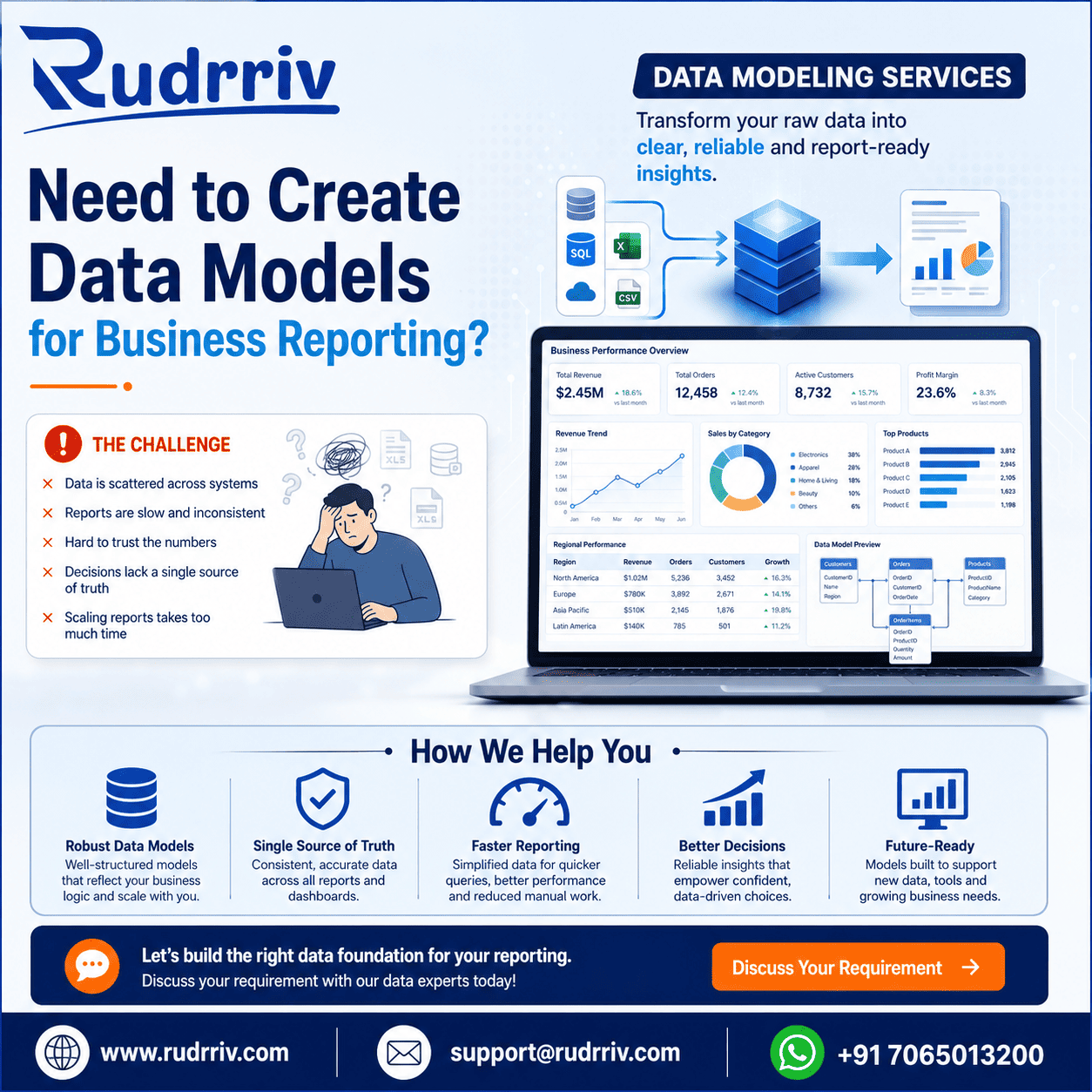
A professional-services firm spends several days combining project, billing, and utilization data. It first agrees common definitions for client, project, revenue, and capacity. A data model and dashboard are then built around those definitions. The result is not merely a new visualization; it is a governed reporting process with owners, refresh rules, and exception checks.
How should we prioritize technology opportunities?
Prioritize opportunities by balancing business impact, user value, feasibility, risk, and time to evidence. A visible, measurable problem with a willing process owner is usually a better first project than an ambitious platform transformation with unclear ownership.
- State the problem: describe the current condition without naming a preferred tool.
- Establish a baseline: measure time, cost, errors, volume, delay, satisfaction, or risk.
- Identify users and owners: include employees, customers, administrators, approvers, and support teams.
- Map dependencies: data, systems, permissions, vendors, policies, and integrations.
- Score options: expected impact, implementation effort, operational risk, and reversibility.
- Choose a pilot: limit scope while preserving enough realism to test value.
- Define a stop rule: specify when the organization will pause, redesign, or reject the approach.
A strong business case includes assumptions rather than pretending to know the result. For example, “If the new workflow reduces handling time by 20% at current volume, it may release approximately X hours per month.” The pilot then tests the assumption.
Should we buy, configure, integrate, or build?
Buy when the capability is common and a mature product meets most needs. Configure when the core product fits but workflows, roles, fields, or reports need adjustment. Integrate when value depends on reliable movement of data between systems. Build when the capability is strategically differentiated, unavailable in suitable products, or constrained by specialized requirements.
| Option | Best fit | Main advantage | Main caution |
|---|---|---|---|
| Buy | Standard business capability | Faster access to mature features | Recurring fees and product constraints |
| Configure | Standard product with workflow differences | Better fit without full custom development | Complex configuration can become hard to maintain |
| Integrate | Several systems must share data | Reduces duplicate entry and improves flow | Failures, data mapping, and vendor changes need monitoring |
| Build | Differentiated or specialized capability | Control and tailored functionality | Higher lifecycle responsibility and technical debt |
The decision should include total lifecycle cost, implementation speed, data portability, security, reliability, vendor roadmap, support, internal skills, and exit options. Custom development is not automatically more flexible; poorly documented custom systems can become more restrictive than commercial software.
A responsible technology implementation roadmap
A responsible roadmap moves from discovery to controlled adoption and measurable scale. Each stage should have a named owner, required inputs, deliverables, acceptance criteria, dependencies, and a decision to continue, revise, or stop.
1. Discovery and process definition
Interview users, observe the workflow, collect examples, identify exceptions, and establish baseline measures. Confirm the business owner and the people who can approve policy, data, security, and budget decisions.
2. Requirements and scope
Separate essential outcomes from preferred features. Define users, volumes, integrations, data fields, permissions, performance expectations, reporting, support, migration, training, and handover. A statement of work should make responsibilities and exclusions clear.
3. Solution and provider evaluation
Compare options against the same requirements. Ask for demonstrations using realistic scenarios. Verify references, security practices, delivery capacity, ownership terms, support arrangements, subcontracting, and exit provisions. Avoid selecting only on the feature list shown in a sales presentation.
4. Pilot and verification
Use representative users and data where permitted. Test standard journeys, edge cases, access control, failure recovery, reporting, and support response. Record defects and classify them by business impact. A pilot should produce evidence, not simply a launch announcement.
5. Adoption and rollout
Train users in the new workflow, not only the interface. Update policies, job aids, responsibilities, and escalation routes. Roll out in manageable groups and monitor both system performance and user behavior.
6. Operation, review, and improvement
Assign product or process ownership after launch. Review access, data quality, model behavior, incidents, vendor performance, usage, cost, and business outcomes. Maintain documentation and rehearse continuity and exit procedures.
People, skills, and change determine whether technology helps
Adoption is not a communication exercise added at the end; it is part of solution design. Employees often resist systems that add duplicate work, reduce autonomy without explanation, expose performance without context, or fail during real exceptions. Their feedback can reveal design and control problems that a project team cannot see.
Involve representative users early. Explain the problem, how roles may change, what data is collected, which decisions remain human, and how concerns will be handled. Provide role-based training and allow time for supervised practice. Managers should review whether targets and incentives still make sense under the new workflow.
Capability gaps may require a combination of internal ownership and external expertise. Internal teams carry business context and accountability. External specialists can contribute technical depth, implementation capacity, independent review, or cross-functional coordination. The design should leave the organization more capable, not permanently unable to operate without one individual or vendor.
What risks must be managed?
The main risks are not limited to hacking. Technology risk includes unavailable systems, incorrect data, excessive access, unreliable automation, poor model outputs, unclear ownership, unsupported custom code, vendor changes, and processes that employees bypass.
- Cybersecurity: use role-based access, multifactor authentication, secure configuration, monitoring, patching, backups, and incident procedures.
- Privacy: identify personal or sensitive data, define a lawful purpose, minimize collection, control sharing, and manage retention.
- Data quality: define owners, standards, validation, lineage, refresh frequency, and correction procedures.
- AI reliability: test accuracy by use case, require review where consequences matter, monitor drift, and provide a way to challenge outputs.
- Vendor dependence: confirm data export, documentation, service levels, support, price-change terms, continuity, and exit assistance.
- Operational resilience: define what happens during outages, failed integrations, unavailable staff, or corrupted data.
- Intellectual property: document ownership and permitted use of code, data, prompts, outputs, models, content, and third-party components.
Do not upload confidential, regulated, personal, or client-owned information into an AI or software service until its terms, data handling, access controls, retention, and approved use are understood.
How do we measure whether technology is helping?
Measure delivery, adoption, operational performance, risk, and business outcomes together. A project can be delivered on time but still fail because users avoid it. A system can attract high usage but create poor decisions. A cost-saving target can be met while customer experience declines.
| Measurement layer | Questions | Example indicators |
|---|---|---|
| Delivery | Was the agreed capability delivered and accepted? | Milestones, defects, test coverage, acceptance |
| Adoption | Are intended users completing the new workflow? | Active use, completion, training, support requests |
| Operations | Did the process become faster, better, or more reliable? | Cycle time, error rate, backlog, availability |
| Customer | Did the experience or outcome improve? | Response, completion, satisfaction, complaints |
| Financial | Is value proportionate to total cost? | Cost per transaction, capacity, avoided loss, payback |
| Risk | Are new risks controlled and visible? | Incidents, access exceptions, model errors, audit findings |
Use a baseline and a review period appropriate to the process. Report assumptions and external factors. When benefits depend on behavior change, separate technical availability from actual adoption. When AI is involved, track accuracy and exception rates by category rather than relying only on a single average.
Which support model is right for a technology initiative?
The right model depends on scope certainty, workload, continuity, internal capability, governance, and the number of disciplines involved.
- Defined project: suitable for a diagnostic, dashboard, integration, automation, migration, website, or clearly bounded implementation.
- Dedicated professional: useful when the business needs consistent capacity in development, data, analytics, automation, product, or project coordination.
- Ongoing support: appropriate for maintenance, enhancement, reporting, quality assurance, administration, and incremental improvement.
- Managed team: useful when several skills and workstreams must be coordinated under shared delivery controls.
A practical checklist before approving a technology project
- The business problem and desired outcome are written without assuming a particular product.
- Current performance has a measurable baseline.
- A business owner and technical owner are named.
- Users, exceptions, and accessibility needs are documented.
- Data sources, quality, ownership, and permissions are understood.
- Security, privacy, regulatory, and contractual reviews are included.
- Buy, configure, integrate, and build options have been compared.
- Total lifecycle cost and exit cost are estimated.
- The pilot has acceptance criteria and a stop rule.
- Training, support, documentation, and handover are in scope.
- Success measures include adoption, operations, customers, finance, and risk.
- The organization can export its data and continue operating if the vendor changes.
How Rudrriv can help
Rudrriv can help organizations move from a broad technology ambition to a practical delivery plan. Relevant support may include requirement discovery, process analysis, data modeling, dashboards, automation, artificial-intelligence support, web or software development, quality assurance, documentation, project coordination, and ongoing operational support.
Depending on the need, the engagement can be structured as a defined project, a dedicated professional, ongoing specialist support, or a managed team. Explore data and AI services, development support, outsourcing options, or specialist talent according to the capability and continuity required.
Summary: Will Technology Help Us?
Technology will help when it is tied to a clear problem, designed around real users, supported by trustworthy data, and governed through measurable outcomes and responsible controls. It can improve productivity, service, visibility, decision making, and access. It can also amplify weak processes, poor data, security gaps, and unexamined assumptions.
The most reliable approach is to start with the outcome, improve the process, select the smallest suitable solution, test it under realistic conditions, and scale only after evidence. Keep people accountable for consequential decisions, protect data and access, document ownership and exit arrangements, and measure adoption as carefully as technical delivery.
The question is therefore not simply whether technology will help us. It is whether we will choose, implement, and govern technology in a way that helps people and the business achieve a defined result.
FAQs About Whether Technology Will Help Us
Will technology help us or replace people?
Technology is most useful when it removes repetitive work, improves access to information, and supports better decisions. It can replace some tasks, but most business outcomes still depend on human judgment, customer understanding, accountability, creativity, and relationship management. The practical goal is usually task redesign rather than wholesale replacement of people.
How can technology help a small business?
A small business can use technology to automate routine administration, improve customer response times, track sales and cash flow, coordinate remote work, standardize service delivery, and make reporting easier. The best starting point is one measurable bottleneck, such as slow invoicing, missed leads, duplicate data entry, or weak inventory visibility.
What business problems should be automated first?
Start with high-volume, rules-based, repetitive work that consumes time and produces avoidable errors. Good candidates include data transfer, document routing, appointment reminders, standard reports, lead assignment, invoice follow-up, and basic support triage. Avoid automating unstable processes before the underlying workflow and ownership are clear.
How do we know whether a new tool is worth the cost?
Compare total cost with the value of time saved, errors reduced, cycle time improved, risk controlled, and revenue opportunities supported. Include subscriptions, implementation, integration, migration, training, security, maintenance, and exit costs. Run a pilot with baseline measures before approving a wider rollout.
Can AI make business decisions for us?
AI can summarize information, identify patterns, forecast scenarios, and recommend options, but important decisions should remain subject to human review. A responsible process defines which decisions AI may support, what data it uses, how outputs are checked, who approves action, and how errors or bias are handled.
What are the main risks of using technology in business?
Common risks include weak cybersecurity, excessive access permissions, unreliable data, vendor lock-in, service outages, privacy failures, poor adoption, hidden integration costs, and overreliance on automated outputs. These risks can be reduced through governance, role-based access, backups, testing, documentation, training, and clear ownership.
Should we buy software, build it, or improve our existing systems?
Buy when the process is common and a mature product meets most requirements. Configure or integrate existing systems when the gap is mainly workflow or data flow. Build only when the capability is strategically important, differentiated, or unavailable in suitable products. The decision should consider lifecycle cost, speed, flexibility, security, and internal capability.
How long does a technology transformation take?
A focused pilot may take weeks, while a cross-functional transformation can take months or longer. Duration depends on process complexity, data quality, integrations, approvals, migration, testing, training, and change management. Use staged milestones rather than one large launch, and define measurable acceptance criteria for each stage.
What information should we prepare before engaging a technology specialist?
Prepare the business problem, current workflow, users, systems, data sources, constraints, security needs, desired outcomes, budget range, deadline, decision makers, and success measures. Screenshots, process maps, sample reports, data dictionaries, and known pain points help a specialist produce a more accurate scope.
How can Rudrriv support a technology initiative?
Rudrriv can help with requirement discovery, data and AI support, automation planning, analytics, web and software development, specialist professionals, defined projects, ongoing support, and managed teams. The appropriate model depends on whether you need diagnosis, implementation capacity, dedicated expertise, or coordinated long-term delivery.
Need help defining the right technology engagement?
Share the process, users, systems, constraints, data, and outcomes involved. Rudrriv can help structure a defined project, dedicated-professional arrangement, ongoing support plan, or managed technology team with clear responsibilities, delivery controls, and handover.
Discuss your requirementAt Rudrriv, we make it easier for businesses to access the right expertise, execute important work, and scale with confidence.