
Will Tech Company Support Help Your Business?
The search phrase “will tech company” usually reflects a practical but unfinished business question: will a technology company solve the problem, what will it deliver, how much control will the client retain, and which type of provider is suitable? The useful answer depends less on whether a supplier calls itself a tech company and more on whether it can connect technology work to a measurable business outcome.
A capable technology partner may help launch a digital product, improve an existing website, integrate disconnected systems, automate repetitive work, organize data, implement analytics, support artificial-intelligence use cases, strengthen quality assurance, or maintain critical applications. However, external support is not automatically the correct answer. A business should first define the problem, identify internal constraints, check whether a simpler product or process change is sufficient, and understand the risks of custom development.
This guide is written for founders, startups, small and medium-sized businesses, ecommerce teams, agencies, professional-service firms, enterprise departments, operations leaders, procurement teams, and decision-makers comparing technology providers. It explains what a tech company can do, when to engage one, how to choose between a freelancer, agency, dedicated professional, or managed team, and how to control scope, security, ownership, quality, cost, and handover.
Where external capability is justified, Rudrriv development support, data and AI services, and flexible specialist talent options can be considered according to the actual requirement rather than as a fixed package.
Quick Answer: Will Tech Company Support Be Worth It?
Technology-company support is worthwhile when a defined business outcome is blocked by missing technical expertise, insufficient delivery capacity, system complexity, data problems, security requirements, or a deadline that the internal team cannot meet safely. The provider should be able to explain the proposed solution, its assumptions, alternatives, cost drivers, risks, responsibilities, and measurable acceptance criteria.
Do not begin by asking for “an app,” “AI,” or “digital transformation” without defining the underlying need. Begin with the user problem, current process, expected improvement, available data, affected systems, internal owner, and constraints. A reliable provider will challenge unnecessary features and may recommend configuration, integration, automation, or process improvement instead of expensive custom software.
Before signing, verify relevant experience, team composition, architecture and security approach, delivery milestones, testing, account ownership, documentation, support obligations, change-control rules, and exit provisions. Start with discovery or a controlled pilot when uncertainty is high.
Key Takeaways
- Start with the business outcome: technology is the means, not the objective.
- Clarify what kind of tech company you need: product vendor, development agency, consultancy, managed-service provider, or specialist team.
- Compare normalized scopes: proposals are not comparable until deliverables, exclusions, responsibilities, testing, support, and ownership are aligned.
- Retain operational control: the business should control critical accounts, repositories, data, domains, documentation, and deployment access.
- Use staged commitment: discovery, prototype, pilot, or milestone-based delivery reduces uncertainty before a larger investment.
- Measure acceptance and impact: verify both whether the agreed system works and whether it improves the intended business process.
- Select an engagement model that matches governance capacity: a managed team may be more appropriate than individual hiring when coordination is complex.
What This Page Covers
- What a technology company is and the services it may provide.
- How to decide whether external technical support is necessary.
- How to define requirements, scope, milestones, and success measures.
- How to compare freelancers, agencies, dedicated professionals, and managed teams.
- How to control security, confidentiality, intellectual property, data, and access.
- How to verify quality through testing, acceptance criteria, reporting, and handover.
- How Rudrriv can support a defined technology requirement.
Table of Contents
- How this guide was prepared
- What a tech company means
- Business problems a tech company can solve
- How to decide whether you need one
- How to define the requirement
- Engagement models compared
- How to select a provider
- Security, ownership, and governance
- Delivery, testing, and handover
- Mistakes and red flags
- Practical examples
- Final decision checklist
How this guide was prepared
This article combines practical requirement discovery, technology-provider selection, software-delivery governance, information-security, quality-assurance, ownership, and handover considerations. The controls described here align with widely used principles found in the NIST Cybersecurity Framework, the OWASP Application Security Verification Standard, CISA Secure by Design guidance, and the ISO overview of information-security management.
These sources provide useful principles, but every project has different legal, regulatory, technical, data, and commercial requirements. Platform features, provider capabilities, security threats, licensing terms, prices, and implementation methods also change. Businesses should therefore obtain current professional advice where regulated data, contractual liability, sector-specific compliance, or material operational risk is involved.
Rudrriv can assist with requirement discovery, specialist matching, defined projects, dedicated professionals, ongoing technical support, and managed teams where those models are relevant. This guide does not assume that every reader needs custom development or an outsourced team.
What does a tech company actually do?
A technology company creates, configures, integrates, operates, or supports technology-intensive products and services. The label covers very different businesses, so buyers should identify the provider category before comparing capability.
A software product company sells access to a standard product, usually through a subscription or license. A development agency designs and builds custom websites, applications, integrations, or platforms. A technology consultancy advises on architecture, operating models, security, data, cloud, or transformation. A managed-service provider operates defined systems or support functions continuously. A staff-augmentation or specialist-talent provider supplies individuals who work within the client’s delivery process. Some firms combine several of these models.
The distinction matters because the commercial and operational responsibilities differ. A product vendor controls its roadmap. A custom-development provider builds against a statement of work. A dedicated professional may work under the client’s daily direction. A managed team typically accepts broader responsibility for capacity, coordination, reporting, continuity, and delivery management.
| Provider type | Typical value | Best suited to | Key buyer caution |
|---|---|---|---|
| Software product vendor | Ready-made capability with faster adoption | Standard processes that fit an existing platform | Customization, data portability, and vendor lock-in |
| Freelance specialist | Focused expertise and flexible cost | Narrow tasks with a clear owner and limited dependencies | Continuity, coverage, and coordination risk |
| Development agency | Cross-functional project delivery | Defined websites, applications, integrations, and redesigns | Scope gaps, change requests, and post-launch support |
| Technology consultancy | Independent analysis and strategic direction | Architecture, transformation, security, and operating-model decisions | Advice may not include implementation |
| Dedicated professional | Stable capacity integrated with the client team | Ongoing backlog, maintenance, or specialist work | The client still needs product and delivery management |
| Managed team | Multi-skill capacity with governance and continuity | Complex or ongoing programmes requiring coordination | Service boundaries and decision rights must be explicit |
The correct provider is therefore determined by the shape of the work, not by the prestige of the label. A five-page corporate website, an ERP integration, an AI-assisted support workflow, and a regulated data platform require very different teams and controls.
Which business problems can a technology company solve?
A technology company is most useful when it can remove a specific operational, customer, data, or scalability constraint. Common outcomes include reducing manual work, improving digital customer journeys, connecting systems, creating reliable reporting, launching new products, strengthening security, and maintaining systems that support revenue or operations.
Digital products and customer experiences
Providers may research user needs, design interfaces, build websites or mobile applications, configure ecommerce platforms, create customer portals, and integrate payment, support, or identity systems. The project should define the intended user action, accessibility expectations, device coverage, performance targets, analytics, content ownership, and post-launch maintenance.
Business systems and automation
A provider may connect customer relationship management, finance, inventory, marketing, support, and operational systems. It can replace spreadsheet handoffs with workflows, notifications, approvals, or APIs. The highest-value automation usually begins with process mapping because automating an unclear process can reproduce errors faster.
Data, analytics, and artificial intelligence
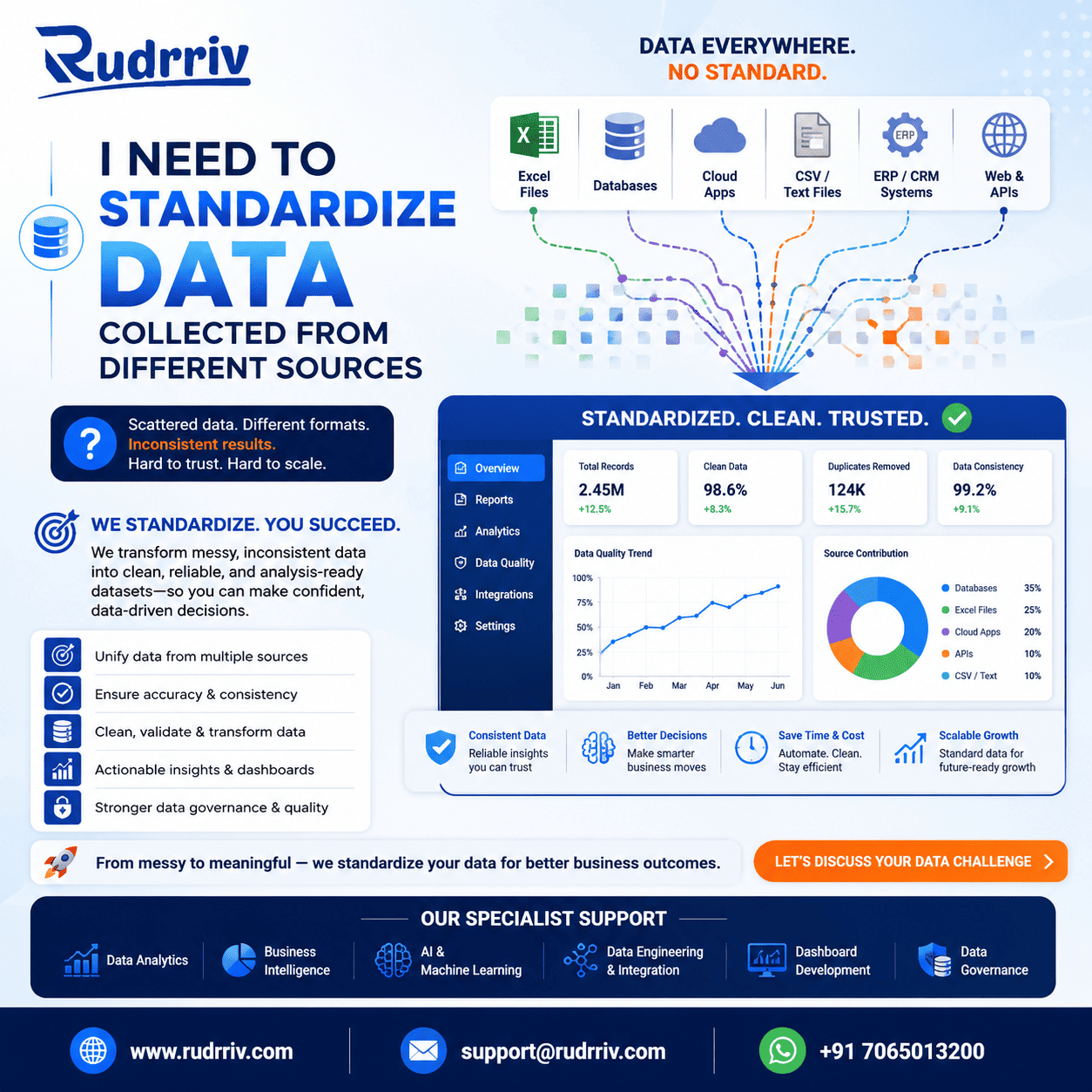
Data work can include collection, cleaning, standardization, warehouse design, dashboards, forecasting, machine-learning support, retrieval systems, and AI-assisted workflows. The team should confirm data quality, lawful use, access controls, human oversight, evaluation methods, failure handling, and the cost of operating models after launch. An AI demonstration is not the same as a reliable production system.
Maintenance, modernization, and technical operations
Many businesses do not need a new system. They need an existing platform stabilized, upgraded, documented, secured, monitored, or made easier to change. Modernization may involve dependency updates, cloud migration, database improvement, performance work, automated testing, deployment pipelines, or gradual replacement of high-risk components.
How do you decide whether your business needs a tech company?
You need external technical support when the cost and risk of not acting exceed the cost and risk of the engagement, and when the required capability cannot be supplied adequately by your current team or an off-the-shelf platform. This decision should be made through evidence rather than urgency alone.
Begin by describing the present state. What happens today? Who performs the work? Which systems are involved? Where do delays, errors, customer complaints, compliance concerns, duplicate data, or missed opportunities occur? Quantify the frequency and business effect where possible.
Next, define the desired state without prescribing the technology. For example, “reduce order-entry time from twenty minutes to five minutes while preserving approval controls” is more useful than “build an AI automation.” “Allow customers to see project status without emailing the service team” is clearer than “create a portal.”
Then test alternatives. A process change, better training, a standard software product, an integration, a no-code workflow, or a configuration change may be sufficient. Custom software becomes more reasonable when the requirement is differentiating, complex, high-volume, integration-heavy, or poorly served by existing products.
Decision rule: engage a technology company when the expected business value is clear enough to justify discovery, the solution requires capability you do not have, and the organization can provide a responsible owner, timely decisions, access, and user participation.
How should you define a technology requirement before requesting proposals?
A useful request for proposal defines the problem, users, current environment, boundaries, constraints, and acceptance conditions without pretending that every technical decision is already known. This gives providers enough context to propose responsibly while preserving room for discovery.
Prepare the following information:
- Business outcome: the measurable change the project should enable.
- User groups: customers, staff, partners, administrators, and decision-makers affected.
- Current process and systems: platforms, spreadsheets, integrations, data sources, and known limitations.
- Scope boundaries: what is included, excluded, or dependent on another party.
- Functional needs: important workflows and user actions, ranked by priority.
- Non-functional needs: security, availability, performance, accessibility, auditability, privacy, and scalability.
- Data considerations: volume, quality, sensitivity, ownership, migration, retention, and deletion.
- Commercial constraints: budget range, deadline drivers, licensing limits, and procurement rules.
- Delivery governance: project owner, approvers, review cadence, escalation path, and change-control method.
- Success and acceptance: tests, measurable thresholds, user validation, and operational readiness.
A statement of work should convert this information into deliverables, milestones, responsibilities, dependencies, assumptions, exclusions, acceptance criteria, payment triggers, and handover obligations. For uncertain projects, discovery should be a paid deliverable rather than hidden inside a speculative fixed quote.
Which engagement model should you choose?
The engagement model should match the duration, complexity, uncertainty, and management effort of the work. There is no universally superior option.
A defined project is appropriate when the outcome, boundaries, and acceptance criteria can be described with reasonable confidence. A dedicated professional suits an ongoing backlog where the client has product direction and management capacity. Ongoing support works for maintenance, optimization, monitoring, and incremental change. A managed team is useful when the provider must coordinate multiple disciplines and provide continuity, governance, and reporting.
Hybrid models are common. A business may begin with discovery, proceed to a fixed-scope first release, and then retain a dedicated or managed support team. The contract should explain how work moves between phases and how estimates are updated as uncertainty reduces.
How do you select the right technology company?
Select the provider whose evidence, process, team, and commercial structure best fit the actual work. A polished sales presentation is not proof of delivery capability.
1. Test its understanding of the problem
A strong provider asks about users, workflow, commercial priorities, system constraints, data, security, internal roles, and success measures. It should identify missing information and challenge weak assumptions. Be cautious when a company recommends a platform or architecture before understanding the operating context.
2. Verify relevant evidence
Request examples that resemble your project in complexity, industry constraints, integration pattern, user type, or delivery model. Ask what the provider actually delivered, which parts were handled by the client, what changed during the project, and how quality was accepted. References should be discussed with appropriate respect for confidentiality.
3. Meet the proposed delivery team
Clarify who will perform discovery, architecture, design, development, data work, testing, project management, security review, and support. Ask whether named people are employees, contractors, or subcontractors; where they work; what overlap hours are available; and how replacements or absences are handled.
4. Compare the proposed approach
A credible approach explains the phases, outputs, decision gates, dependencies, risks, and validation methods. It should separate assumptions from commitments. For a complex project, insist on discovery before accepting an exact fixed price for the full build.
5. Normalize commercial terms
Compare total expected cost, not only the quoted build fee. Include discovery, design, licenses, cloud services, data migration, integrations, testing, content, training, deployment, warranty, maintenance, monitoring, and future change. Confirm the hourly or daily rates and approval rules for work outside scope.
6. Review the contract as an operational document
The agreement should cover deliverables, payment, acceptance, intellectual property, licensing, confidentiality, data handling, security obligations, subcontracting, liability, support, service levels where relevant, termination, transition assistance, and dispute handling. Obtain qualified legal review for material engagements.
How should security, ownership, and governance be managed?
Security and ownership should be designed into the engagement before access is granted. They should not be left for the final handover.
Use organization-owned accounts for domains, cloud platforms, source-code repositories, analytics, app stores, email services, payment systems, and production databases wherever possible. Grant individual role-based access rather than sharing master credentials. Require multi-factor authentication and keep a current access register.
Define data categories and handling rules. The provider should know which data is public, internal, confidential, personal, regulated, or commercially sensitive. The contract and delivery plan should address storage, transfer, test data, backups, retention, deletion, incident notification, and subcontractor access.
Intellectual-property terms should distinguish newly created work from pre-existing provider components, open-source software, third-party libraries, fonts, stock assets, model licenses, and platform terms. The business needs enough rights and documentation to operate, change, and transition the system without unexpected restrictions.
Governance should include named decision-makers, a regular status rhythm, risk and issue tracking, change-control rules, architecture or security review when required, and escalation paths. A service level is useful only when the measured service, target, exclusions, response obligation, and remedy are clearly defined.
How do you control delivery, testing, and handover?
Control delivery by converting expectations into inspectable milestones and acceptance criteria. Progress should be demonstrated through working outputs, not reported only as percentages.
Each milestone should identify what will be delivered, the environment in which it will be reviewed, the tests that apply, who approves it, the review period, and what happens when requirements are not met. User acceptance should involve the people who understand the real workflow, not only the project sponsor.
Testing should reflect the system. It may include functional, integration, accessibility, performance, security, browser, device, data-migration, backup-recovery, and operational tests. Automated tests are valuable for repeatable checks, but they do not replace thoughtful exploratory and user testing.
Handover should include source code, design files, infrastructure definitions where applicable, database documentation, data dictionaries, architecture diagrams, environment configuration, dependency records, credentials through a secure channel, operating procedures, backup and recovery instructions, test evidence, known issues, licenses, training, and a prioritized next-step backlog.
What mistakes and red flags should you avoid?
The most expensive mistakes usually occur before development begins: unclear outcomes, weak ownership, premature technology choices, incomplete scope, and no plan for operation after launch.
- Buying a feature list without validating the problem: the result may work technically but fail to improve the process.
- Choosing only on price: an inexpensive proposal may omit discovery, migration, testing, security, documentation, or support.
- Accepting a fixed deadline before discovery: estimates based on unknown systems and data are fragile.
- Allowing provider-owned critical accounts: this can make transition difficult and weaken control.
- Ignoring non-functional requirements: performance, security, accessibility, reliability, and maintainability affect real-world value.
- Leaving acceptance subjective: “completed” should be defined by agreed evidence.
- Underestimating client responsibilities: slow decisions, unavailable users, poor data, and delayed access can block delivery.
- Building without an operating model: every system needs ownership, monitoring, updates, support, and funding after launch.
- Using AI without evaluation and oversight: model output can be inaccurate, inconsistent, insecure, or unsuitable for high-impact decisions.
- No exit plan: transition rights, documentation, access removal, and knowledge transfer should be agreed at the start.
Additional red flags include secretive subcontracting, refusal to identify the team, vague security answers, requests for shared master passwords, copied portfolio material, pressure to sign immediately, no written exclusions, unusually broad intellectual-property claims, and resistance to milestone reviews.
Practical examples of choosing the right support
Example 1: An ecommerce business with inventory errors
An ecommerce company experiences cancelled orders because website stock does not match the warehouse system. The first request is for a complete new ecommerce platform. Discovery shows that the storefront is adequate; the main failure is delayed inventory synchronization and weak exception handling.
The more appropriate project is a defined integration improvement: map inventory events, improve API reliability, add monitoring, create a retry process, and provide an operations dashboard. Success is measured through reduced mismatch rate, fewer cancelled orders, faster error resolution, and documented support procedures. This avoids replacing the entire platform unnecessarily.
Example 2: A professional-services firm needs client visibility
A consulting firm receives repeated emails asking for project status and document copies. It considers a large custom client portal. Interviews reveal that clients mainly need milestone status, upcoming actions, approved documents, and a secure message history.
A phased approach starts with a prototype using the firm’s existing identity and document systems. The first release serves one service line, with role-based access, audit logs, accessibility checks, and a clear support owner. Adoption and reduction in status emails are reviewed before additional features are funded.
Example 3: A growing company wants AI customer support
A startup wants an AI agent to answer every customer question. Its help content is inconsistent, customer data permissions are unclear, and no one owns response quality. Building immediately would create reputational and privacy risk.
The first phase standardizes the knowledge base, classifies question types, identifies prohibited data, and defines when a human must take over. A limited retrieval-based assistant is then piloted on low-risk questions. Evaluation measures answer correctness, source coverage, refusal behavior, escalation accuracy, latency, and operating cost. Expansion occurs only after the evidence is acceptable.
Final technology-company selection checklist
Use this checklist before approving a provider or project. A “no” does not always disqualify a supplier, but it should trigger clarification, mitigation, or a smaller initial commitment.
| Area | Question to verify | Evidence to request |
|---|---|---|
| Business fit | Does the provider understand the outcome and users? | Discovery notes, problem statement, success measures |
| Scope | Are deliverables, exclusions, assumptions, and dependencies written? | Statement of work and responsibility matrix |
| Team | Are the proposed people and roles known? | Team profiles, availability, substitution process |
| Architecture | Are major technical choices and alternatives explained? | Solution outline, decision log, risk register |
| Security | Are access, data, vulnerabilities, and incidents addressed? | Security questionnaire, controls, contractual obligations |
| Quality | Is testing matched to the system and acceptance criteria? | Test strategy, demonstration process, acceptance plan |
| Ownership | Will the business control accounts, data, code, and documentation? | Contract clauses and account setup plan |
| Commercials | Is total cost and out-of-scope pricing understandable? | Cost breakdown, rates, license and cloud assumptions |
| Governance | Are decisions, reporting, changes, and escalation defined? | Governance calendar, change process, issue path |
| Handover | Can another team operate and continue the system? | Documentation list, training plan, transition clause |
How Rudrriv can help
Rudrriv can help businesses move from an unclear technology need to an accountable engagement. Depending on the requirement, support may involve a defined discovery or development project, a dedicated developer or data professional, ongoing maintenance, quality-assurance support, or a managed cross-functional team.
The starting point is requirement discovery: the business outcome, users, current systems, data, constraints, internal capacity, security expectations, timeline, and success measures. The engagement can then be structured with named responsibilities, milestones, review cycles, acceptance criteria, reporting, ownership, and handover.
Relevant options include web and software development, data and AI support, digital product and UX design, outsourcing support, and specialist hiring models. Only the capabilities required by the problem should be included.
Summary: Will Tech Company Support Help Your Business?
The answer is yes when external technology capability addresses a defined business constraint, the value justifies the investment, and the engagement is structured with appropriate scope, governance, security, quality, ownership, and handover. The answer may be no when the problem is unclear, a standard product already meets the need, the organization lacks an internal owner, or the cost and operational burden exceed the likely value.
Do not choose a provider solely because it uses modern terminology or presents an ambitious feature list. Choose the team that understands the workflow, explains alternatives, exposes assumptions, provides relevant evidence, accepts measurable delivery controls, and leaves the business able to operate and change the result.
A discovery phase or limited pilot is often the safest first step. It converts uncertainty into evidence and gives both parties a practical way to test communication, analytical quality, technical judgment, and delivery discipline before a larger commitment.
FAQs About Will Tech Company Support
What does the phrase “will tech company” usually mean in a business search?
The phrase is incomplete in standard English, but it commonly signals a future-oriented buying question: will a technology company help, what will it do, and is external technical support worthwhile? A useful evaluation should therefore focus on the business outcome, required capability, delivery model, security, ownership, cost, and evidence of fit.
Will a tech company build only software?
No. A technology company may provide product discovery, UX design, websites, ecommerce systems, mobile applications, cloud infrastructure, integrations, data engineering, analytics, automation, AI implementation, cybersecurity support, testing, maintenance, and technical operations. The exact scope depends on whether it is a product company, consultancy, development agency, managed-service provider, or specialist team.
How do I know whether my business needs a tech company?
External technology support is useful when an important outcome is blocked by missing expertise, limited internal capacity, a fixed deadline, technical debt, security concerns, integration complexity, or the need for continuous maintenance. First confirm that the problem cannot be solved more safely or economically through an existing platform, process change, or internal team.
What should I prepare before contacting a technology provider?
Prepare the business problem, target users, current systems, must-have requirements, desired integrations, data sensitivity, decision-makers, expected timeline, budget range, internal responsibilities, approval process, and success measures. Do not start with a feature list alone. Providers need business context to recommend the right architecture and delivery model.
Should I hire a freelancer, agency, dedicated developer, or managed team?
Use a freelancer for a narrow task with limited coordination. Use an agency for a defined project requiring several disciplines. A dedicated professional suits sustained work under your direction. A managed team is appropriate when you need cross-functional delivery, governance, continuity, reporting, and scalable capacity. The best model depends on complexity, duration, internal management capacity, and risk.
How can I compare proposals from technology companies?
Normalize every proposal against the same evaluation sheet. Compare discovery depth, scope, exclusions, architecture assumptions, deliverables, milestones, acceptance criteria, team composition, security controls, testing, documentation, support, ownership, dependencies, change-request rules, pricing, and exit terms. A lower headline price may exclude critical work such as migration, QA, training, or maintenance.
Who should own the code, cloud accounts, data, and documentation?
Your contract should state ownership clearly. In most client-funded projects, the business should control its domain, cloud tenancy, source-code repository, analytics, credentials, production data, design files, documentation, and deployment pipeline, subject to agreed licensing for pre-existing provider tools. Use organization-owned accounts and role-based access wherever practical.
What security questions should I ask a tech company?
Ask how it handles access control, secure development, dependency management, secrets, backups, logging, vulnerability remediation, incident reporting, employee and subcontractor access, data location, deletion, and business continuity. Security expectations should match the sensitivity of the system and be written into the scope, contract, and acceptance process.
How long does a technology project take?
A small defined improvement may take days or weeks, while a custom platform, migration, data programme, or multi-system integration may take several months. A credible estimate follows discovery and includes assumptions, dependencies, review time, testing, deployment, and contingency. Treat an immediate fixed promise as provisional until the provider understands the system.
How can Rudrriv support a technology requirement?
Rudrriv can help structure requirements and provide relevant development, design, data, AI, quality-assurance, project-support, dedicated-professional, ongoing-support, or managed-team capacity. The engagement should begin with the business outcome and then define responsibilities, milestones, controls, reporting, ownership, and handover.
Need help defining the right technology engagement?
Share the business problem, current systems, users, data considerations, internal capacity, timeline, and desired outcome. Rudrriv can help structure a defined project, dedicated-professional arrangement, ongoing support plan, or managed technology team with clear responsibilities and delivery controls.
Discuss your requirementAt Rudrriv, we make it easier for businesses to access the right expertise, execute important work, and scale with confidence.