
Project Manager Responsibilities: Planning to Reporting
What responsibilities should a project manager handle from planning and risk management to delivery and reporting? The project manager should turn an approved business objective into a controlled delivery system: define the scope and success conditions, build an integrated plan, coordinate people and dependencies, manage risks and issues, control changes and quality, forecast the likely outcome, report honestly, secure acceptance, and organize handover and closure.
The important caution is that project management is not the same as owning every decision or doing every specialist task. The sponsor remains accountable for the business case and major approvals. Product, technical, design, finance, legal, security, operations, and supplier leads remain accountable for decisions within their authority. The project manager makes those responsibilities explicit, connects them through governance, and ensures that decisions arrive before they block delivery.
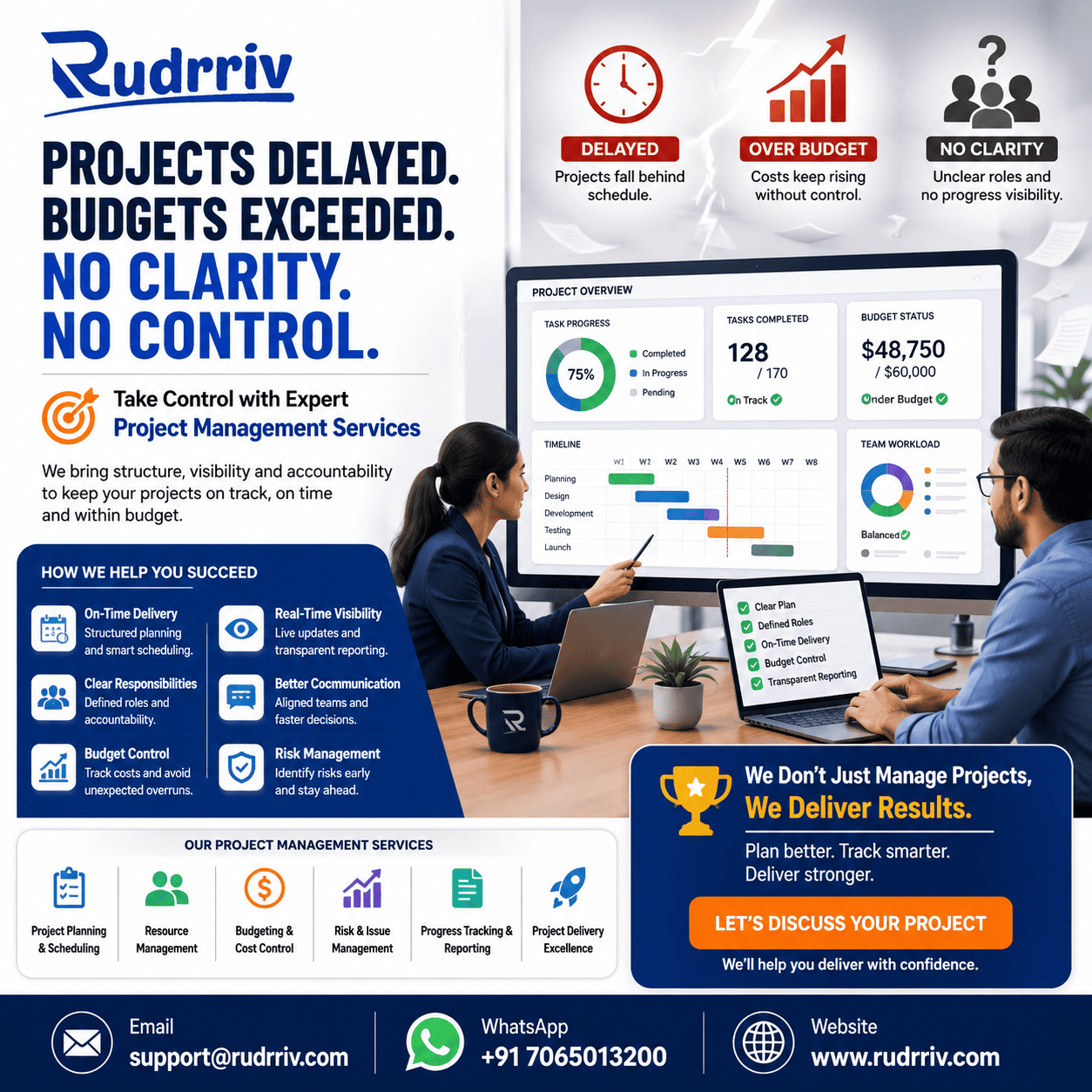
Quick Answer: What Should a Project Manager Handle?
A project manager should own the management process across the lifecycle, not every specialist decision. Before work begins, this means clarifying the objective, deliverables, exclusions, assumptions, stakeholders, governance, acceptance criteria, schedule, resources, cost baseline, dependencies, risks, communication cadence, and change process.
During delivery, the project manager coordinates work, removes or escalates blockers, maintains the integrated plan, verifies that quality activities occur, manages issues and changes, protects decision deadlines, monitors suppliers, and keeps stakeholders aligned with current evidence. Reporting should show actual progress, variance, forecast outcomes, risks, decisions, and actions—not simply a list of completed tasks.
At completion, the project manager coordinates acceptance, operational handover, support readiness, financial and contractual closure, access removal, documentation, lessons, and final reporting.
Key Takeaways
- Define ownership before activity: the project manager coordinates the system, while sponsors and specialists retain clearly stated decision rights.
- Plan outcomes and evidence: scope, acceptance criteria, dependencies, resources, cost, schedule, and quality checks must connect to the intended business result.
- Treat risk as a decision process: each material risk needs an owner, response, trigger, exposure review, and escalation route.
- Control change openly: every proposed change should show its effect on value, scope, time, cost, quality, risk, and operations.
- Forecast instead of merely recording: reporting should explain where the project is likely to finish and what management action is required.
- Make handover part of planning: operational readiness, support, documentation, ownership, and access should not be left to the final week.
- Use proportionate governance: the level of control should reflect complexity, uncertainty, regulatory exposure, supplier dependence, and business impact.
Table of Contents
- Set the mandate, scope, and decision rights
- Build one integrated delivery plan
- Manage risks, issues, and dependencies
- Coordinate stakeholders and delivery roles
- Control delivery, quality, and change
- Separate PM ownership from specialist ownership
- Report status, variance, and forecast
- Close the project and complete handover
- Apply the role in practical situations
- Summary
Set the Mandate, Scope, and Decision Rights
The project manager's first responsibility is to make the project governable. That begins by confirming why the work exists, what outcome is expected, what is inside and outside scope, who can approve changes, and what evidence will demonstrate completion. A charter, initiation document, brief, or statement of work can carry this information.
At minimum, the initiation record should identify the sponsor, project manager, customer or operational owner, key specialists, deliverables, exclusions, assumptions, constraints, target dates, funding boundaries, dependencies, acceptance authority, reporting route, and escalation thresholds. The project manager should challenge unresolved contradictions—for example, a fixed deadline with an undefined scope or a quality target without time for review and testing.
The Project Management Institute's overview of the project-manager role includes identifying goals and scope, planning tasks, managing resources, communicating with stakeholders, addressing blockers and risks, documenting the process, and ensuring deliverables are completed. In practice, these responsibilities only work when authority is explicit.
Decision rule: do not approve a detailed delivery schedule until the outcome, scope boundary, acceptance owner, and major decision rights are sufficiently clear.
Build One Integrated Delivery Plan
A project plan should connect scope, work, schedule, resources, cost, quality, procurement, communication, risk, and handover. Separate documents may be used, but they must describe one coherent delivery model. If the resource plan assumes two engineers while the schedule assumes four, or the launch date ignores security review and operational training, the project does not have an integrated plan.
The project manager should decompose deliverables into manageable work, establish dependencies, identify milestones, obtain effort and duration input from the people doing the work, and create a baseline that can be monitored. For uncertain work, the plan should show ranges, assumptions, discovery stages, decision points, and contingency rather than false precision.
Scheduling is not simply entering dates into software. The U.S. Government Accountability Office schedule guidance emphasizes the need for a reliable, high-quality schedule that can be maintained and assessed. For business projects, the practical lesson is to connect activities logically, identify critical dependencies, update actual progress, and understand how delay changes the forecast and cost exposure.
Manage Risks, Issues, and Dependencies
The project manager should create a practical risk-and-issue system before problems become urgent. A risk is an uncertain event or condition that may affect objectives; an issue has already occurred. Dependencies are relationships in which one task, decision, supplier, system, or team relies on another. Combining them in one undifferentiated list makes ownership and action less clear.
For each material risk, the project manager should record the cause, uncertain event, potential effect, likelihood, impact, proximity, exposure, owner, response, trigger, residual exposure, and next review. For issues, the record should include current impact, containment, resolution owner, target date, decisions required, and escalation status. Dependencies need an owner on both sides, required date, current confidence, and consequence of failure.
ISO 21502 guidance on project management describes practices intended to work across different organizations and project types. Its lifecycle perspective reinforces a useful principle: risk, issue, change, benefit, information, and control activities should be integrated with delivery rather than treated as occasional administration.
Coordinate Stakeholders and Delivery Roles
A project manager should create a communication and decision system that matches stakeholder influence, information needs, and timing. This includes identifying stakeholders, understanding their interests and concerns, agreeing meeting and reporting cadences, preparing decisions, recording actions, and preventing important information from remaining inside one team.
Communication is not measured by the number of meetings. The project manager should ask whether each forum has a clear purpose: working coordination, risk review, design approval, commercial control, steering decisions, customer feedback, release readiness, or executive oversight. Attendees, inputs, outputs, and decision rights should follow that purpose.
The UK Project Delivery Capability Framework provides role and competency descriptions across project delivery. Businesses can use the same underlying idea even outside government: clarify which capability belongs to the project manager and which belongs to sponsorship, commercial, technical, change, operational, assurance, or product leadership.
Protect decision deadlines
Many projects appear to be delayed by execution when the real cause is late approval. The project manager should maintain a decision log containing the decision, owner, options, recommendation, evidence, required date, consequence of delay, and final outcome. A decision needed on Friday should not first appear in a status report on Friday.
Control Delivery, Quality, and Change
During execution, the project manager should maintain a credible view of what is complete, what remains, what is blocked, and what evidence supports the status. Percent-complete estimates without acceptance evidence are weak. Better controls use completed deliverables, approved documents, passed tests, deployed features, signed decisions, or other observable outputs.
Quality management starts before testing. The project manager should ensure that requirements and acceptance criteria are reviewable, quality activities are scheduled, environments and data are available, defects have severity and ownership rules, and the authorized person can accept or reject the result. Specialists perform the technical review; the project manager ensures the process is planned, resourced, and completed.
Change control should be fast enough to support delivery but disciplined enough to protect the business case. Each proposed change should state the reason, value, urgency, options, and impact on scope, schedule, cost, resources, quality, security, operations, benefits, and existing commitments. Minor changes may be handled within delegated tolerances, while material changes require sponsor or governance approval.
| Responsibility area | What the project manager handles | Useful evidence | Typical escalation |
|---|---|---|---|
| Scope and outcomes | Clarifies deliverables, exclusions, assumptions, acceptance, and traceability to objectives. | Charter, scope baseline, requirements map, acceptance record. | Conflict between desired outcome, time, funding, or authority. |
| Schedule and resources | Integrates activities, dependencies, capacity, milestones, and forecast dates. | Maintained schedule, resource plan, milestone forecast. | Critical delay, unavailable capability, or tolerance breach. |
| Cost and commercial control | Tracks commitments, actuals, forecast, contingency, supplier obligations, and variance. | Cost report, forecast, purchase and contract status. | Funding shortfall, disputed scope, or unauthorized spend. |
| Risk, issues, and change | Maintains ownership, responses, decisions, impact analysis, and escalation. | Risk register, issue log, change log, decision log. | Exposure above tolerance or unresolved cross-team impact. |
| Quality and acceptance | Plans reviews, tests, defect handling, evidence, and acceptance workflow. | Quality plan, test evidence, defect status, sign-off. | Failed acceptance, serious defect, or insufficient assurance. |
| Communication and reporting | Provides accurate status, forecast, decisions, actions, and stakeholder alignment. | Status report, action log, minutes, dashboard. | Decision delay, disputed facts, or deteriorating forecast. |
| Handover and closure | Coordinates operational readiness, documentation, ownership transfer, and final review. | Handover pack, closure report, lessons, access record. | Unaccepted deliverable or unsupported operational risk. |
The project manager should tailor these controls to the project's scale and risk. A small internal initiative may use a concise one-page status and action log; a regulated transformation may require formal assurance, audit trails, supplier governance, and multiple approval gates.
Separate PM Ownership from Specialist Ownership
A strong project manager prevents two opposite failures: taking over decisions that belong to specialists, and allowing necessary management work to fall between roles. The project manager owns coordination, visibility, integration, and escalation. The sponsor owns the business case and executive direction. Product and business owners prioritize value and accept business outcomes. Technical leaders own architecture and engineering judgement. Finance, legal, security, procurement, and operations own professional decisions within their mandates.
| Decision or activity | Project manager | Other accountable role |
|---|---|---|
| Approve the business case and major tolerance changes | Prepares evidence, impact, options, recommendation, and governance route. | Sponsor or authorized steering group. |
| Prioritize product features or business requirements | Plans the decision, exposes delivery effects, and records the approved priority. | Product owner, business owner, or customer authority. |
| Select technical architecture | Coordinates review, dependencies, risks, dates, and decision evidence. | Architect, engineering lead, or technical authority. |
| Certify legal, security, financial, or regulatory compliance | Ensures the review is scheduled, evidence is available, and conditions are tracked. | Qualified legal, security, finance, or compliance owner. |
| Accept the final deliverable | Confirms evidence, outstanding items, handover readiness, and sign-off process. | Sponsor, customer, product owner, or operational owner. |
A RACI or similar responsibility model can help, but the project manager should also document approval limits, escalation thresholds, substitutes, and required decision dates. A single letter in a matrix does not resolve ambiguous authority.
Report Status, Variance, and Forecast
Project reporting should help leaders decide, not merely reassure them. The project manager should report the current baseline, actual progress, schedule and cost variance, forecast completion, remaining effort, top risks and issues, changes, quality status, supplier concerns, dependencies, decisions required, and recovery actions. Traffic-light ratings need definitions and evidence.
Good reporting separates fact, estimate, assumption, and decision. It also avoids burying bad news in detail. The project manager should state the likely consequence, the latest date for intervention, the options available, and the person who must decide. PMI guidance on project governance similarly connects project control with meetings, reporting, risk and issue management, assurance, and management processes.
Close the Project and Complete Handover
Project closure should be planned from initiation because delivery is not complete until the receiving organization can use, support, own, and govern the result. The project manager should identify the operational owner, support model, service levels, documentation, training, data or content ownership, access, warranty or defect arrangements, supplier obligations, and unresolved risks before the final release.
At closure, the project manager coordinates final acceptance, financial reconciliation, contract completion, asset and account transfer, access removal, archive requirements, benefits ownership, lessons, residual actions, and the final report. Open items should be transferred to named owners with due dates and governance, not hidden by marking the project complete.
The closure report should compare the approved baseline with actual scope, cost, schedule, quality, outcomes, and major changes. It should explain what remains uncertain, which benefits will be measured later, and who owns that measurement. This creates a usable record for operations, audit, future projects, and supplier review.
Apply the Role in Practical Situations
Example 1: A startup launching a customer portal
The founder initially asks the project manager to “make sure the portal launches in eight weeks.” The mistaken assumption is that the date is the plan. The better approach is to define the minimum customer journey, decision owner, technical unknowns, security and privacy reviews, acceptance evidence, launch support, and what can move to a later release. The project manager protects the date by making scope and decisions explicit, not by pressuring the team to absorb unlimited change.
Example 2: An ecommerce replatforming project
The business expects the project manager to coordinate design and development but overlooks catalogue migration, payment operations, analytics, redirects, customer service, warehouse integration, supplier contracts, and peak-season timing. The project manager builds an integrated dependency map, establishes migration rehearsals and acceptance criteria, and reports forecast risk against the trading calendar. Specialist ecommerce, development, data, and quality support may be needed, but the project manager remains responsible for integration and escalation.
Summary
A project manager should manage the complete delivery system from definition through closure. That includes clarifying outcomes and scope, integrating schedule, cost, resources, quality and dependencies, organizing governance, managing risks and issues, controlling change, coordinating stakeholders and suppliers, reporting evidence and forecasts, and securing acceptance and handover.
The project manager should not replace the sponsor, product owner, architect, engineer, designer, finance lead, legal adviser, security specialist, operational owner, or customer authority. The role is to connect those accountabilities, make decisions timely, maintain a credible forecast, and ensure that unresolved exposure is visible to the person authorized to act.
For a small, low-risk initiative, these responsibilities can be handled with lightweight controls. For a complex or high-impact programme, the same responsibilities require stronger governance, specialist assurance, formal baselines, supplier management, and documented decision trails. The practical test is whether leaders can see what is being delivered, what may prevent success, where the project is likely to finish, and what decision is needed next.
FAQs on Project Manager Responsibilities
What responsibilities should a project manager handle from planning and risk management to delivery and reporting?
A project manager should translate the approved objective into a workable plan, coordinate scope, schedule, budget, resources, risks, quality, dependencies, communication, change control, delivery acceptance, reporting, and closure. The role is accountable for making work visible and controlled, while sponsors, product owners, technical leads, and functional managers retain their own decision rights.
Does the project manager own the project budget?
The project manager usually maintains the cost baseline, tracks actuals and forecasts, explains variances, and raises decisions when funding or scope must change. Formal budget authority may remain with the sponsor, finance team, or business owner. The governance plan should state who can approve spending, contingency use, and budget changes.
What is the difference between a project manager and a product manager?
A project manager focuses on controlled delivery: scope, schedule, resources, risks, dependencies, communication, and completion. A product manager focuses on product value, customer needs, prioritization, roadmap, and market outcomes. On digital initiatives they work closely together, but one role should not silently absorb the other's decisions.
How should a project manager handle risk management?
The project manager should establish a risk process, identify threats and opportunities with the team, assess likelihood and impact, assign owners, agree responses, monitor triggers and exposure, and escalate risks that exceed tolerance. Risks should be connected to schedule, cost, scope, quality, security, supplier, and operational decisions rather than stored in an inactive register.
What should a project status report include?
A useful status report includes the reporting period, overall health with supporting evidence, milestone progress, deliverables completed, schedule and cost variance, forecast dates and costs, top risks and issues, decisions required, changes, dependencies, quality information, and actions with owners and due dates. It should distinguish facts, forecasts, assumptions, and unresolved decisions.
How much technical knowledge does a project manager need?
The required depth depends on the project. A project manager does not need to replace architects, engineers, designers, legal advisers, or subject-matter experts, but must understand enough to challenge assumptions, connect dependencies, plan reviews, recognize uncertainty, and communicate consequences. Complex technical work may require a technical project manager or delivery lead.
When does a business need a dedicated project manager?
Dedicated project management becomes valuable when work crosses teams, suppliers, locations, systems, regulatory requirements, or fixed deadlines; when dependencies and changes are frequent; or when leaders lack time to coordinate decisions. Smaller, low-risk initiatives may be managed by a capable team lead using proportionate controls.
Is the project manager responsible for quality assurance?
The project manager is responsible for ensuring that quality expectations, review activities, acceptance criteria, responsibilities, and evidence are planned and followed. Technical specialists usually perform testing or professional review, while the sponsor or authorized owner accepts the deliverable. The project manager coordinates the system; they do not certify work outside their competence.
What should a project manager do at project closure?
Closure should confirm acceptance, resolve or transfer open items, reconcile finances and contracts, archive decisions and evidence, hand over operations and support responsibilities, release resources, remove unnecessary access, record lessons, and report final performance against the approved baseline and intended outcomes. Closure is a controlled transition, not merely the end of task activity.
Do agile projects still need project-management responsibilities?
Yes. Agile delivery changes how planning and control are performed, but it does not remove the need for governance, funding, risk management, dependency coordination, stakeholder communication, forecasting, quality, release readiness, and reporting. These responsibilities may be distributed across a product owner, scrum master, delivery manager, engineering lead, and sponsor, so role clarity is essential.
Need Clearer Project Delivery Ownership?
When an initiative spans business, technology, suppliers, data, quality assurance, and operational handover, Rudrriv can help define the delivery model and provide relevant project-based, specialist, or ongoing support. The starting point is a clear scope, decision structure, risk profile, reporting need, and handover expectation.
Discuss your requirementAt Rudrriv, we make it easier for businesses to access the right expertise, execute important work, and scale with confidence.