
Questions to Ask When Hiring Project Management Support
The most useful questions to ask when hiring a project manager or outsourced project management service are the ones that reveal how the candidate will make decisions, control scope, manage risk, communicate with stakeholders, and protect delivery quality. For a digital product, the starting point is not the project-management tool or methodology. It is whether the manager can turn an uncertain business idea into an evidence-based choice between a responsive website, a progressive web application, a native or cross-platform mobile app, a phased combination, or no app yet.
A strong candidate should challenge assumptions before accepting a schedule. They should ask who the users are, how often they will return, whether offline functionality or device APIs are central, how the product will be discovered, what the business can maintain, and which outcomes will justify further investment. The main caution is hiring someone who can coordinate tasks but cannot expose weak requirements, commercial dependencies, technical risk, or ownership gaps.
Use the interview to test how the project manager thinks through a realistic scenario. Ask for the decision process, evidence needed, roles involved, first 30-day plan, reporting model, acceptance criteria, and handover approach. The best answer is usually specific, conditional, and transparent about what still needs validation.
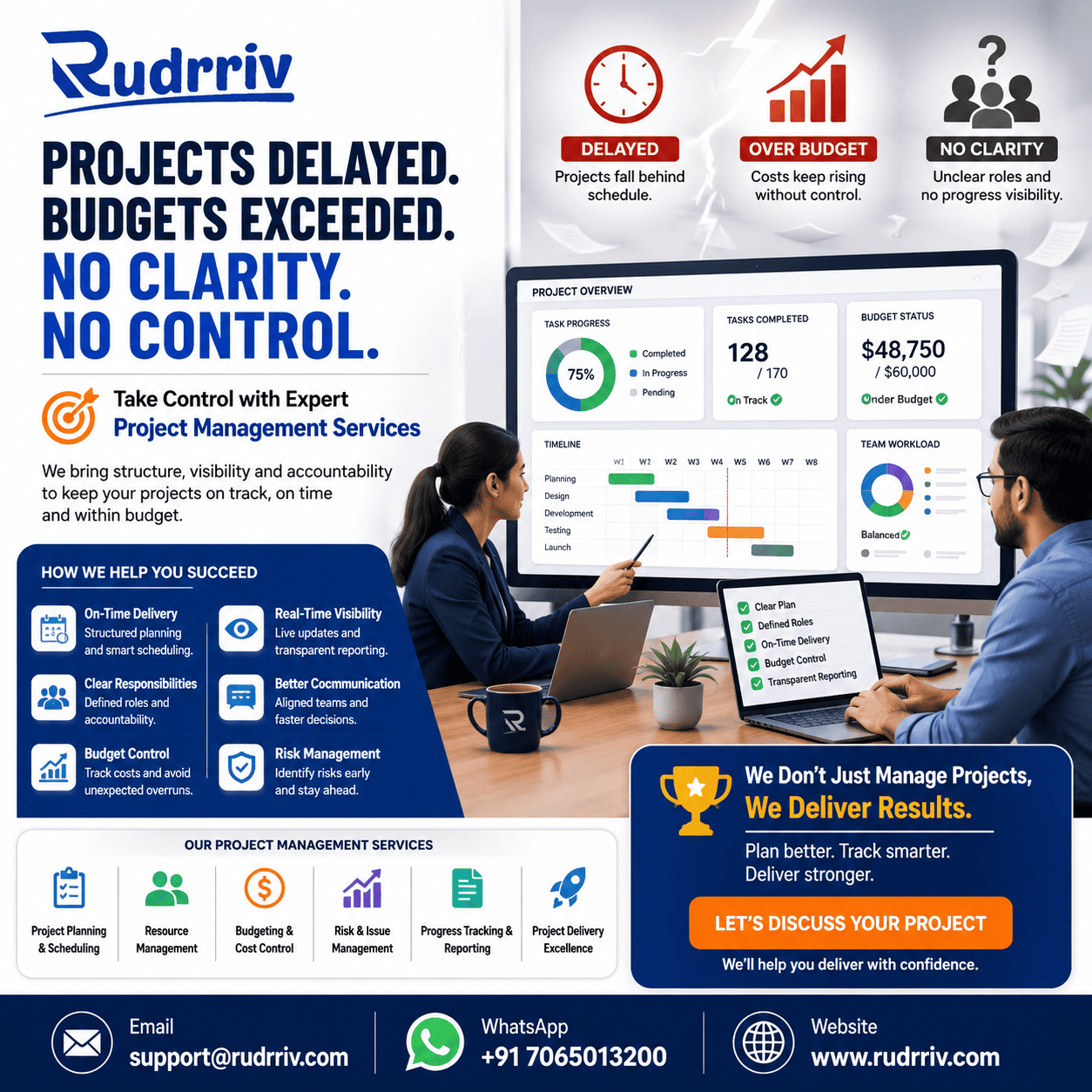
Quick Answer: What Should You Ask?
Ask the candidate to explain how they will define the business outcome, identify stakeholders, validate user behaviour, select the right delivery model, control scope, build the plan, manage dependencies, report risks, verify quality, and organize handover. Do not accept only a list of software tools, certifications, or ceremonies.
For a website, PWA, or mobile-app project, ask how the manager will determine whether the product needs installation, offline capability, push notifications, deep device access, app-store distribution, broad search discoverability, or simply an excellent browser experience. A reliable answer separates business evidence from technical feasibility and names the specialists needed to validate each assumption.
Before appointing anyone, agree the role’s decision authority, expected availability, pricing basis, first 30-day outputs, reporting cadence, change-control process, ownership rules, maintenance responsibilities, and exit or replacement plan. A short paid discovery phase can be safer than committing immediately to a long build.
Key Takeaways
- Test decision quality, not tool familiarity: ask the candidate to reason through your actual product and constraints.
- Require evidence before platform selection: user frequency, discoverability, offline use, device access, and maintenance capacity should guide the choice.
- Clarify authority and accountability: document what the project manager can decide, what needs approval, and who owns delivery outcomes.
- Compare the full operating model: fees make sense only alongside capacity, specialist support, reporting, governance, and handover.
- Protect client ownership: repositories, app-store accounts, analytics, designs, documents, backlogs, and access should remain controlled by the business.
- Plan for operation after launch: maintenance, incident handling, releases, vendor dependencies, and knowledge transfer belong in the interview.
- Prefer a phased decision when evidence is weak: a responsive website or pilot may validate demand before PWA or app investment.
Table of Contents
- Define the decision the manager must own
- Test business and user understanding
- Compare website, PWA, and app judgment
- Probe discovery and technical planning
- Check delivery governance and communication
- Compare cost, capacity, and service models
- Confirm maintenance and ownership
- Use realistic interview scenarios
- Recognize project-management red flags
- Review the final decision summary
Define the Decision the Manager Must Own
Start by stating the decision authority and outcome expected from the role. A project manager may coordinate a plan, lead discovery, manage external suppliers, facilitate product decisions, or own delivery governance across design, development, quality assurance, and launch. These are different responsibilities and require different levels of experience.
Ask: “Which decisions would you expect to own, which would you recommend, and which must remain with our product, technical, commercial, or compliance leaders?” A strong answer identifies decision boundaries and proposes a clear escalation path. It should also explain how unresolved questions will be recorded so that silence is not mistaken for agreement.
For context, the Project Management Institute describes a project as structured work and deliverables directed toward a desired outcome. The interview should therefore focus on how the candidate converts the desired outcome into decisions, evidence, responsibilities, and accepted deliverables—not merely how meetings will be scheduled.
Ask these role-definition questions
- What outcome would you restate as the project objective, and what would you exclude?
- Which assumptions must be tested before you approve a plan or date?
- Who should make product, architecture, budget, security, and launch decisions?
- How will you handle a stakeholder who requests work outside the agreed objective?
- What evidence will show that discovery is complete enough to proceed?
Test Business and User Understanding
A suitable project manager should begin with the customer task and operating context, not with a preferred technology. Ask how they would learn who the users are, what they need to accomplish, where the interaction happens, how frequently they return, what prevents completion, and how the business will measure usefulness.
The strongest candidates distinguish between stated preferences and observed behaviour. For example, stakeholders may say they need a mobile app because competitors have one, while customers may discover the service through search, use it infrequently, and resist installation. In that case, a responsive website may reduce friction and provide broader reach.
Questions about suitability and product validation
- What user evidence would change your initial recommendation?
- How would you validate whether customers will install and repeatedly use an app?
- Which customer journeys must work before we expand the feature set?
- How will accessibility, language, geography, connectivity, and device range affect planning?
- What analytics or research should exist before the first major development commitment?
Ask the candidate to name a decision they reversed after evidence contradicted the original brief. This reveals whether they can protect the business from momentum and sunk-cost thinking.
Compare Website, PWA, and Mobile-App Judgment
The project manager should be able to organize a fair comparison between a responsive website, a progressive web app, and a mobile app. They do not need to be the solution architect, but they should know which evidence and specialists are required before approving a recommendation.
A responsive website is usually the strongest default when broad reach, search discoverability, link sharing, and low first-use friction matter. A PWA can add an app-like web experience, installability, caching, and selective offline functionality, but support and behaviour vary by browser and platform. A mobile app becomes more defensible when intensive offline use, deep device APIs, app-store distribution, high-frequency engagement, or background capabilities are central to the product.
The MDN overview of progressive web apps explains that PWAs use web technologies while offering capabilities associated with platform-specific apps. Browsers apply platform-specific installation criteria, so installability should be verified on the target devices rather than assumed.
Use this comparison to ask how the candidate would gather evidence, resolve trade-offs, and record the final decision.
| Decision area | Responsive website | Progressive web app | Mobile app |
|---|---|---|---|
| Discoverability | Ask how search, links, and first-time access support the business goal. | Ask how web discoverability will coexist with an installable experience. | Ask whether app-store discovery and website support are both required. |
| Installation | No installation should be required for the core experience. | Verify browser criteria, prompts, and platform-specific installation behaviour. | Plan app-store accounts, review, release, signing, and update processes. |
| Offline use | Define the minimum experience when connectivity is poor or unavailable. | Specify which screens and data can be cached, edited, and synchronized. | Define offline workflows, local storage, synchronization, and conflict handling. |
| Device access | Confirm that browser capabilities are sufficient for the core task. | Test required web APIs across target browsers and devices. | Justify native integrations such as sensors, background services, or advanced hardware access. |
| Delivery effort | Usually the simplest route when one browser-based experience meets the need. | Adds manifest, service-worker, caching, installability, and compatibility work. | Adds platform builds, release operations, store compliance, testing, and device coverage. |
| Maintenance | Ask who manages hosting, browser testing, security updates, content, and analytics. | Add service-worker updates, cache control, compatibility checks, and fallback behaviour. | Add operating-system updates, store releases, SDK changes, crash monitoring, and platform-specific support. |
| Best-fit evidence | Users arrive through search or links and complete tasks in a browser. | Repeat users benefit from installability or selective offline capability without full native scope. | High-frequency use or essential device capabilities justify ongoing app operations. |
A strong project manager should also be comfortable recommending a responsive website first, a website with selected PWA features, a website plus mobile app, phased delivery, or no app yet. The decision should follow evidence rather than prestige or competitor imitation.
Probe Discovery and Technical Planning
Ask how the candidate will turn uncertainty into a testable product and delivery plan. Discovery should identify business rules, user journeys, data flows, integrations, security needs, accessibility requirements, operational constraints, quality expectations, and unresolved technical questions.
Questions about requirements and architecture
- How will you separate business requirements, user needs, technical constraints, and solution preferences?
- What should be prototyped or tested before architecture is approved?
- Which integrations, data sources, permissions, and device APIs create the highest risk?
- How will browser compatibility and operating-system support be defined?
- What acceptance criteria will designers, developers, testers, and business owners use?
- How will non-functional requirements such as performance, availability, privacy, accessibility, and scalability enter the backlog?
For mobile-app work, ask whether the manager can coordinate architecture and testing decisions with engineering leaders. The Android guide to app architecture emphasizes clear boundaries and responsibilities within an application. The manager should translate that kind of technical structure into ownership, milestones, testability, and maintainability without pretending to replace the architect.
For notification-led experiences, verify platform-specific constraints. Apple’s official web-push documentation shows that Home Screen web apps can support web push under defined conditions. The interview question is not simply “Can a PWA send notifications?” but “Which target users, platforms, permissions, fallbacks, and operational processes make notifications viable?”
Check Delivery Governance and Communication
The project manager should make progress inspectable. Ask for the operating rhythm they would establish: planning, decision logs, risk reviews, demonstrations, quality reviews, budget reporting, stakeholder updates, change control, and escalation. The purpose is not ceremony; it is early visibility of decisions and problems.
Ask for the first 30-day plan
- Week 1: confirm objective, stakeholders, authority, constraints, current evidence, and immediate risks.
- Week 2: map users, journeys, requirements, platform criteria, dependencies, and technical questions.
- Week 3: compare options, validate assumptions, define scope boundaries, roles, estimates, and acceptance criteria.
- Week 4: approve the initial roadmap, reporting cadence, risk register, quality plan, and decision gates.
Ask what the manager will report when progress is not going to plan. A trustworthy answer includes impact, cause, options, recommendation, decision owner, and the date by which action is required. Avoid reporting that lists completed tasks without showing unresolved decisions, budget movement, quality issues, or dependency risk.
Test the change-control approach
Present a realistic change: a senior stakeholder requests app-store launch halfway through a responsive-web project. Ask how the candidate would assess user value, architecture impact, schedule, budget, testing, store requirements, maintenance, and opportunity cost. The answer should not be an automatic refusal or acceptance; it should be a controlled decision with evidence and updated commitments.
Compare Cost, Capacity, and Service Models
Compare the complete delivery model rather than the headline project-management fee. An individual project manager may be suitable when the internal team already provides product, architecture, design, development, QA, and operational ownership. An outsourced project management service may be stronger when the work needs continuity, backup capacity, standardized governance, or coordination across several specialists and suppliers.
Commercial questions to ask
- Is pricing fixed, time-based, capacity-based, milestone-based, or part of a managed service?
- What availability is committed, and what happens during leave, illness, or workload peaks?
- Which activities are included: discovery, workshops, planning, reporting, vendor coordination, QA oversight, launch, and handover?
- Which specialists can the manager access, and are their costs included?
- How are estimates created, challenged, updated, and approved?
- What triggers a commercial change, and how will impact be shown before approval?
Ask for one sample status report, risk entry, decision record, and change request with confidential details removed. These artifacts reveal more about operational quality than a polished presentation. Do not request client-confidential information or accept unverified claims as evidence.
Confirm Maintenance, Security, and Ownership
A project manager’s responsibility should extend to operational readiness, not stop at the launch date. Ask who will own monitoring, support, defects, security updates, infrastructure, content changes, analytics, app-store releases, browser compatibility, service-worker behaviour, vendor renewals, and user feedback after launch.
Ownership and handover questions
- Will the business own the domain, repositories, cloud accounts, analytics, app-store accounts, design files, and documentation?
- How will access be granted, reviewed, and removed using least-privilege principles?
- Which decisions, configurations, dependencies, and credentials must be documented?
- What training or knowledge transfer will operations and support teams receive?
- What evidence is required before final acceptance and payment?
- How will unresolved defects, warranties, support obligations, and roadmap items be handed over?
Ask how accessibility will be accepted as a measurable requirement rather than a late visual review. The W3C Web Content Accessibility Guidelines 2.2 provide testable success criteria that can be referenced in requirements, procurement, and acceptance planning.
Use Realistic Interview Scenarios
Scenario-based questions show whether the candidate can apply judgment under uncertainty. Give the same scenario to each shortlisted candidate and compare the assumptions they test, people they involve, risks they identify, and decisions they defer.
Example 1: Professional-service firm
Situation: A regional advisory firm assumes it needs a mobile app to appear modern. Most prospective clients discover the firm through search, review a few service pages, and request a consultation only a few times each year. Better decision: begin with a fast, accessible responsive website and validated lead journey. The project manager should challenge installation assumptions, prioritize discoverability and trust, and define evidence that would justify later app investment. Specialist guidance may help with UX, technical discovery, analytics, and responsive development.
Example 2: Ecommerce repeat-purchase experience
Situation: An ecommerce business wants separate iOS and Android apps immediately because repeat customers are valuable. Research shows that customers also arrive through search and social links, while a smaller loyal segment wants faster repeat ordering and alerts. Better decision: protect the responsive website as the acquisition layer, then test PWA features or a mobile app for the validated repeat-use segment. The manager should separate acquisition, retention, notifications, account behaviour, and maintenance economics before recommending the roadmap.
Example 3: Field-service operation
Situation: Technicians need to view assignments, capture photos, record signatures, and continue working in areas with unreliable connectivity. A browser-only approach is assumed to be cheapest. Better decision: validate offline workflows, synchronization, conflict handling, camera access, security, and device management. A PWA may suit some environments, while a native or cross-platform mobile app may be justified if deep device integration and reliable offline operation are central. The project manager should coordinate field research, technical prototypes, security review, and operational training before committing.
Recognize Project-Management Red Flags
The clearest red flags appear when a candidate removes uncertainty by making unsupported promises. Project management should expose assumptions and create controlled decisions, not hide complexity behind a confident schedule.
- Immediate technology certainty: recommending an app, PWA, or website before understanding users and constraints.
- Dates without discovery: committing to launch before scope, dependencies, resources, and acceptance criteria are known.
- Activity-only reporting: showing meetings and tasks while omitting decisions, risks, quality, budget, and outcomes.
- Weak change control: treating new requirements as small without assessing architecture, testing, maintenance, or opportunity cost.
- Unclear ownership: allowing critical accounts, documents, repositories, or app-store access to remain with individuals or suppliers.
- No operational plan: focusing on launch while ignoring support, updates, incidents, analytics, and knowledge transfer.
- Methodology rigidity: forcing a delivery framework that does not fit the project’s risk, compliance, team, or decision environment.
Ask the candidate to describe a failed or troubled project and what they changed afterward. Look for accountability, specific learning, and improved controls rather than blame.
When External Project Leadership Adds Value
External project leadership is relevant when the business needs independent discovery, cross-functional coordination, supplier governance, or additional delivery capacity. The engagement should still be scoped around the actual problem: a platform decision, a defined development project, ongoing product support, or coordination of a managed team.
Rudrriv can help businesses structure technical discovery and product planning, access relevant design and development capability, or establish outsourced delivery support. Depending on the need, explore development support, outsourced specialist support, or dedicated talent options. The recommended model should follow the project’s scope, internal capacity, governance needs, and maintenance responsibilities.
Summary: Make the Project Decision Inspectable
Hire the project manager or outsourced service that can make the decision process visible: what evidence is needed, who owns each choice, how scope and risk will be controlled, how quality will be accepted, and how the product will be operated after launch. The strongest interview answers are specific about assumptions, trade-offs, responsibilities, and validation.
A responsive website is usually enough when the core task works well in a browser and broad reach, search discoverability, easy sharing, and low first-use friction matter most. PWA capabilities become useful when repeat web users benefit from installability, caching, selective offline behaviour, or an app-like experience and the required browser support is verified. A mobile app is justified when high-frequency use, intensive offline workflows, deep device APIs, push-driven engagement, or app-store distribution is central enough to support the additional release, testing, and maintenance obligations.
The right answer may be a website first, a website with PWA features, a website plus an app, phased delivery, or no app yet. Before development, validate users, scope, budget, timeline, technical feasibility, maintenance, ownership, quality assurance, and handover.
FAQs About Hiring Project Management Support
What questions should I ask when hiring a project manager or outsourced project management service?
Ask how the person or service will define the outcome, validate user needs, control scope, build the delivery plan, manage risks, report progress, handle changes, protect access, and organize handover. For a digital-product project, also ask how they will decide between a responsive website, progressive web app, and mobile app before development begins.
How can I tell whether a project manager understands digital product work?
A capable project manager can connect user journeys, product requirements, architecture choices, design, development, testing, release, analytics, and maintenance. Ask for a relevant example and have the candidate explain the decision points, dependencies, trade-offs, and lessons rather than only naming tools or methodologies.
Should the project manager recommend a website, PWA, or mobile app?
The project manager should organize the evidence and decision process, not make an unsupported technology choice alone. The recommendation should reflect user frequency, discoverability, offline requirements, device APIs, installation behaviour, app-store needs, budget, timeline, security, and maintenance capacity, with technical specialists validating feasibility.
When is an outsourced project management service suitable?
Outsourced support is suitable when the business needs structured delivery leadership but does not have enough internal capacity, specialist product experience, or continuity to manage the work. Confirm decision authority, reporting lines, availability, escalation procedures, knowledge transfer, and how the external manager will work with internal stakeholders.
How should project management fees be compared?
Compare the responsibilities and capacity behind the fee. Check whether pricing includes discovery, planning, workshops, reporting, risk management, vendor coordination, acceptance support, release planning, and handover. A lower fee may exclude important work, while a broader service may include specialist oversight that reduces coordination gaps.
What should be included in the first 30 days?
The first 30 days should establish the business outcome, stakeholder map, user assumptions, current-state evidence, platform decision criteria, scope boundaries, delivery approach, roles, risk register, communication cadence, acceptance criteria, and near-term milestones. Avoid starting a large build before the unresolved assumptions are visible and assigned.
Who should own project tools, documents, and product accounts?
The client should retain ownership or assured access to source repositories, cloud accounts, analytics, app-store accounts, domains, design files, specifications, backlogs, test evidence, and decision records. Use role-based access and require a documented handover so the project can continue if the manager or provider changes.
What are warning signs when interviewing a project manager?
Warning signs include accepting an unclear brief without challenge, promising dates before discovery, treating every change as harmless, avoiding budget questions, reporting activity instead of decisions and outcomes, ignoring quality assurance or maintenance, and being unable to explain how risks, dependencies, ownership, and handover will be controlled.
Can a business launch a responsive website first and add an app later?
Yes. A phased approach is often appropriate when the business still needs to validate demand, user frequency, offline behaviour, or device-feature requirements. The project manager should ensure the website architecture, data model, analytics, and product roadmap do not block later PWA capabilities or a mobile app where evidence justifies them.
How should project success be measured after launch?
Measure whether the agreed user task works, the product meets acceptance and quality criteria, critical defects are controlled, stakeholders can operate the solution, and the business has clear ownership and maintenance processes. Product metrics such as adoption, completion, retention, search discovery, or operational time should be chosen before launch and reviewed in context.
Need Help Defining the Right Project?
Share the business outcome, user problem, platform options, internal capacity, delivery risks, and current stage. Rudrriv can help structure discovery, project leadership, specialist support, or a managed delivery arrangement with clear responsibilities and practical decision controls.
Discuss your requirementAt Rudrriv, we make it easier for businesses to access the right expertise, execute important work, and scale with confidence.