
Long-Term Provider Agreement Questions to Ask
The most important questions to ask an outsourcing provider before signing a long-term service agreement are the ones that reveal how the relationship will operate when demand changes, work falls behind, key people leave, sensitive data is involved, or the contract must end. Start by testing whether the provider understands the business outcome and can convert it into measurable scope, accountable roles, service levels, quality controls, governance, and an executable transition plan.
A long-term agreement should not depend on broad promises such as “dedicated support” or “flexible scaling.” The contract must explain what is included, who performs the work, how capacity changes, and what happens when expectations are missed.
The main caution is commitment before validation. A capable provider may still be unsuitable for your process, systems, risk profile, or management capacity. Compare answers with evidence and use discovery or a pilot when important assumptions remain untested.
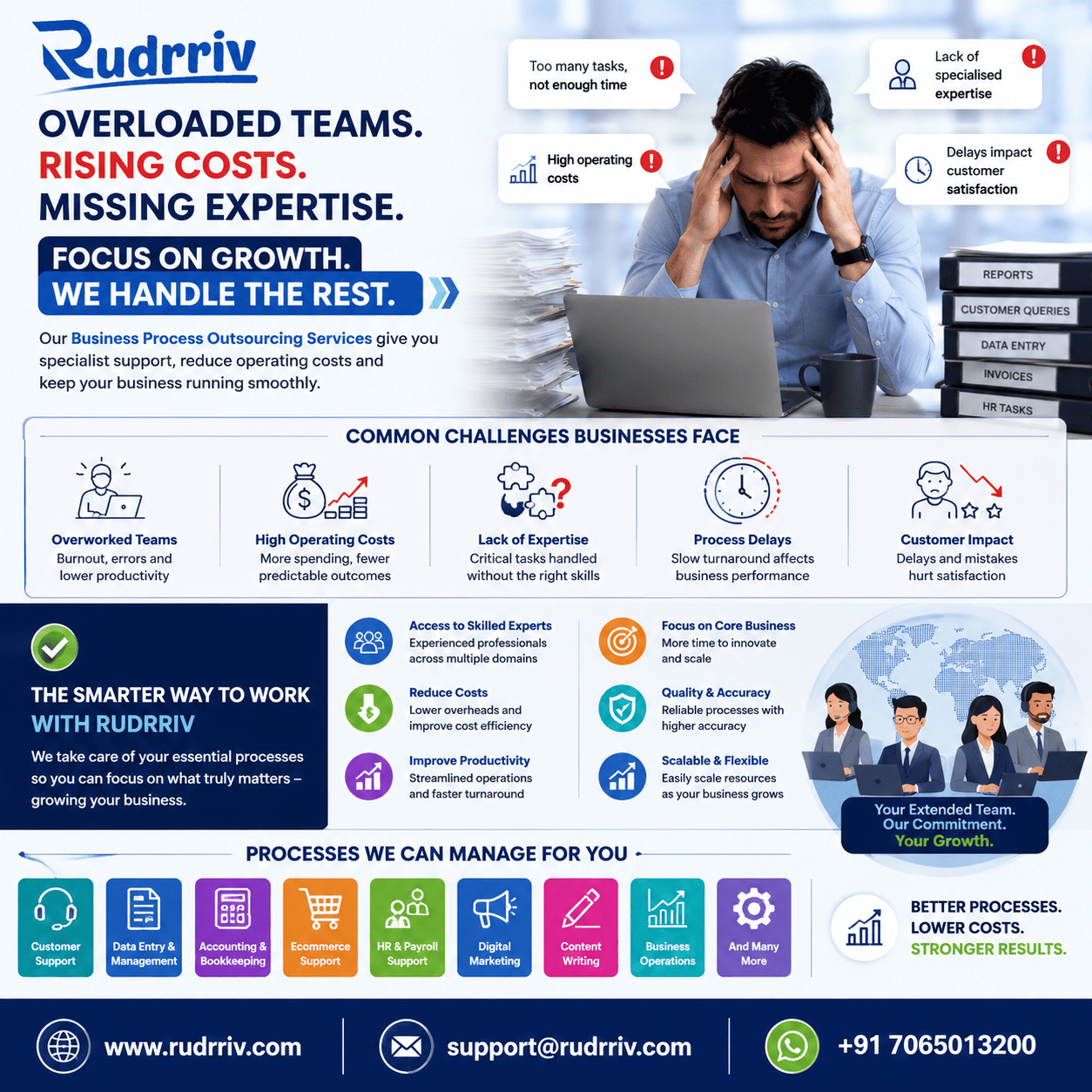
Quick Answer: What Should You Ask an Outsourcing Provider?
Ask the provider to explain the operating model in enough detail that another person could manage it after the sales team leaves. The answer should identify the service boundary, expected volumes, hours and locations, named roles, client dependencies, quality standards, reporting sources, escalation path, security controls, and the process for adding or removing work.
Then test the model under pressure. Ask what happens during a demand spike, an outage, an employee departure, a security incident, repeated quality failure, a disputed invoice, or a termination. Strong providers describe specific procedures, owners, timeframes, and evidence. Weak providers rely on reassurance or postpone detail until after signature.
Before committing for several years, make sure the transition, steady-state service, change process, renewal, and exit are all workable. Every important answer should appear in the agreement or its schedules rather than remaining in a presentation, email, or meeting note.
Key Takeaways
- Define the business outcome first: the provider cannot price or govern a service correctly when the process boundary and expected result are unclear.
- Verify the actual delivery team: confirm roles, seniority, locations, continuity coverage, and how replacements are approved and trained.
- Make service levels measurable: every KPI needs a definition, data source, reporting frequency, owner, exclusion rule, and corrective-action process.
- Compare total operating cost: include transition, tools, client management time, overtime, change requests, compliance work, and exit assistance.
- Protect data and intellectual property: document access, storage, subcontracting, incident handling, retention, ownership, return, and deletion.
- Design governance before launch: routine reviews, escalation, decision rights, risk tracking, and change control prevent issues from becoming contractual disputes.
- Plan the exit while negotiating entry: knowledge, accounts, data, documentation, and service continuity must be transferable without avoidable disruption.
Table of Contents
- Set outcomes and service boundaries
- Test long-term provider suitability
- Confirm team capacity and continuity
- Define service levels and acceptance
- Compare total cost and resources
- Protect data, IP, and subcontracting
- Set governance and change control
- Plan transition, maintenance, and exit
- Test the contract with real scenarios
- Run the final agreement review
Set Business Outcomes and Service Boundaries
Begin by asking the provider to restate the business problem, not merely the list of tasks. A customer-support contract may be intended to extend coverage, improve response consistency, absorb seasonal demand, or provide multilingual capability. A software-development arrangement may be intended to release a defined product, maintain an existing platform, or add durable engineering capacity. These are different operating models even when the proposal uses similar staffing labels.
Ask exactly which activities are in scope, which are excluded, where work begins and ends, and what your team must supply. Record expected volumes, hours, channels, languages, systems, locations, peak periods, regulatory constraints, and upstream dependencies. Clarify whether the provider is responsible for advice, execution, approval, deployment, quality assurance, or only selected stages.
Decision rule: do not accept a price or service level until both parties can describe the same process boundary, baseline demand, and definition of success.
For a useful governance reference, ISO 37500 guidance on outsourcing covers phases, processes, and governance across the contractual period. It can help procurement and operating teams identify questions beyond the initial supplier selection.
Test Whether the Provider Fits a Long-Term Role
Suitability depends on the work, risk, and client stage—not provider size alone. Ask for examples matching your complexity, operating hours, technology, and regulatory exposure. References should explain how the provider handled difficult periods.
Explore financial and operational resilience, including recruitment, transition funding, client concentration, delivery locations, and continuity testing. Startups may prioritize flexibility and iteration; enterprises may require auditability, segregation of duties, global coverage, and formal change control.
Also test management fit. Ask how quickly risks are surfaced, whether senior leaders remain involved, how disagreements are resolved, and whether the provider can challenge unrealistic requests constructively. Long-term partners must communicate bad news early.
Confirm the Delivery Team, Capacity, and Continuity
Ask who will deliver the service, where they work, which skills are mandatory, and how much time is committed. Distinguish named people from sample profiles, identify subcontractors, and expose any dependence on one specialist.
Capacity claims need a plan. Ask about recruitment time, screening, training, ramp-up measurement, and demand above forecast. For rapid scaling, request evidence of the talent pool, management capacity, licenses, and access process.
Continuity requires documented procedures, shared repositories, cross-training, succession coverage, and replacement overlap. The contract should define staffing-change notice, replacement timing, qualifications, and the client’s approval role for key positions.
Define Service Levels, Quality, and Acceptance Rules
Service levels should measure the outcome that the outsourced process can reasonably control. A response-time target may be appropriate for support; defect severity and release acceptance may matter for software; accuracy, timeliness, and exception handling may matter for back-office operations. Avoid a long list of metrics that can all be “green” while customers or internal teams remain dissatisfied.
For every KPI, ask how it is calculated, which system is the source of truth, what is excluded, when the clock starts and stops, who validates the data, and how disputed results are handled. Define severity levels, sampling methods, acceptance criteria, rework ownership, root-cause analysis, improvement plans, and any service credits. Credits may provide accountability, but they do not replace a practical recovery process.
The table below converts high-value questions into evidence and contract outcomes. Use it as a comparison aid across shortlisted providers.
| Decision area | Question to ask | Evidence to request | Agreement outcome |
|---|---|---|---|
| Scope | What is included, excluded, and dependent on our team? | Process map, assumptions, responsibility matrix | Statement of work with boundaries and dependencies |
| People | Who delivers the service and how are replacements managed? | Role profiles, staffing plan, continuity process | Key-role, qualification, and replacement terms |
| Quality | How is work checked and accepted? | Quality plan, sampling method, acceptance examples | Acceptance, rework, and corrective-action rules |
| Performance | Which service levels reflect business impact? | Metric definitions, sample dashboard, source systems | SLA schedule with remedies and exclusions |
| Security | How are access, incidents, and subprocessors controlled? | Security policies, assessments, incident process | Security, audit, notification, and flow-down clauses |
| Commercials | What changes the fee beyond the headline price? | Rate card, volume bands, change examples | Pricing schedule and change-control mechanism |
| Continuity | How will critical service continue during disruption? | Continuity plan, recovery tests, location strategy | Recovery objectives and continuity obligations |
| Exit | How will data, knowledge, accounts, and work transfer? | Sample exit plan, asset register, handover checklist | Exit-assistance schedule with timing and fees |
A strong response is specific enough to be tested. Where a provider cannot supply evidence before signature, record the missing item as a precondition, transition deliverable, or acceptance gate rather than assuming it will be resolved later.
Price the Full Operating Model, Not Just the Fee
Compare total cost using the same demand and responsibility assumptions. Ask whether pricing is based on full-time equivalents, transactions, time and materials, fixed scope, outcomes, or a hybrid. Each model can work, but each shifts volume, productivity, and change risk differently between client and provider.
Identify one-time and variable charges: discovery, recruitment, transition, training, tooling, licenses, environments, overtime, weekend coverage, travel, currency movements, taxes, security assessments, additional reporting, change requests, and exit support. Ask how unused capacity is treated and what happens when volumes fall below or rise above forecast.
Include internal resource cost. A low-fee model may require daily supervision, testing, approvals, infrastructure, or rework. Ask the provider to list client dependencies, then model normal, high-demand, delayed-transition, and early-exit scenarios.
Protect Data, Intellectual Property, and Subcontracting
Security and ownership questions should be answered before access is granted. Map the data, systems, credentials, source code, customer records, business documents, and confidential information involved. Ask where data is processed, whether remote access is allowed, how privileges are approved, how activity is logged, and how access is removed when roles change.
For cybersecurity supply-chain risk, NIST SP 800-161 Revision 1 provides guidance on identifying, assessing, and mitigating risks associated with products and services. For software-related outsourcing, the CISA Software Acquisition Guide supplier questions can help buyers examine secure-development and third-party practices.
If personal data is processed, confirm documented instructions, confidentiality, security, subprocessor controls, audit support, incident assistance, retention, return, and deletion. The ICO guidance on controller-processor contract terms is useful for UK GDPR contexts. Obtain qualified advice for the jurisdictions and transfers that apply.
Clarify intellectual-property ownership for deliverables, pre-existing tools, templates, source code, documentation, training materials, and improvements. Require disclosure and approval of subcontractors where appropriate, and ensure equivalent confidentiality, security, and service obligations flow down while the primary provider remains accountable.
Set Governance, Change Control, and Escalation
Governance turns the contract into a working relationship. Ask who owns day-to-day delivery, commercial decisions, security issues, service improvement, and executive escalation on both sides. Define meeting cadence, decision rights, reporting packs, action tracking, risk registers, and the route for urgent exceptions.
Change control should distinguish routine operational adjustment from a material change in scope, volume, technology, location, risk, or service level. Ask how changes are estimated, approved, tested, scheduled, and reflected in pricing. Without a workable mechanism, teams either delay necessary changes or argue about whether new work is already included.
Escalation must be faster than dispute resolution. Define when failure triggers corrective action, executive review, step-in rights, scope reduction, or termination. Sample reports should show root causes, owners, and overdue actions—not only status summaries.
Plan Transition, Maintenance, and Exit Before Launch
The transition plan should specify discovery, knowledge transfer, recruitment, access, training, testing, parallel operation, readiness review, and go-live acceptance. Ask which assumptions can delay transition and who bears the resulting cost. A fixed launch date is credible only when critical dependencies, approval time, environment readiness, and data availability are visible.
For ongoing services, define who maintains procedures, automation, integrations, documentation, security controls, and the service catalogue. Improvement commitments need baselines, approvals, and measurable outcomes rather than vague innovation promises.
Exit planning should cover termination assistance, knowledge transfer, data return or deletion, documentation, open work, account ownership, credentials, asset registers, source repositories, licenses, supplier contacts, and cooperation with an incoming provider. State duration, service levels, charges, and responsibilities during exit. The client should be able to leave without losing operational knowledge or control of essential assets.
Test the Agreement Against Real Operating Scenarios
A contract often appears complete until it is tested against an event that crosses scope, commercial, security, and governance clauses. Walk through realistic scenarios with the provider before signature and record any unresolved decision.
Example 1: Ecommerce Support During Peak Demand
An ecommerce business assumes a fixed support team can handle seasonal demand. The better agreement defines volume bands, forecasts, temporary capacity, training lead time, response targets, quality sampling, returns escalation, and data access. Customer contacts rise around promotions, so specialist support may help model staffing and integrate helpdesk and order systems.
Example 2: Extending Product Engineering Capacity
A software company expects faster releases, but the proposal omits code review, security testing, documentation, and maintenance ownership. The better agreement defines product roles, repository control, acceptance, defect severity, release authority, open-source approval, knowledge transfer, and post-deployment support. This aligns delivery with user reliability, not feature count alone.
Example 3: A Startup Outsourcing a Core Operation
A startup wants a three-year managed service before demand is proven. A shorter initial term or staged commitment with discovery, volume bands, performance gates, and a defined move to steady state may fit better. This protects both parties while demand and management capacity become clearer.
Run a Final Agreement Review Before Signing
Use the final review to confirm that operational promises, commercial assumptions, and legal terms describe the same service. Ask each stakeholder to identify the clause or schedule that controls their highest-risk issue.
- Can both parties describe the outcome, process boundary, exclusions, and client dependencies consistently?
- Are baseline volumes, demand ranges, service hours, locations, systems, and languages documented?
- Are the named roles, skill levels, key-person rules, replacement process, and capacity plan clear?
- Do quality standards, acceptance criteria, service levels, data sources, exclusions, and remedies align?
- Are setup, recurring, variable, change, compliance, transition, and exit costs visible?
- Are security controls, access, audit evidence, incident notification, data location, retention, and deletion defined?
- Are intellectual property, accounts, source materials, documentation, and deliverable ownership unambiguous?
- Are subcontractors disclosed and held to equivalent obligations while the provider remains accountable?
- Are governance meetings, decision rights, reporting, escalation, and corrective-action processes practical?
- Can the change-control process handle new volumes, channels, technology, regulation, or locations?
- Does the continuity plan define recovery priorities, communications, alternative capacity, and testing?
- Can the transition and exit plans be executed without losing data, knowledge, access, or service continuity?
If material answers remain outside the contract, postpone the long-term commitment or make those items formal preconditions. A well-negotiated agreement should reduce ambiguity for both client and provider, not transfer every uncertainty to one side.
When a Clearer Outsourcing Model Needs Specialist Support
External support is useful when the work spans operating-model design, recruitment, technology, quality assurance, or governance. Rudrriv can help clarify requirements, structure defined projects, access dedicated professionals, or establish managed support. Relevant options include outsourcing support and dedicated specialist talent.
The appropriate starting point may be discovery, a limited pilot, a defined transition project, or an ongoing team. The engagement should follow validated demand, risk, internal capacity, and ownership requirements rather than forcing every client into the same model.
Summary
Before signing a long-term outsourcing agreement, confirm that the provider can translate your business outcome into a complete operating model. The essential questions cover scope, people, capacity, service levels, quality, total cost, data, intellectual property, subcontracting, governance, continuity, change, and exit.
Do not evaluate answers only for confidence. Request evidence, test the agreement against realistic disruptions, and place every material commitment in the contract or its schedules. A pilot or staged commitment is often the better choice when demand, technical dependencies, or working relationships are not yet proven.
The strongest agreement gives both parties enough clarity to deliver, adapt, correct problems, and separate responsibly. It should protect service continuity and ownership without making routine operational change unnecessarily difficult.
FAQs on Long-Term Outsourcing Agreements
What are the key questions to ask an outsourcing provider before signing a long-term service agreement?
Ask about scope, the delivery team, service levels, quality controls, security, subcontractors, pricing, governance, continuity, ownership, and exit support. Request evidence, then place agreed commitments in the statement of work and schedules. A sales promise is not sufficient unless the agreement states who is responsible, how performance is measured, and what happens when commitments are missed.
Should a business run a pilot before signing a multi-year outsourcing contract?
A pilot is useful when the process, demand, systems, or working relationship is unproven. Define its scope, success criteria, roles, data access, and handover in advance. Test communication, quality, and problem solving—not only output volume. Treat scaling as a separate decision supported by a ramp-up and capacity plan.
Which service levels should be included in an outsourcing agreement?
Use service levels that reflect business impact, such as response, resolution, uptime, turnaround, accuracy, backlog age, customer satisfaction, or defect escape. Define the source data, exclusions, severity levels, reporting frequency, and corrective-action process. Select a small set of meaningful measures rather than many metrics that can hide poor outcomes.
How should outsourcing proposals be compared when pricing models differ?
Normalize proposals against the same volumes, service hours, roles, locations, tools, transition work, and performance assumptions. Separate recurring fees from setup, licenses, overtime, change requests, compliance work, and exit assistance. Also compare the client resources required; a lower provider fee may create more supervision, rework, or technology cost internally.
What data-security questions should be asked before outsourcing?
Ask what data is accessed, where it is stored, who can use it, how access is removed, and how incidents are reported. Confirm encryption, logging, retention, deletion, backups, recovery, subprocessors, transfers, and audit evidence. Because obligations vary by jurisdiction and sector, have qualified legal and security advisers review the final clauses.
How can a contract reduce the risk of key-person dependency?
Require role descriptions, minimum skills, succession coverage, documented procedures, cross-training, staffing-change notices, and an agreed replacement process. Critical knowledge should be stored in shared systems rather than personal files. For essential roles, define transition overlap and qualification requirements so service continuity does not depend on one individual.
Should an outsourcing provider be allowed to use subcontractors?
Subcontracting can be acceptable when it is transparent and controlled. Ask which activities are subcontracted, where the work occurs, and what due diligence applies. The agreement should define approval or notification rights, equivalent confidentiality and security obligations, and accountability. The primary provider should remain responsible for the contracted outcome.
What exit clauses are essential in a long-term outsourcing agreement?
Define termination rights, notice, exit assistance, transition timing, data return or deletion, account transfer, documentation, knowledge transfer, asset ownership, access removal, final invoicing, and cooperation with a replacement provider. State how exit work is priced. Test the clause against a realistic scenario to confirm that operational steps are clear.
How often should a long-term outsourcing agreement be reviewed?
Review operational performance monthly or quarterly and the commercial and contractual model at least annually, or sooner after material changes in volume, regulation, technology, or location. Governance should track service levels, risks, staffing, security events, dependencies, and improvement actions. The agreement should support approved change without constant full renegotiation.
Need Help Defining the Right Outsourcing Model?
Share the process, expected demand, systems, delivery risks, internal capacity, and desired outcomes. Rudrriv can help structure an appropriate project, dedicated-professional arrangement, ongoing support plan, or managed team with clear responsibilities and delivery controls.
Discuss your requirementAt Rudrriv, we make it easier for businesses to access the right expertise, execute important work, and scale with confidence.