
Which Business Functions to Outsource or Keep In-House
The best way to decide which business functions should be outsourced and which should remain in-house is to protect the work that creates strategic advantage, carries material accountability, or depends on close organisational judgement, while considering external support for work that is well defined, measurable, repeatable, capacity-sensitive, or dependent on scarce specialist skills. The main caution is that a function should not be outsourced merely because a supplier quote appears lower than an employee cost.
Begin at the activity level rather than labelling an entire department “core” or “non-core.” A finance team may retain cash planning, controls, and management decisions while using external support for transaction processing. A product team may keep roadmap and architecture ownership while engaging specialists for a defined build, quality assurance, or maintenance workload. A customer-support function may retain policy and escalations while extending coverage through a managed team.
The practical starting point is a make-or-buy assessment that considers strategy, risk, data, customer impact, process maturity, demand patterns, total cost, management capacity, and reversibility. The answer may be fully in-house, fully outsourced, or a hybrid model in which internal leaders retain decisions and external specialists execute a controlled scope.
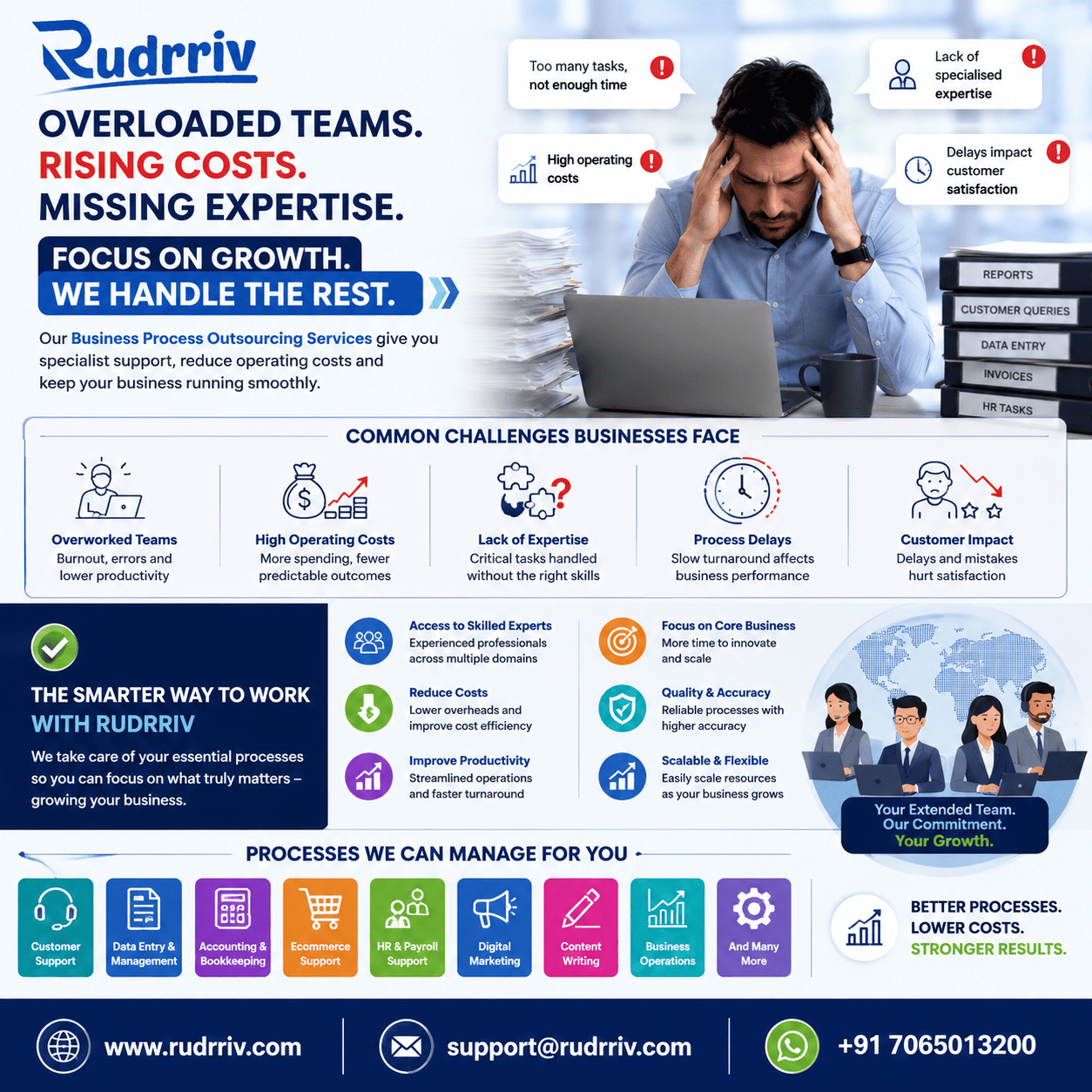
Quick Answer: Outsource or Keep In-House?
Keep a function in-house when it directly differentiates the business, requires frequent executive judgement, contains critical intellectual property, controls regulatory or security accountability, or depends on tacit knowledge that cannot yet be documented. These functions may still use advisers or specialist contributors, but the decision rights and operating knowledge should remain internal.
Consider outsourcing when the outcome can be clearly specified, demand varies, specialist capability is difficult to maintain internally, performance can be measured, and a provider can deliver better capacity or continuity without weakening customer experience or control. Do not outsource a broken or undocumented process and expect the supplier to repair every ambiguity.
When the evidence is mixed, use a hybrid model or a limited pilot. Retain an accountable internal owner, define service levels and acceptance criteria, establish data and access controls, and agree how knowledge, assets, and work will be handed back or moved to another provider.
Key Takeaways
- Protect strategic control: keep decisions, intellectual property, risk ownership, and critical customer insight inside the business.
- Assess activities, not departments: one function can contain work that should be retained, co-sourced, and outsourced.
- Outsource mature work: external delivery is easier when processes, inputs, exceptions, outputs, and quality standards are documented.
- Compare total cost: include management, tools, transition, rework, oversight, and exit costs—not only the supplier fee or salary.
- Match the model to demand: variable workloads and intermittent specialist needs often favour external capacity; stable high-volume work may justify an internal team.
- Keep accountability internal: legal, security, data, customer, and commercial responsibilities remain with the business even when tasks are delegated.
- Design for reversibility: retain ownership of accounts, data, documentation, code, processes, and supplier-independent operating knowledge.
Table of Contents
- Start with strategic importance
- Rate each function with eight tests
- Identify work suited to outsourcing
- Choose in-house, hybrid, or outsourced
- Adjust the choice by business stage
- Compare total cost and resources
- Plan transition and governance
- Apply the framework to examples
- Avoid weak make-or-buy decisions
- Use the final decision checklist
Start with Strategic Importance, Not Workload
The first decision is whether the function helps the business win, protect itself, or learn faster. High workload alone does not make a function suitable for outsourcing, and “non-core” does not mean unimportant. Payroll processing may not differentiate a company, yet errors can damage trust. Product strategy may consume limited hours, yet it shapes almost every downstream investment.
Break the function into decisions, recurring activities, specialist tasks, systems, data, exceptions, and approvals. Then identify which parts require internal context or authority. This often reveals a better boundary than moving an entire department.
Keep decision rights near the business
Activities should usually remain internally owned when they set direction, approve risk, define policy, commit money, control sensitive access, or resolve important customer exceptions. External experts can provide analysis and execution, but an internal leader should remain responsible for priorities and acceptance.
Separate expertise from ownership
A business does not need to employ every specialist it uses. It may obtain legal, security, development, design, data, or operational expertise externally while retaining ownership of the underlying decision. This distinction enables access to deeper capability without transferring strategic control.
The U.S. Small Business Administration overview of outsourced functions similarly frames outsourcing as obtaining products or services externally rather than automatically expanding the full-time team. Use that flexibility selectively rather than as a blanket policy.
Rate Each Function with Eight Decision Tests
A function is a stronger outsourcing candidate when its output is clear, demand is variable, specialist skills are scarce, and the business can monitor performance without constant intervention. It is a stronger in-house candidate when it drives differentiation, carries material accountability, depends on tacit knowledge, or requires rapid decisions across teams.
Use the following scorecard during a leadership workshop. A single high-risk factor can outweigh several efficiency benefits, so treat the table as a structured discussion rather than a mechanical formula.
| Decision test | Favour in-house | Favour outsourcing | Question to resolve |
|---|---|---|---|
| Strategic differentiation | The activity shapes why customers choose you. | The activity supports the offer but does not define it. | Would losing this capability weaken competitive advantage? |
| Decision authority | Frequent judgement, policy, or executive approval is required. | Rules and escalation limits are clear. | Can the provider act without repeatedly asking what “good” means? |
| Data and risk | Exposure could create severe legal, security, or trust consequences. | Access can be limited, monitored, and contractually controlled. | What accountability remains with the business? |
| Tacit knowledge | Performance depends on undocumented context and relationships. | Inputs, exceptions, and outputs can be documented. | Could a capable new team learn the work predictably? |
| Demand pattern | Work is stable, continuous, and sufficient for a dedicated team. | Work is seasonal, project-based, or difficult to forecast. | Will internal capacity be consistently used? |
| Specialist depth | The capability is central enough to build and retain internally. | Expertise is intermittent, scarce, or changes rapidly. | Can the business maintain the required level of expertise? |
| Measurability | Quality is subjective and discovered through close collaboration. | Service levels, acceptance criteria, and outcomes are observable. | How will work be accepted and disputed? |
| Reversibility | Switching would be highly disruptive or create lock-in. | Data, documentation, tools, and assets remain portable. | Could the function be moved or brought back without losing continuity? |
Document the reason for each rating. If leaders disagree, that disagreement often identifies the real design work: clarifying ownership, standardising a process, reducing sensitive access, or separating policy from execution.
Identify Work That Is Ready to Outsource
Outsource work when the business can define the outcome and govern the relationship. A provider cannot compensate indefinitely for missing process ownership, conflicting priorities, undefined quality, or uncontrolled access.
- The scope can be expressed through deliverables, service levels, volumes, milestones, or acceptance tests.
- Inputs and dependencies are available when the provider needs them.
- Exceptions and escalation rights are documented.
- An internal owner has time and authority to make decisions.
- Data access can follow least-privilege principles.
- Performance can be reviewed through evidence rather than impressions.
- The business owns the accounts, assets, documentation, and outputs required for continuity.
Do not outsource an undefined problem
When leaders cannot agree on the desired outcome, begin with discovery rather than a long delivery contract. A short diagnostic engagement may clarify the process, baseline, architecture, customer need, or operating model before the business decides what work should move outside.
Treat supplier access as an operating risk
External capability expands the operational boundary of the organisation. The NIST cybersecurity supply-chain guidance recommends identifying, assessing, and mitigating supplier-related risks as part of organisational risk management. The UK National Cyber Security Centre also provides supplier assurance questions covering areas such as privileged access, networks, cloud services, and security practices.
Choose In-House, Hybrid, or Outsourced Delivery
The decision is rarely binary. Many businesses achieve better control by retaining strategy and approvals while using external specialists for capacity, execution, or defined expertise.
In-house fits continuous strategic work
Build internal capability when the workload is sustained, the knowledge compounds over time, and close collaboration improves decisions. Internal teams are also better positioned when the organisation must respond immediately to sensitive events or when the capability itself is part of the market advantage.
Hybrid delivery preserves ownership
Co-sourcing works well when an internal product owner, functional leader, or programme manager sets priorities while external specialists add execution capacity. It is often the safest model for technology, data, design, marketing operations, finance operations, and customer support because it separates accountability from production.
Full outsourcing needs mature governance
A more complete transfer can suit stable, standardised services with clear interfaces and measurable outcomes. Even then, retain contract management, risk oversight, policy, data ownership, and enough internal knowledge to challenge performance and manage change.
Let Business Stage Change the Answer
The right sourcing boundary changes as the organisation moves from validation to scale. A startup may use external specialists to avoid hiring ahead of demand, while a growing business may internalise capabilities that have become frequent and strategically important.
- Validation stage: keep customer discovery, product direction, pricing, and learning loops close to founders. Use defined external expertise for prototypes, research, design, compliance advice, or technical discovery.
- Early growth: use external capacity to handle spikes, launch projects, specialist gaps, and extended service hours. Document processes before volume makes informal knowledge risky.
- Scaling business: bring high-frequency, differentiated capabilities inside when coordination cost, knowledge accumulation, and leadership needs justify a team. Retain partners for specialist depth or overflow.
- Enterprise environment: segment functions by risk tier, geography, regulation, business unit, and resilience need. A consistent supplier-assurance and contract-management model becomes essential.
The UK government’s Sourcing Playbook treats insourcing and outsourcing as planning decisions that require commercial, financial, delivery, and operational input. Although written for public-sector sourcing, the principle is useful for private organisations: involve the people who will own the service before committing to the model.
Compare Total Cost, Capacity, and Management Load
Compare the full operating economics of each option over a realistic period. A supplier quote may exclude internal management, tools, integration, travel, change requests, transition, or rework. An employee cost may exclude recruitment time, benefits, equipment, training, unused capacity, management, and the risk of relying on one person.
| Cost or resource area | In-house questions | Outsourcing questions |
|---|---|---|
| Capacity | Will there be enough sustained work for the team? | Can capacity expand or contract without service disruption? |
| Talent | Can the business recruit, develop, and retain the skill? | Who will actually perform the work and at what seniority? |
| Management | Which leader will coach, review, and coordinate the team? | Which internal owner will prioritise, approve, and manage the supplier? |
| Technology | What tools, licences, environments, and support are required? | Which tools are included, and who owns configurations and data? |
| Quality | How will standards and peer review be maintained? | What evidence, testing, revision, and acceptance process applies? |
| Transition | How long until new hires are productive? | What discovery, knowledge transfer, parallel running, and setup are needed? |
| Exit | What happens if demand falls or skills change? | How are data, assets, access, documentation, and unfinished work returned? |
Also account for opportunity cost. If internal leaders spend months recruiting a capability that is needed only for a defined project, delay may be more costly than the supplier premium. Conversely, repeatedly purchasing a high-volume capability can become more expensive and less integrated than building a team.
Plan Transition, Controls, and Ongoing Governance
A sound sourcing decision includes the operating model, not only the provider choice. Define how work enters the process, who can approve changes, how exceptions are handled, what evidence demonstrates completion, and how the relationship will evolve.
- Baseline the current service: volume, cycle time, quality, backlog, cost, incidents, customer impact, and dependencies.
- Define the retained organisation: internal owner, decision rights, risk responsibilities, approval limits, and stakeholder roles.
- Specify the service: scope, exclusions, inputs, outputs, service levels, acceptance criteria, and change control.
- Control data and access: least privilege, individual accounts, logging, location, retention, sub-processors, incident handling, and removal.
- Transfer knowledge: process maps, examples, exceptions, systems, contacts, brand rules, and escalation paths.
- Run a phased transition: pilot, parallel operation, sampling, quality review, and agreed readiness criteria.
- Govern performance: delivery reviews, outcome measures, issue logs, risk reviews, improvement actions, and commercial decisions.
- Maintain an exit path: portable data, documentation, source files, credentials, licences, handover support, and continuity planning.
Accountability check: when a provider processes personal data, define the roles and contractual responsibilities before access begins. The UK Information Commissioner’s Office explains what controller-processor contracts need to include, such as documented instructions, confidentiality, security, sub-processor controls, assistance, audit provisions, and end-of-contract handling. Apply the laws relevant to your organisation and jurisdictions.
Apply the Framework to Real Business Functions
Example 1: A startup needs finance operations
Situation: a startup needs bookkeeping, payroll coordination, monthly reporting, cash visibility, and investor-ready information. The mistaken assumption is that the whole finance function must either be hired internally or transferred to one external firm.
Better decision: keep cash decisions, approval authority, budgets, fundraising narratives, and management interpretation with founders or an internal finance lead. Consider external support for transaction processing, reconciliations, payroll administration, and reporting preparation under documented controls. Specialist guidance may help design the split, but leadership retains financial accountability.
Example 2: Ecommerce support volume is rising
Situation: an ecommerce business has seasonal peaks, evening enquiries, order-status questions, returns, and occasional sensitive complaints. The confusion is whether outsourcing support will damage the brand.
Better decision: retain customer policy, tone, exception authority, high-value complaints, and insight analysis internally. Pilot external delivery for defined Tier 1 queues or extended hours using approved scripts, system permissions, quality sampling, and escalation rules. The model fits variable demand while protecting the customer decisions that shape trust.
Example 3: A software team lacks specialist capacity
Situation: a growing software company needs a new integration, usability improvements, release testing, and ongoing maintenance. It assumes that outsourcing development means giving an external team control of the product.
Better decision: retain product roadmap, architecture standards, security authority, code ownership, release approval, and customer priorities internally. Use external specialists for a defined project, quality assurance, UI/UX support, or managed capacity with repository access controls, documentation, code review, and handover. Specialist support is most useful when the internal product owner can make timely decisions.
Avoid Weak Make-or-Buy Decisions
Most failures begin before delivery: the organisation chooses a model without defining the service, the retained responsibilities, or the evidence required to manage it.
- Outsourcing only to reduce headline cost: hidden coordination, transition, quality, and exit costs can erase the expected benefit.
- Calling every support activity non-core: some supporting functions protect trust, resilience, compliance, or strategic learning.
- Moving an unstable process: undocumented exceptions and conflicting priorities become supplier disputes.
- Transferring ownership with execution: the business loses decision rights, customer insight, data control, or technical knowledge.
- Ignoring internal management capacity: outsourced work still needs prioritisation, approvals, review, and relationship management.
- Using vague service levels: speed measures without quality, customer, risk, or outcome measures encourage the wrong behaviour.
- Allowing supplier lock-in: proprietary tools, shared accounts, missing documentation, or inaccessible source files make change expensive.
- Skipping a pilot: a limited test could reveal communication, capability, data, and workflow problems before a large transition.
- Failing to revisit the decision: business stage, volumes, technology, talent, and regulation change the appropriate boundary.
Final Outsource-or-In-House Checklist
Approve the sourcing model only when leadership can answer the following questions clearly.
- Which decisions and responsibilities must remain internal?
- Does the function create competitive advantage or critical organisational learning?
- What data, systems, intellectual property, customer interactions, and regulatory duties are involved?
- Is the workload stable, variable, project-based, or intermittent?
- Can the process, exceptions, outputs, and quality standards be documented?
- Can performance be measured without constant supervision?
- What is the total cost of internal delivery, external delivery, and transition?
- Who will own priorities, approvals, risk, service reviews, and supplier decisions?
- What access controls, security requirements, and contract terms are required?
- How will knowledge be transferred and retained?
- Can accounts, data, documentation, code, creative assets, and work products be moved?
- What pilot or phased transition will validate the assumptions?
- What conditions would justify bringing the function in-house later?
Summary
Keep business functions in-house when they define strategy, control material risk, depend on confidential context, accumulate valuable knowledge, or require frequent cross-functional judgement. Consider outsourcing when the work is mature, measurable, capacity-sensitive, and better served by specialist capability or flexible resources.
A hybrid model is often the practical middle ground: internal leaders retain policy, priorities, customer insight, data ownership, and acceptance authority while external specialists perform a controlled scope. The right boundary can change as demand stabilises, internal capability grows, or the function becomes more strategically important.
Before implementation, validate the model through a total-cost comparison, supplier-risk assessment, documented service design, pilot, and reversible transition plan. The objective is not to maximise outsourcing or internal headcount; it is to place each activity where it can be performed well without weakening control, learning, resilience, or customer trust.
FAQs on Outsourcing vs In-House Functions
How do you decide which business functions should be outsourced and which should remain in-house?
Start by rating each function for strategic differentiation, decision authority, data sensitivity, tacit knowledge, workload variability, specialist scarcity, process maturity, and measurability. Keep work in-house when it shapes competitive advantage or requires close executive judgement. Outsource work that is well defined, measurable, repeatable, and better supported by external expertise or flexible capacity. Validate the decision with a pilot before moving a critical function.
Which business functions are usually suitable for outsourcing?
Functions are often suitable when demand is variable, specialist skills are needed intermittently, outputs can be specified, and performance can be measured. Examples may include defined software projects, quality assurance, design production, payroll administration, bookkeeping support, after-hours customer support, data preparation, or specialist research. Suitability still depends on data, regulation, customer impact, and the maturity of the process.
Which functions should normally remain in-house?
Keep functions in-house when they determine strategy, control material risk, depend on confidential context, or require rapid cross-functional judgement. Product direction, pricing authority, core intellectual property, senior customer relationships, security accountability, and final regulatory decisions commonly need internal ownership even when specialists support the work.
Is outsourcing always cheaper than hiring employees?
No. Compare total cost rather than supplier fees alone. Include recruitment, salary, benefits, management time, tools, facilities, utilisation, transition, documentation, supplier oversight, change requests, rework, and exit costs. Outsourcing may be economical for variable or specialist work, while an internal team may be better value for stable, high-volume work that requires continuous coordination.
When is a hybrid or co-sourced model better than full outsourcing?
A hybrid model is useful when the business must retain strategy, approvals, data ownership, or customer insight but needs external capacity or specialist depth. The internal owner defines priorities and accepts work; the external team performs agreed delivery. This approach often fits product development, analytics, marketing operations, finance support, and customer service with escalation rules.
Can customer-facing work be outsourced safely?
Yes, when service standards, brand guidance, escalation paths, quality monitoring, training, and data controls are explicit. Keep ownership of customer policy, sensitive complaints, pricing exceptions, and insight analysis internally. Begin with a limited queue, region, channel, or service window and review customer outcomes before expanding.
Should data-sensitive or regulated work remain in-house?
Not automatically, but accountability cannot be outsourced. Before involving a provider, identify the data, legal role, permitted processing, access level, location, sub-processors, retention, incident duties, audit rights, and end-of-contract handling. Highly sensitive or judgement-heavy activities may remain internal even when supporting tasks are delegated.
How should a business transition a function to an external provider?
Document the current process, baseline performance, dependencies, systems, data, exceptions, approval rights, and service levels. Assign an internal owner, run knowledge transfer, test access controls, operate a parallel or phased period, and define acceptance criteria. Do not switch off the internal capability until the provider can perform the work reliably and the rollback plan has been tested.
How often should outsourcing decisions be reviewed?
Review material arrangements at least annually and whenever strategy, regulation, customer expectations, technology, volume, supplier performance, or internal capability changes. A function that was sensible to outsource during rapid growth may later justify an internal team; a mature internal process may later become suitable for specialist or managed support.
Need Help Defining the Right Sourcing Boundary?
When a function contains a mix of strategic decisions, specialist work, variable capacity, and operational risk, Rudrriv can help clarify the requirement and structure an appropriate model. Depending on the need, that may involve a defined project, dedicated professionals, ongoing operational support, or a managed team with documented responsibilities, access controls, quality review, and handover.
Review Rudrriv outsourcing options, specialist talent models, or business solutions based on the scope and level of ownership your organisation needs.
Discuss your sourcing decisionAt Rudrriv, we make it easier for businesses to access the right expertise, execute important work, and scale with confidence.