
How Much Should a Business Spend on Advertising?
A business should spend enough on advertising to buy a meaningful decision—not simply the largest amount it can afford. The practical answer to how much should a business spend on advertising and how to set a realistic test budget is to work backward from customer value, gross margin, an acceptable acquisition cost, the number of outcomes needed to judge the offer, and the cost of running the test properly.
A useful test budget must cover creative, a credible landing experience, reliable tracking, campaign management, and enough time to observe normal customer behavior. A very small campaign may prove that ads can run without showing whether the channel can acquire worthwhile customers.
The main caution is affordability. Treat the first test as a controlled learning investment that may not recover its cost. Protect essential operating cash, then define what would justify scaling, require redesign, or stop the campaign.
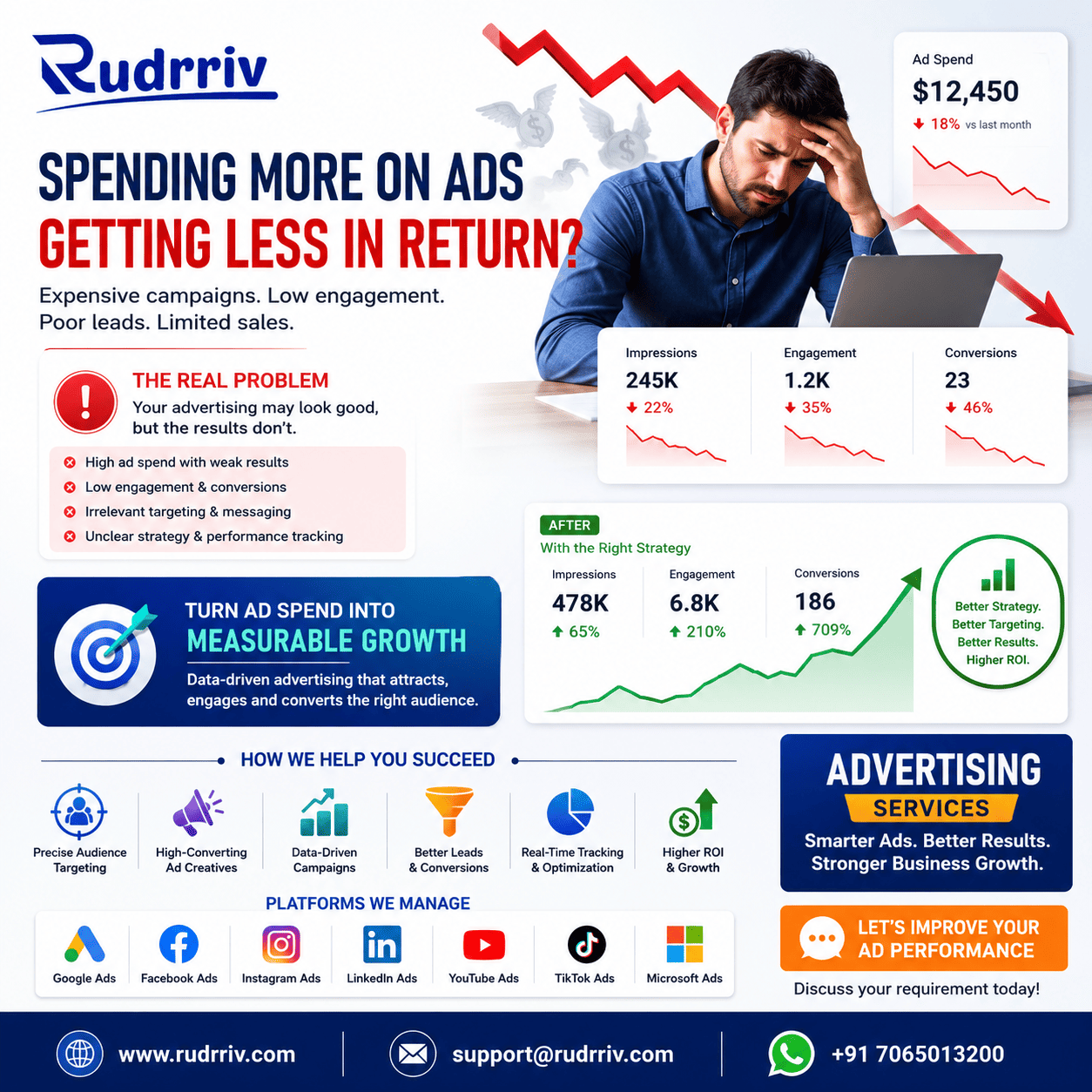
Quick Answer: How Much Should a Business Spend?
Start with an allowable customer acquisition cost, not a generic revenue percentage. Estimate the contribution from a new customer after product, fulfilment, transaction, sales, and servicing costs. Include repeat-purchase value only when reliable evidence supports it. The remainder sets the acquisition-cost boundary.
Decide how many qualified outcomes are needed to answer one question. Multiply that number by the target acquisition cost, then add creative, landing-page, tracking, tools, management, and a controlled contingency. The result is an all-in test budget.
Use revenue percentages only as a reasonableness check. New businesses should protect cash and test narrowly; businesses with validated economics can fund larger or separate tests for demand capture, prospecting, retargeting, and experimentation.
Key Takeaways
- No universal percentage works: margin, customer value, capacity, sales cycle, and cash position matter more than revenue alone.
- A test must answer one decision: define the audience, offer, channel, conversion, and success rule before setting spend.
- Calculate from outcomes: required qualified conversions multiplied by target acquisition cost gives a defensible media starting point.
- Budget for execution: creative, landing pages, tracking, tools, management, and follow-up are part of the advertising investment.
- Match time to behavior: the test must cover normal demand patterns and the delay between an ad interaction and a verified sale or lead.
- Do not scale bad data: validate tracking, lead quality, fulfilment capacity, and economics before increasing spend.
- Protect the downside: the business should remain financially stable even if the first test produces no profitable result.
Table of Contents
- Start with unit economics
- Define what the test must prove
- Choose channels from customer intent
- Calculate a minimum viable test budget
- Fund the complete advertising test
- Match test length to the buying cycle
- Review realistic budget examples
- Scale, pause, or redesign
- Avoid inconclusive budget mistakes
- Summarize the budget decision
Start With Unit Economics, Not a Fixed Percentage
Start with the maximum amount the business can responsibly pay for a desired customer outcome. Revenue alone is insufficient: sales can still destroy cash when margins are low, returns are high, follow-up is expensive, or fulfilment cannot absorb demand.
Estimate an allowable acquisition cost
Calculate gross profit from the first transaction, subtract variable fulfilment and servicing costs, and reserve the profit the business wants to retain. The remainder is the maximum acquisition cost. For lead generation, work backward from close rate: if one in five qualified leads becomes a customer, the allowable lead cost is about one-fifth of the allowable customer acquisition cost.
Repeat purchases can support a higher acquisition budget only when retention evidence is reliable. Prefer realized cohort data and do not use optimistic lifetime value to justify unaffordable spend.
Practical rule: approve the test only when the business can state its target outcome, maximum acceptable acquisition cost, cash limit, and operational capacity in plain language.
Use revenue share as a cross-check
A revenue percentage can reserve a marketing envelope or compare periods, but it cannot show whether a specific campaign is feasible. Businesses with similar revenue may have very different margins, capacity, seasonality, and growth needs.
Compare the calculated test with available cash. If it is unaffordable, narrow the market, audience, offer, or conversion path instead of underfunding several channels.
Define What the Advertising Test Must Prove
A realistic test budget is attached to one decision. “See whether ads work” is too broad. Ask whether a defined channel, audience, and offer can produce a verified outcome within a stated cost boundary.
Write the test statement before building campaigns:
- Audience: the specific customer group and geography.
- Offer: the product, service, incentive, or action being promoted.
- Channel: where the audience is expected to discover or search for it.
- Primary outcome: a verified purchase, qualified lead, booked call, accepted opportunity, or other meaningful event.
- Decision threshold: the cost, quality, volume, or learning required to scale, revise, or stop.
- Test boundary: the maximum spend and latest review date.
Install and test measurement before launch. Google Analytics defines a key event as an action important to the business. Review the official Google Analytics guidance on key events when designing a website measurement plan.
Choose Channels Based on Customer Intent
Channel choice changes how quickly spend produces useful evidence. Search captures expressed demand; paid social supports discovery and creative testing; retargeting reaches previous visitors but is limited by audience size. Match the test to customer intent rather than headline click cost.
Use the comparison below to match the first test to customer behavior instead of dividing a limited budget equally across platforms.
| Advertising approach | Strongest use | Test-budget implication | Main risk |
|---|---|---|---|
| High-intent search | Capturing people actively looking for a defined solution | Budget must cover realistic click costs and enough qualified searches | Broad queries can consume spend without commercial intent |
| Paid social prospecting | Introducing a visual offer or educating a defined audience | Requires several creative angles and enough delivery to compare them | Cheap clicks may not translate into qualified outcomes |
| Retargeting | Re-engaging recent visitors, viewers, or existing prospects | Usually limited by audience size rather than available cash | Overfrequency and weak incrementality can distort results |
| B2B professional networks | Reaching specific roles, industries, or account groups | Higher interaction costs may be acceptable when deal value and lead quality support them | Small samples and long sales cycles delay conclusions |
| Shopping or marketplace ads | Promoting products with structured feeds and clear purchase paths | Budget must include feed quality, pricing competitiveness, and margin by product | Revenue can look strong while low-margin products lose money |
Prioritize the channel closest to a reliably measured customer action. Add another only when the first test reaches a clear learning limit or the journey requires it.
Calculate a Minimum Viable Advertising Test Budget
Use a simple outcome-based formula:
Media test budget = required qualified outcomes × target cost per outcome.
All-in test budget = media + creative + landing experience + tracking + tools + management + contingency.
Required outcomes are not a universal platform number. A test for a broken landing page needs less evidence than one used to forecast acquisition economics. B2B teams may review fewer qualified opportunities in depth, while ecommerce teams may need more purchase observations.
Convert the total into a daily budget carefully
Divide media spend by active test days, then verify platform pacing. Google Ads uses an average daily budget and allows daily variation within spending limits. Review the current Google Ads average daily budget documentation before translating a fixed test amount into campaign settings.
Do not set a daily budget too low to reach the audience or gather useful outcomes. If the amount is unaffordable, narrow geography, audience, products, keywords, or the test question.
Separate affordability from statistical confidence
The correct budget is constrained by evidence needs and cash tolerance. If the market cannot produce enough data within an affordable limit, improve demand, the offer, measurement, or the landing experience before buying more traffic.
Fund the Complete Test, Not Media Alone
Media is one line in the budget. Tests become inconclusive when the business buys traffic but underfunds the work needed to turn it into trustworthy evidence.
- Creative and copy: enough distinct concepts to test the message, not dozens of minor variations.
- Landing experience: a page that matches the ad promise, loads reliably, explains the offer, and makes the next step clear.
- Measurement: website, phone, CRM, ecommerce, or offline tracking that distinguishes valid outcomes from duplicates and spam.
- Sales follow-up: response time, qualification criteria, call handling, and outcome feedback for lead-generation campaigns.
- Campaign operations: setup, exclusions, audience controls, feed work, policy review, monitoring, analysis, and documented changes.
- Contingency: a limited reserve for replacing weak creative, correcting tracking, or extending the test when conversion lag is longer than expected.
Configure website conversion measurement before meaningful spend. The official Google Ads web conversion setup guidance explains how website actions are used to evaluate campaign performance. Also verify consent, data retention, access, and regional privacy requirements.
Match Test Length to the Buying Cycle
Budget and duration must be designed together. A short test may suit a frequent purchase but be meaningless for enterprise software, property, or professional services with long evaluation cycles.
Allow for conversion lag
Measure time from first interaction to verified outcome, including qualification, demonstrations, approvals, and returns. Review early delivery and tracking signals, but do not declare final acquisition cost before outcomes mature.
Keep the test stable enough to interpret
Frequent changes to audience, bidding, creative, and pages make results hard to attribute. Change one meaningful variable at a time when volume permits. Google Ads can split traffic and budget between campaign versions; the official custom experiment guidance explains how those comparisons are structured.
Monitor throughout, but agree the decision window in advance. Stop for broken tracking, policy problems, unsafe claims, inventory constraints, or severe lead-quality issues; otherwise avoid reacting to isolated days.
Three Realistic Advertising Budget Examples
These are illustrations, not benchmarks. Replace every assumption with the business's own data.
Local professional-service firm
A local advisory firm tests high-intent search for one service in one city. At $80 per qualified consultation and a target of 15 consultations, media is $1,200. Adding $450 for the landing page, call tracking, setup, and analysis creates a $1,650 all-in test.
Spreading the amount across several channels and services would weaken the result. The narrow test better matches intent and supports consistent qualification.
Ecommerce product launch
An ecommerce business has a $42 contribution per order and reserves $12 profit, leaving a $30 allowable acquisition cost. For 35 purchases, media is $1,050. It adds $700 for creative, page testing, feed checks, tracking, and management, making the all-in test $1,750.
The test should be judged on valid purchases, margin after discounts and returns, and customer fit—not revenue alone.
B2B subscription startup
A subscription startup with limited close-rate data tests one role, one problem, and one lead offer. It budgets $2,400 for media and $1,600 for research, messaging, the landing page, CRM tracking, and sales feedback. The decision is whether the offer attracts the right roles and produces sales-accepted conversations.
Because the sales cycle is long, the team uses early lead-quality criteria and a later pipeline review. Specialist guidance may help connect campaign and sales data.
Scale, Pause, or Redesign After the Test
A test succeeds when it produces a useful decision. Review data quality first, then customer quality, economics, and capacity.
Scale when the system is repeatable
- Tracking and offline outcome feedback are reliable.
- The intended audience and offer produce qualified customers.
- Acquisition cost remains within the agreed economic limit after real fulfilment costs.
- The business can serve additional demand without harming quality.
- Creative, landing pages, and sales follow-up can be maintained as volume rises.
Increase budget in controlled steps. Efficiency may decline as the campaign reaches broader, less-qualified audiences.
Pause when the evidence is invalid
Pause when conversion tracking is broken, campaign settings do not match the test, lead spam overwhelms valid demand, stock or service capacity is unavailable, or the advertising claim cannot be supported. Fix the condition before buying more traffic.
Redesign when the learning is clear
Redesign when the audience engages but rejects the offer, the page fails, leads are consistently disqualified, or channel behavior does not fit the purchase. Record what changed and what the next version must prove.
Avoid Budget Mistakes That Make Tests Inconclusive
- Starting from an arbitrary monthly amount: the campaign has no connection to customer value or the evidence required.
- Testing too many variables: several channels, audiences, offers, and creatives divide spend until none receives a fair test.
- Counting weak outcomes: clicks, video views, or unqualified forms replace the business result the campaign was meant to produce.
- Ignoring non-media costs: the team cannot improve creative, repair the landing page, or verify conversions after launch.
- Stopping after a few days: normal demand variation and conversion lag are mistaken for a stable result.
- Changing settings repeatedly: the final data cannot explain which decision caused the outcome.
- Scaling before fulfilment is ready: additional leads or orders reduce service quality and damage economics.
- Using optimistic lifetime value: uncertain future purchases justify unaffordable acquisition costs today.
Before approval, use this final decision check to confirm that the test is financially safe and capable of producing a useful answer.
| Decision check | Question to answer | Evidence required before launch |
|---|---|---|
| Financial safety | Can the business lose the full test amount without harming essential operations? | Cash limit, margin model, capacity, and stop authority |
| Measurement readiness | Will the campaign record the outcome that matters? | Tested events, lead-source capture, CRM or order validation |
| Channel fit | Does the platform match how the customer discovers or searches? | Audience behavior, demand signals, offer and creative plan |
| Decision quality | What will scale, revise, or stop the test? | Predefined thresholds, review date, and responsible owner |
| Execution capacity | Can the business maintain creative, pages, follow-up, and fulfilment? | Named owners, response standards, inventory or service capacity |
When Specialist Support Improves the Test
External support is useful when the team cannot connect economics, audience strategy, creative, landing-page performance, measurement, and sales outcomes. The requirement may be a defined setup, a planning project, a dedicated specialist, or ongoing support.
Rudrriv can help organizations access relevant capability through dedicated specialist support or broader business solutions. A useful engagement should begin with the decision to be made, the available evidence, the budget boundary, and clear ownership of accounts, data, creative assets, and handover.
Summary: Set a Budget That Can Answer a Question
Do not choose advertising spend from a universal percentage, competitor budget, or platform recommendation alone. Start with customer value, allowable acquisition cost, the qualified outcome, and the evidence required.
Add execution costs, confirm financial safety, and match duration to customer behavior and conversion lag. Keep the test narrow and define scale, redesign, and stop rules in advance.
The realistic budget is therefore not the smallest amount that can launch ads. It is the smallest all-in amount that can answer a meaningful business question without putting essential operations at risk.
Advertising Budget FAQs
How much should a business spend on advertising and how to set a realistic test budget?
Work backward from an acceptable acquisition cost, the qualified outcomes needed for a decision, and all execution costs. The full amount must be affordable to lose. Define scale, revise, and stop rules before launch, then run the test long enough to observe the buying cycle.
Should advertising spend be a percentage of revenue?
Use a revenue percentage only as a planning cross-check. Businesses with the same revenue can have different margins, retention, sales cycles, and capacity. Start with unit economics and cash flow, then confirm the result fits the wider marketing budget.
What is the minimum useful advertising test budget?
There is no universal minimum. The useful minimum is the amount required to generate enough qualified observations to answer one defined question. A budget that buys only a few clicks is usually a delivery check, not a reliable performance test.
How long should an advertising test run?
Cover normal demand patterns and the customer decision cycle. A same-day purchase can be assessed sooner than a long B2B sale. Predefine the review date, keep settings reasonably stable, and account for conversion lag.
Should a small business start with search ads or social ads?
Start with the channel that matches customer discovery and intent. Search often fits existing demand; paid social supports visual discovery and education. With limited funds, test one primary channel and one clear offer before expanding.
What costs should be included besides media spend?
Include creative, copy, landing-page work, analytics, call or lead tracking, feeds where relevant, tools, management, and a controlled contingency. Excluding these costs can leave the test unable to measure or improve the customer journey.
How many conversions are enough to judge an advertising test?
It depends on the decision, result variation, and the cost of being wrong. A small sample can reveal broken tracking or a mismatched offer but may not estimate stable acquisition cost. Define the evidence threshold before material spend.
When should a business increase or reduce ad spend?
Increase spend when tracking is reliable, customer quality is acceptable, economics work after fulfilment costs, and capacity exists. Reduce or pause when data is invalid, lead quality is poor, the page is failing, or acquisition cost exceeds the agreed limit.
What should be tracked before advertising begins?
Track the outcome that matters: a validated purchase, qualified lead, appointment, opportunity, or useful call. Verify campaign parameters, events, consent, duplicate prevention, source capture, and offline feedback. Test the complete path before meaningful spend.
How should privacy and consent affect an advertising test?
Use lawful data and audience practices consistent with platform policies. Document tags, pixels, cookies, customer lists, and offline records; obtain consent where required; limit access; and avoid unnecessary personal data. Define measurement expectations before launch.
Need Help Structuring an Advertising Test?
Share the offer, target customer, current economics, available data, preferred channels, and budget boundary. Rudrriv can help clarify the test scope, identify the specialist capability required, and structure measurement and delivery responsibilities without forcing a larger engagement than the decision needs.
Discuss your advertising testAt Rudrriv, we make it easier for businesses to access the right expertise, execute important work, and scale with confidence.