
Are Business Analytics in Demand?
Yes, business analytics are in demand, but the strongest demand is not for people who only produce dashboards. Employers and business teams increasingly need professionals who can define useful metrics, connect fragmented data, test assumptions, explain uncertainty, and turn findings into decisions. The practical question is therefore not simply whether the field is growing; it is which analytics capabilities remain valuable as automation and generative AI make routine reporting faster.
For a career decision, demand depends on the role, industry, location, seniority, and balance of technical and business skills. For an organization, demand appears as a need for better forecasting, customer understanding, operational visibility, pricing, risk control, and performance management. In both cases, analytics creates value only when data is trustworthy and someone owns the resulting decision.
This guide explains where demand comes from, which roles and skills are most resilient, how AI is changing the work, when small and large organizations should invest, and how to start without overbuilding.
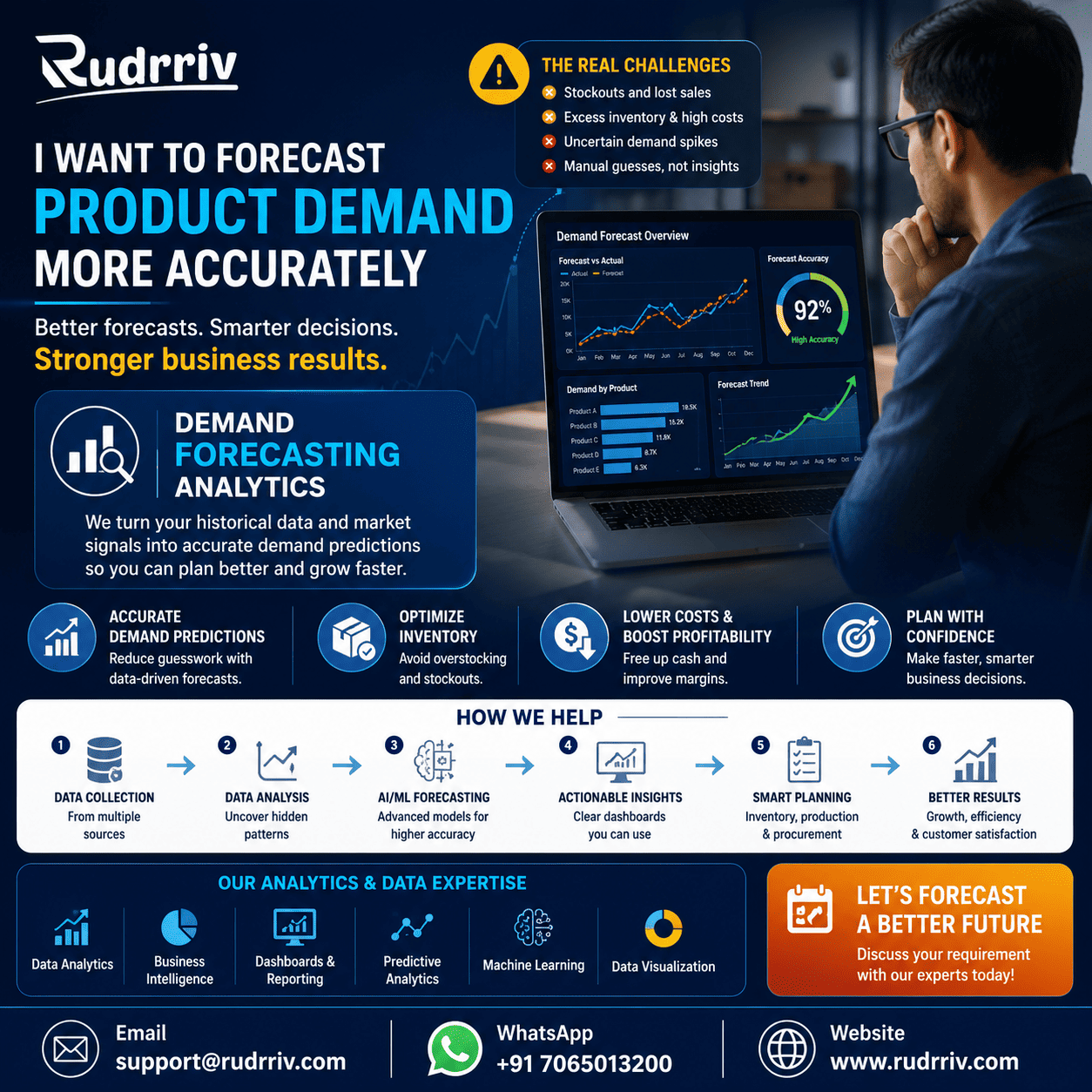
Quick Answer: Are Business Analytics in Demand?
Business analytics remains a high-value capability because organizations generate more data than they can reliably interpret. The demand spans employment, consulting, internal transformation, and managed analytics support. It is visible in roles related to business intelligence, operations research, product analytics, customer analytics, analytics engineering, data science, and decision support.
The important caution is that entry-level reporting tasks are becoming easier to automate. Sustainable demand is shifting toward analysts who combine domain knowledge, SQL and data literacy, metric design, data-quality judgment, experimentation, forecasting, governance, and stakeholder communication.
For businesses, the best starting point is one decision with a clear owner—not a large technology purchase. For professionals, the best starting point is a portfolio that shows how analysis changed a recommendation, exposed a risk, or improved a process.
Key Takeaways
- Demand is broad but uneven: analytics needs differ by industry, geography, company maturity, and role definition.
- Routine reporting is being automated: higher-value work increasingly involves problem framing, validation, interpretation, and action.
- Business context is a differentiator: domain knowledge helps an analyst choose meaningful metrics and avoid technically correct but commercially weak conclusions.
- SQL remains foundational: many analytics roles still require direct access to structured data, even when AI assists with queries.
- Small businesses benefit from focused analytics: a few trusted measures can be more useful than an expensive dashboard estate.
- Data quality and governance affect demand: organizations need people who can establish definitions, ownership, access, and reliable refresh processes.
- Implementation should be phased: validate one decision use case before expanding tools, integrations, and team size.
Table of Contents
- What current demand signals actually mean
- Where organizations use business analytics
- Roles and skills with durable demand
- How AI is changing analytics work
- Business analytics compared with adjacent fields
- Cost and resource decisions for businesses
- How to launch a useful analytics capability
- Why analytics projects fail
- Practical examples by business stage
- Summary
What Current Demand Signals Actually Mean
Demand should be assessed through several signals rather than a single job title. Government occupational outlooks, employer surveys, job postings, internal hiring plans, consulting demand, and the spread of analytics responsibilities into non-technical roles each reveal a different part of the market.
For example, the U.S. Bureau of Labor Statistics publishes outlooks for related occupations such as operations research analysts and data scientists. The World Economic Forum’s Future of Jobs Report 2025 also identifies AI, big data, technological literacy, and analytical thinking as important workforce themes. These sources do not prove that every analytics job is easy to obtain, but they support the broader conclusion that data-driven capability remains strategically important.
Decision rule: interpret “in demand” as demand for a combination of skills and outcomes, not as a guarantee attached to a degree title or software certificate.
Where Organizations Use Business Analytics
Organizations invest in analytics when recurring decisions are too important, too frequent, or too complex to manage through intuition alone. The most valuable use cases usually sit close to revenue, cost, service quality, risk, or resource allocation.
| Business area | Typical analytics question | Useful outcome | Common limitation |
|---|---|---|---|
| Marketing | Which channels and customer segments create qualified demand? | Budget allocation and campaign improvement | Weak attribution or inconsistent tracking |
| Sales | Which opportunities are likely to progress or stall? | Pipeline prioritization and forecasting | Incomplete CRM activity and stage definitions |
| Ecommerce | Where do customers abandon, return, or repurchase? | Conversion, retention, merchandising, and inventory decisions | Disconnected storefront, advertising, and fulfilment data |
| Operations | Which processes create delay, waste, or service variation? | Capacity planning and process improvement | Manual records and inconsistent timestamps |
| Finance | Which products, customers, or regions produce sustainable margin? | Pricing, budgeting, and profitability control | Allocation rules that hide true economics |
| Product | Which behaviors indicate activation, value, or churn? | Roadmap and experience decisions | Vanity metrics without causal evidence |
The pattern is consistent: demand grows when analytics is embedded in a management process. A dashboard with no decision owner may be technically complete but commercially unused.
Roles and Skills with Durable Demand
The most resilient roles combine technical execution with business judgment. Titles vary, so candidates and employers should read responsibilities carefully.
Core role families
- Business intelligence analyst: reporting, semantic definitions, dashboarding, and stakeholder decision support.
- Data analyst: querying, cleaning, exploration, visualization, and recurring analysis.
- Product or marketing analyst: funnels, cohorts, experiments, customer behavior, and growth decisions.
- Operations or supply-chain analyst: forecasting, scheduling, process performance, inventory, and service levels.
- Analytics engineer: transformation pipelines, governed models, testing, and reusable business definitions.
- Data scientist: advanced statistics, prediction, optimization, experimentation, and machine-learning applications.
- Analytics translator or manager: business problem definition, prioritization, adoption, governance, and communication.
Skill stack employers can use
A practical foundation includes spreadsheets, SQL, visualization, statistics, metric design, data-quality checks, and concise business writing. Python or R becomes more important for automation, experimentation, forecasting, and advanced analysis. Cloud warehouses, transformation tools, version control, and semantic layers matter for modern data teams, but tools should follow the role’s actual work.
Communication is not a secondary skill. Analysts must explain assumptions, distinguish correlation from causation, state uncertainty, and recommend a next action. That capability becomes more valuable as AI makes basic charts and summaries easier to generate.
How AI Is Changing Analytics Work
AI is changing the task mix rather than eliminating the need for analytics. It can accelerate query drafting, code explanation, anomaly detection, documentation, chart suggestions, and narrative summaries. It can also produce confident errors, use the wrong metric definition, overlook data leakage, and confuse a plausible story with evidence.
Professionals therefore need to supervise AI-assisted workflows. This includes verifying source tables, testing calculations, checking population definitions, reviewing joins, protecting sensitive data, documenting prompts or transformations where appropriate, and ensuring a human decision owner accepts the conclusion.
The durable advantage is the ability to ask a better question. “Why did revenue decline?” is usually too broad. A stronger analyst decomposes it into price, volume, mix, acquisition, conversion, retention, seasonality, returns, and operational constraints, then tests the most decision-relevant explanations.
Business Analytics Compared with Adjacent Fields
Business analytics overlaps with business analysis, data science, business intelligence, and data engineering, but each emphasizes a different part of the decision system.
| Field | Primary focus | Typical outputs | Best fit |
|---|---|---|---|
| Business analytics | Performance, diagnosis, forecasting, and decisions | Analyses, models, forecasts, recommendations | People who combine data with business context |
| Business intelligence | Consistent reporting and visibility | Dashboards, metrics, semantic models | Recurring management reporting |
| Business analysis | Processes, requirements, and organizational change | Requirements, process maps, solution definitions | Transformation and systems projects |
| Data science | Statistical and machine-learning methods | Experiments, predictive models, optimization | Complex prediction or productized intelligence |
| Data engineering | Reliable movement and storage of data | Pipelines, platforms, quality controls | Scalable and governed data foundations |
A small company may need one versatile analyst. A larger organization may separate these responsibilities. The correct design depends on data volume, decision complexity, regulatory requirements, and how frequently insights must be delivered.
Cost and Resource Decisions for Businesses
Business analytics costs are driven less by chart count than by data readiness. Important variables include the number of source systems, historical data quality, identity matching, refresh frequency, access controls, licensing, integration work, modelling complexity, testing, documentation, and user support.
A focused SMB pilot may use existing spreadsheets, a database, and a visualization platform. An enterprise programme may require a cloud warehouse, transformation pipelines, governed definitions, role-based access, quality monitoring, and dedicated owners. The cheapest tool can become expensive when teams spend hours reconciling inconsistent numbers.
- Use internal staff when the organization already has clean data, clear ownership, and recurring analytical work.
- Use a defined project for a diagnostic, dashboard redesign, data model, forecasting model, or initial implementation.
- Use ongoing specialist support when analysis, maintenance, and stakeholder requests recur but do not justify a full internal team.
- Use a managed team when multiple disciplines—data engineering, analytics, visualization, governance, and AI—must operate together.
How to Launch a Useful Analytics Capability
Start with the decision, not the platform. A practical implementation sequence is:
- Name one recurring business decision and the person accountable for it.
- Define the metric, population, time window, and exclusions in plain language.
- Identify source systems and test whether the required fields are complete and trustworthy.
- Create the smallest repeatable analysis that can change an action.
- Review the result with users and document questions, exceptions, and decisions.
- Automate only after the logic is accepted and the source data is stable.
- Assign ownership for refreshes, access, quality checks, definitions, and changes.
- Measure whether the analysis is used and whether decision quality improves.
Relevant guidance on accessible and interoperable web reporting can be checked through W3C accessibility standards. For organizations building data-enabled applications, MDN Web API documentation can help technical teams assess browser capabilities and integration choices.
Why Analytics Projects Fail
Analytics projects often fail because they solve a reporting request without resolving the underlying decision process. Common failure modes include:
- buying tools before defining decisions and owners;
- using different definitions for the same metric;
- building dashboards on unreliable source data;
- measuring activity instead of customer or operational outcomes;
- treating correlation as proof of causation;
- ignoring access control, privacy, and data-retention requirements;
- automating a workflow before users trust the logic;
- creating reports without training, documentation, or maintenance ownership;
- allowing AI-generated analysis to bypass verification.
The corrective action is simple but disciplined: reduce scope, agree definitions, test data quality, connect the output to a named decision, and review actual usage.
Practical Examples by Business Stage
Startup validating product demand
A startup assumes it needs a sophisticated predictive model. Its real problem is that activation and retention are not defined consistently. The better decision is to establish an event taxonomy, a small cohort report, and interviews around early drop-off. Specialist support may help design reliable tracking before advanced modelling.
Ecommerce business with rising advertising cost
The team focuses on platform-reported return on ad spend, but channel data does not account for repeat orders, returns, or margin. A better analytics approach connects acquisition source, customer cohort, contribution margin, and repurchase behavior. This changes budget decisions without requiring an immediate enterprise platform.
SMB with spreadsheet-based operations
Managers receive weekly spreadsheets but reconcile totals manually. The useful first step is not dozens of dashboards; it is a governed data extract, agreed definitions, exception reporting, and a clear owner. Once trusted, the workflow can be automated and expanded.
Enterprise team scaling AI use cases
An enterprise has multiple AI pilots but inconsistent data access and metric definitions. The immediate analytics demand is for data governance, reusable models, quality tests, evaluation criteria, and business owners—not another isolated prototype. A cross-functional data and AI capability can reduce duplication and improve accountability.
Summary
Business analytics are in demand because organizations still need reliable ways to understand performance, predict likely outcomes, allocate resources, and decide what to change. The field is evolving: routine reporting is easier to automate, while problem framing, domain expertise, data quality, governance, experimentation, and decision communication are becoming more important.
Professionals should build evidence of applied work rather than relying only on certificates. Businesses should begin with one high-value decision and expand after users trust the data and act on the insight. Scope, budget, timeline, maintenance, ownership, quality assurance, and handover should be agreed before a larger analytics implementation begins.
Where requirements are unclear or several capabilities must work together, Rudrriv can support technical discovery, data and AI planning, defined analytics projects, dedicated specialists, or ongoing delivery through its Data and AI capabilities.
Frequently Asked Questions
Are business analytics in demand in 2026?
Yes. Organizations continue to need people and systems that can turn operational, customer, financial, product, and market data into decisions. Demand is strongest where analytics is connected to measurable business questions rather than dashboard production alone. Candidates and providers should verify demand by role, industry, geography, and required tool set.
Which business analytics roles are most in demand?
Demand commonly spans business intelligence analysts, data analysts, product analysts, marketing analysts, operations analysts, analytics engineers, data scientists, and analytics managers. Titles overlap, so compare the actual work: reporting, experimentation, forecasting, data modelling, stakeholder communication, or decision support.
Is business analytics a good career for non-technical professionals?
It can be. Domain knowledge in finance, marketing, operations, supply chain, healthcare, or ecommerce can be a major advantage. A non-technical professional still needs data literacy, spreadsheet competence, structured problem solving, and enough SQL and visualization knowledge to work independently and challenge weak conclusions.
Will AI reduce demand for business analysts?
AI will automate parts of data preparation, query writing, chart creation, and narrative summaries, but it also raises the value of problem framing, data validation, causal reasoning, governance, and decision communication. The safer career strategy is to learn how to supervise AI-assisted analysis rather than compete with routine output.
What skills make a business analytics professional employable?
A practical combination includes SQL, spreadsheets, data visualization, statistics, metric design, business process understanding, data quality checks, and clear communication. Depending on the role, Python, experimentation, forecasting, cloud data platforms, and semantic modelling may also matter.
Do small businesses need business analytics?
Small businesses need proportionate analytics, not necessarily an enterprise platform. A reliable sales view, cash and margin reporting, customer retention measures, marketing attribution, and inventory visibility may create more value than a large dashboard programme. Start with a few recurring decisions and trustworthy source data.
How much does it cost to implement business analytics?
Cost depends on data sources, data quality, integration complexity, reporting frequency, security requirements, tool licensing, and internal capability. A focused pilot using existing platforms can be modest, while an enterprise data warehouse and governed analytics programme requires broader investment. Scope the decision use cases before estimating cost.
What is the difference between business analytics and data science?
Business analytics usually emphasizes business performance, reporting, diagnosis, forecasting, and decision support. Data science more often includes advanced statistical modelling, machine learning, and productized predictive systems. In practice the fields overlap, and the right role depends on the decisions and technical depth required.
How should a company start a business analytics programme?
Begin with one important decision, name the owner, define the metric, identify the source systems, assess data quality, and agree how the insight will change an action. Build a small repeatable workflow, document definitions, test adoption, and expand only after the first use case is trusted.
How can a business avoid failed analytics projects?
Avoid starting with tools or a large dashboard inventory. Confirm decision ownership, metric definitions, source-of-truth rules, access controls, refresh expectations, data-quality responsibilities, and how users will act on findings. Review usage and business decisions, not only report completion.
Need Help Defining an Analytics Use Case?
Share the business decision, available data, current tools, reporting problems, users, security constraints, and desired operating rhythm. Rudrriv can help clarify requirements and structure a proportionate analytics engagement.
Discuss your requirementAt Rudrriv, we make it easier for businesses to access the right expertise, execute important work, and scale with confidence.