
Ad Strategy Before Creative and Media Buying
What should an advertising strategy include before creative production and media buying begin? It should define the business outcome, priority customer, problem or opportunity, value proposition, offer, evidence, message hierarchy, customer journey, media roles, budget logic, measurement plan, legal and privacy constraints, test hypotheses, and decision ownership. Creative production and media buying should begin only when those choices are clear enough that teams do not have to invent the strategy while making assets or setting up campaigns.
Advertising cannot compensate for an unclear offer, weak product-market fit, an unprepared landing experience, unreliable tracking, or a sales process that cannot handle demand. Starting with formats and channels often commits money before the organization agrees the behaviour to influence and evidence of progress.
A practical starting point is a concise pre-production strategy document approved by the relevant commercial, marketing, product, sales, legal, analytics, and operational stakeholders. It should guide production, media, measurement, and optimization while remaining open to evidence-led change.
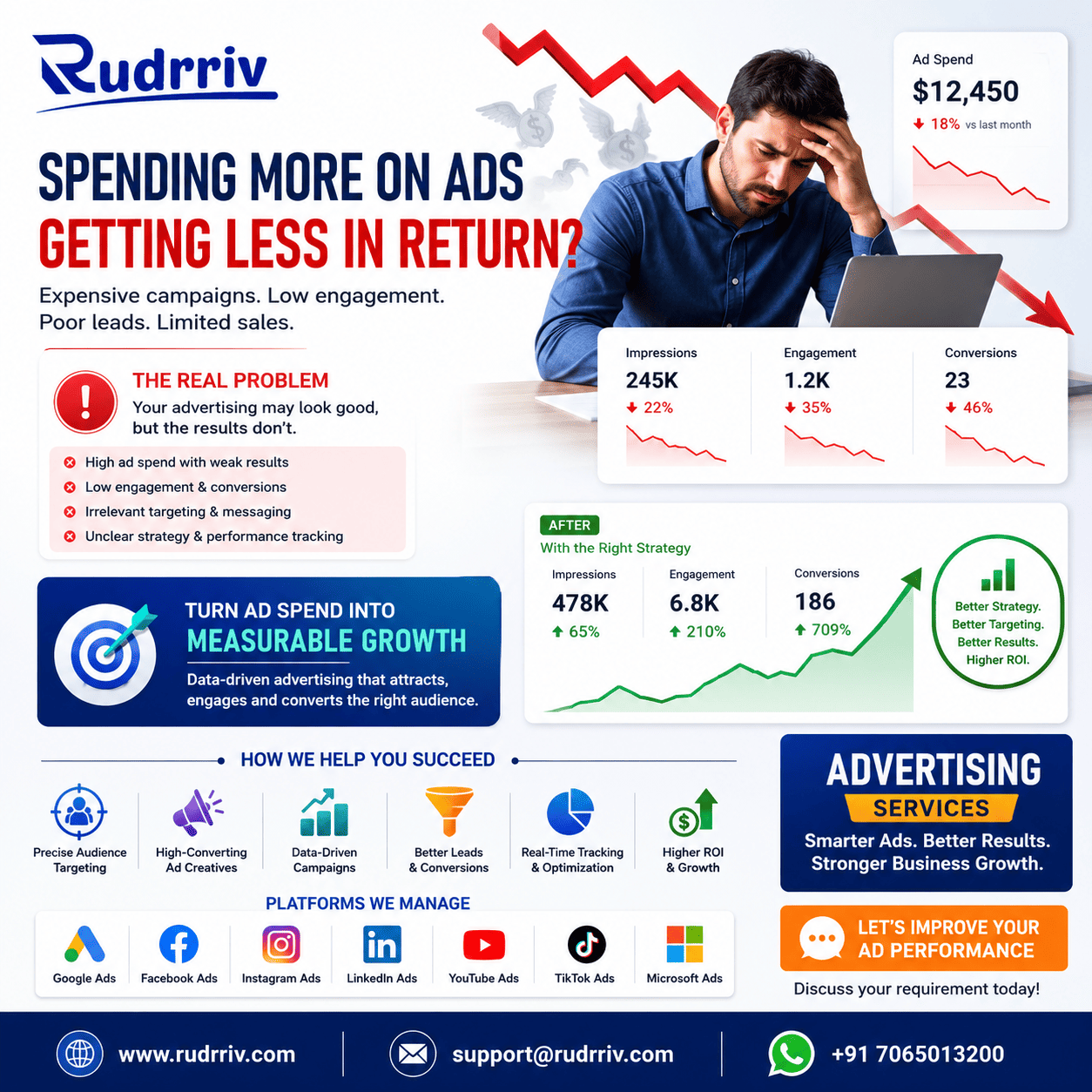
Quick Answer: What the Advertising Strategy Should Include
An advertising strategy should connect a specific business outcome to a specific audience response. It must state what the organization is trying to change, who matters most, what those people currently believe or do, what proposition may move them, why they should believe it, and which customer action the campaign should make easier.
It should then translate that logic into execution boundaries: the role of each channel, the destinations and follow-up journey, asset requirements, budget constraints, conversion definitions, privacy and compliance requirements, test design, reporting cadence, and the people authorized to approve or change the plan.
Do not approve full production or committed media spend until the team has validated the offer, evidence, destination experience, tracking, capacity, and claims. When uncertainty remains, use a smaller discovery, prototype, message test, or limited media pilot rather than disguising assumptions as a finished strategy.
Key Takeaways
- Start with the business decision: define the commercial outcome and customer behaviour before selecting channels or formats.
- Audience strategy needs context: document triggers, barriers, alternatives, evidence needs, and buying roles rather than relying only on demographics.
- The offer must be executable: pricing, availability, eligibility, fulfilment, landing pages, sales follow-up, and proof should support the promise made in advertising.
- Creative and media briefs are downstream: they should express an approved strategy, not compensate for strategic ambiguity.
- Measurement begins before launch: agree conversion definitions, tracking ownership, attribution assumptions, test hypotheses, and decision rules in advance.
- Budget is more than media: include research, production, adaptation, destinations, measurement, verification, testing, fees, and contingency.
- Strategy requires maintenance: review it when customer evidence, economics, operations, regulation, or market conditions change materially.
Table of Contents
- Lock the outcome before selecting channels
- Define the audience by decision context
- Make the proposition and proof production-ready
- Turn strategy into a focused creative brief
- Assign a clear role to every media channel
- Build measurement, privacy, and testing in
- Match budget, resources, and timing
- Use the pre-production strategy matrix
- Learn from three practical decisions
- Summary
Lock the Outcome Before Selecting Channels
The strategy should define the business outcome in operational terms. “Increase awareness,” “generate leads,” or “drive sales” is too broad until the team identifies the product, market, time horizon, valuable customer action, and operational constraint. An ecommerce campaign may prioritize first orders for a category; a B2B campaign may prioritize qualified conversations; a local service campaign may prioritize appointments within serviceable locations.
Platform objectives should follow this decision rather than replace it. For example, official guidance on choosing a LinkedIn advertising objective describes the objective as the action the advertiser wants customers to take. That platform setting is useful, but the business still has to define which actions are valuable, how quality will be checked, and what happens after the platform records them.
Decision rule: no channel should enter the plan unless the team can explain the customer role it serves, the evidence it can produce, and the action it is expected to support.
A complete outcome statement normally includes the priority product or service, geography, customer segment, campaign period, intended behaviour, commercial guardrails, capacity limits, and a small set of primary and diagnostic measures. It should also identify what the campaign is not expected to solve, such as an uncompetitive price, poor retention, weak delivery capacity, or an incomplete product.
Define the Audience by Decision Context
An actionable audience definition explains why a person may act now, what prevents action, which alternatives they consider, who influences the decision, and what information reduces uncertainty. Age, location, industry, job title, and interests may help media targeting, but they rarely explain the complete buying situation.
Document the buying situation
- Trigger: the event, problem, goal, deadline, or change that makes the offer relevant.
- Current behaviour: what people do today, including workarounds, competing products, search habits, or inaction.
- Barrier: price, effort, trust, risk, complexity, timing, internal approval, habit, or lack of urgency.
- Decision roles: user, buyer, approver, influencer, gatekeeper, or beneficiary.
- Evidence need: demonstration, comparison, specification, case evidence, policy, review, guarantee, consultation, or trial.
- Next step: the smallest realistic action that moves the customer closer to the desired outcome.
Use available evidence such as sales-call notes, customer interviews, site search terms, analytics, service questions, reviews, lost-deal reasons, and search-query data. The goal is not a decorative persona, but a defensible view of the customer problem and language.
Make the Proposition and Proof Production-Ready
The strategy must state what the audience is being asked to believe or do and why the offer deserves attention. A proposition is not a slogan. It is the reason the chosen audience should prefer this action, product, service, or viewpoint in the defined situation.
Resolve the offer before writing ads
Confirm the product or service, price or pricing logic, availability, geography, eligibility, fulfilment, terms, urgency, destination, follow-up process, and exclusions. If the advertisement promises a consultation, delivery date, trial, discount, return policy, or performance benefit, the business must be able to support that promise consistently.
Build a claim-and-proof register
List every objective claim that may appear in advertising and the evidence available to support it. The FTC advertising and marketing guidance states that advertising claims must be truthful, not deceptive or unfair, and evidence-based. Other markets and regulated categories may impose additional rules, so legal review should reflect the campaign’s location, audience, product, and medium.
The result should be a message hierarchy with one primary promise, selected supporting reasons, approved proof, necessary qualifications, and a clear call to action. This prevents every asset from trying to communicate every benefit.
Turn Strategy Into a Focused Creative Brief
The creative brief should convert the approved strategy into a production assignment. It should not reopen core decisions unless research or feasibility work reveals a material problem. The brief needs enough freedom for creative thinking but enough discipline to prevent the work from drifting toward attractive but irrelevant ideas.
Include the audience situation, communication objective, single-minded proposition, proof, tone, required response, mandatory claims or disclaimers, brand rules, destinations, deliverable list, format specifications, localization needs, accessibility requirements, review process, and testing plan. Separate true mandatories from preferences so production teams know what cannot change.
Useful distinction: the advertising strategy decides what the campaign must achieve and why. The creative brief defines what the creative work must communicate. The media brief defines where, when, and under what buying conditions the message should reach people.
A production-ready strategy defines the asset system, not only a hero concept. Specify the messages, offers, audiences, formats, languages, destinations, and refresh cycles required so one polished asset does not become the entire campaign system.
Assign a Clear Role to Every Media Channel
Media strategy should explain the job of each channel before a buyer allocates spend. Search may capture existing demand. Video may demonstrate or frame a problem. Social placements may build familiarity, retarget engaged visitors, or generate direct response. Retail media may reach shoppers near a purchase decision. Out-of-home, audio, partnerships, or print may provide reach or context that digital channels cannot reproduce in the same way.
For each channel, define the audience, customer moment, message, placement context, destination, buying method, frequency, format, data dependency, suitability controls, and measures. The IAB guide to brand safety and suitability reinforces that placement controls belong in pre-campaign planning.
Avoid forcing every channel to prove itself through the same metric. A channel used to introduce a new proposition may require different evidence from one used to recover abandoned demand. The overall measurement framework should still connect these roles to the business outcome and prevent weak proxy metrics from becoming the final definition of success.
Build Measurement, Privacy, and Testing Into the Plan
Measurement architecture should be approved before setup. Define primary and secondary conversions, quality feedback, offline events, attribution assumptions, reporting windows, data owners, naming conventions, access, and the decisions each metric informs. Official Google Ads guidance on web conversion measurement explains how actions after ad interactions are measured; the business must still decide which actions are valuable and how quality will be checked.
Write hypotheses before tests
A useful test states the variable, audience, expected effect, success measure, minimum decision window, and action to take after the result. Test one interpretable question at a time where practical. Official guidance on Google Ads custom experiments describes comparing an experiment with an original campaign over time. The broader principle is to preserve a meaningful control and avoid changing so many variables that the result cannot guide the next decision.
Confirm privacy and consent requirements
Targeting, tracking, profiling, customer lists, cookies, pixels, and data sharing may create privacy obligations that vary by jurisdiction and technology. The UK Information Commissioner’s Office explains in its guidance on online advertising technologies that consent requirements can apply to storage and access technologies used for advertising and associated measurement. Before launch, confirm the legal basis, consent experience, disclosures, vendor roles, retention, audience-source permissions, opt-out handling, and signal loss expected in the markets being targeted.
Match Budget, Resources, and Timing to the Strategy
The budget should cover the complete learning and delivery system, not only the amount paid to media owners. Depending on the campaign, costs may include research, strategy, copy, design, video, photography, localization, adaptation, landing pages, development, analytics, consent tooling, verification, platform or agency fees, testing, and contingency.
Do not use a universal percentage split. A brand with a tested proposition and asset library may fund distribution and experimentation more heavily. A new offer may need research, proof, landing-page work, and production first. A complex B2B journey may also require sales enablement and lead-quality feedback.
Set a launch-readiness gate
- The offer, claims, pricing, eligibility, inventory, and fulfilment are confirmed.
- The destination works on priority devices and supports the intended action.
- Tracking, consent, analytics, and lead or order feedback have been tested.
- Creative deliverables match actual media specifications and campaign volume.
- Approvers, escalation owners, turnaround times, and change-control rules are documented.
- The budget includes a defined learning allowance and a decision point before further commitment.
Timing should include strategy approval, production, legal review, platform review, tagging, quality assurance, trafficking, learning periods, reporting, and creative refresh. Compressing the timeline usually transfers risk rather than removing work.
Use This Pre-Production Strategy Matrix
The following matrix can be used as a readiness review. The final column should contain an approved, usable output rather than a broad statement of intent.
| Strategy element | Decision to make | Evidence or input | Required output |
|---|---|---|---|
| Business outcome | What commercial or operational change matters? | Business plan, margins, capacity, sales priorities | Outcome statement with guardrails |
| Audience | Who is most relevant in which decision situation? | Customer research, sales data, analytics, reviews | Priority audience and buying-context definition |
| Problem and trigger | Why might the audience act now? | Interviews, search behaviour, support and sales notes | Trigger, barrier, and current-behaviour summary |
| Proposition and offer | What should people believe or do? | Product facts, pricing, operations, competitor context | Primary promise, offer, exclusions, and call to action |
| Proof and claims | Why should the message be trusted? | Product evidence, policies, demonstrations, approvals | Claim-and-proof register with qualifications |
| Customer journey | What happens after exposure or response? | Landing pages, forms, checkout, sales and service process | Journey map with owners and failure points |
| Media roles | What job does each channel perform? | Audience availability, context, formats, buying options | Channel role, placement, destination, and KPI logic |
| Measurement | How will progress and quality be judged? | Analytics, CRM, commerce, offline data, attribution limits | Conversion map, reporting plan, and decision rules |
| Budget and resources | What can be produced, tested, and sustained? | Media costs, production scope, fees, tools, internal time | Full cost plan, test allowance, and contingency |
| Risk and governance | What could cause harm, waste, or delay? | Legal, privacy, brand, security, operational review | Approvals, controls, escalation, and change log |
A strategy is complete when the entries are specific, supported, approved, and usable by the teams responsible for production, media, measurement, review, and follow-up.
Learn From Three Practical Pre-Production Decisions
Ecommerce brand: fix the offer before making six videos
A growing ecommerce brand requested multiple paid-social videos before deciding whether to lead with a discount, bundle, or performance proof. Margin, stock, repeat purchase, and landing-page readiness differed by offer. The better decision was to select one priority product and offer, validate the proof, prepare the destination, and define purchase-quality measures before producing the full asset set.
B2B startup: define lead quality before buying reach
A software startup assumed broad job-title targeting and a demo form would create useful pipeline. Sales records showed that users, evaluators, budget owners, and procurement teams needed different proof. The better strategy defined one buying situation, priority account profile, stakeholder roles, a proof asset, and a sales-response standard. Media could then optimize toward qualified conversations rather than raw forms.
Professional firm: protect capacity before scaling
A regional professional firm wanted to increase search and social spend across every service. Capacity and profitability varied by location. The better plan prioritized serviceable areas, confirmed booking availability, approved claims, tested call and form tracking, and reviewed capacity weekly. Spend increased only where the business could handle the demand professionally.
Use Specialist Support When Strategy Inputs Are Unresolved
External support is useful when teams agree that advertising is needed but cannot align the commercial objective, customer evidence, proposition, creative system, landing experience, measurement architecture, or delivery responsibilities. A defined discovery project can resolve these inputs before a larger production or media commitment. Rudrriv can provide contextually relevant support through business solutions and design specialists when the requirement calls for strategy translation, campaign assets, landing experiences, or ongoing execution capacity.
The support model should match the uncertainty: a workshop for alignment, a defined project for research and production, or ongoing support for testing, adaptation, quality assurance, and channel coordination.
Summary
Before creative production and media buying begin, the advertising strategy should settle the business outcome, customer decision context, proposition, offer, proof, message hierarchy, journey, media roles, budget, measurement, privacy, testing, and governance. These choices create a common operating brief for everyone who will produce, approve, buy, measure, or optimize the campaign.
The strategy does not need to predict every result. It must separate evidence from assumptions, identify what to test, and define the response to meaningful results. When the offer, destination, tracking, claims, or capacity are not ready, use a smaller validation stage before full production or committed spend.
Advertising Strategy FAQs Before Production
What should an advertising strategy include before creative production and media buying begin?
It should include a business objective, priority audience, customer problem, proposition, offer, proof, message hierarchy, journey, channel roles, budget logic, measurement, privacy and compliance requirements, test hypotheses, responsibilities, and approvals. It is ready when creative and media teams can act without guessing about purpose or success criteria.
How is an advertising strategy different from a creative brief?
The advertising strategy explains the commercial problem, audience, positioning, offer, channel role, measurement approach, and constraints. The creative brief converts those decisions into a focused assignment for copy, design, video, and production teams. A creative brief should not be asked to resolve an unclear audience, weak offer, or undefined business objective.
How is an advertising strategy different from a media plan?
The strategy defines whom the campaign must influence, what change is required, why the message should be believed, and how success will be judged. The media plan then selects platforms, placements, formats, timing, frequency, bidding, and spend allocation. Buying media before the strategy is settled can produce efficient delivery against the wrong objective.
How do you know a business is ready to invest in paid advertising?
A business is more ready when it has a clear offer, sufficient capacity, a usable destination or sales process, reliable tracking, realistic economics, approved claims, and a defined audience problem. Advertising may expose weaknesses in pricing, fulfilment, lead handling, product-market fit, or conversion experience, so review those constraints first.
What customer research is needed before advertising production?
Use available sales calls, search behaviour, site analytics, customer interviews, reviews, support questions, win-loss notes, and competitor observations to identify the customer situation, triggers, barriers, language, alternatives, and proof needs. Research does not need to be elaborate, but it should be strong enough to stop the team from relying only on internal assumptions.
What tracking should be ready before media buying begins?
Define primary and secondary conversion actions, analytics ownership, platform events, landing-page events, lead-quality feedback, offline conversion handling where relevant, naming conventions, attribution assumptions, and reporting access. Test the complete journey before launch. Tracking should reflect the business outcome rather than counting every available interaction as equally valuable.
How should an advertising budget cover more than media spend?
The budget should account for strategy, research, creative development, production, adaptation, landing pages, analytics, verification tools, platform or agency fees, testing, and contingency as well as media. The correct split depends on asset needs, channel complexity, existing materials, campaign duration, and learning goals. A media-heavy budget with inadequate production or measurement can restrict what the campaign can learn.
How often should an advertising strategy be reviewed?
Review it at planned learning points and whenever the offer, audience, market, product, regulation, inventory, capacity, or economics materially change. Routine optimization can happen more often, but strategic changes should be evidence-led. Keep a decision log to separate genuine updates from reactions to short-term noise.
What are the main risks of starting creative or media too early?
Common risks include producing assets for an undefined audience, using unsupported claims, optimizing to weak metrics, sending traffic to an unprepared journey, spreading budget across too many channels, creating incompatible formats, missing consent requirements, and changing several variables at once. A short strategy and readiness review is usually less costly than reworking production after launch.
Need a Stronger Pre-Production Advertising Brief?
Share the business objective, priority audience, offer, current evidence, channels under consideration, budget constraints, destination experience, and measurement setup. Rudrriv can help structure a defined strategy, creative, landing-page, or ongoing campaign-support requirement with clear responsibilities and practical delivery controls.
Discuss your requirementAt Rudrriv, we make it easier for businesses to access the right expertise, execute important work, and scale with confidence.