
Questions to Ask an Advertising Agency Before You Hire
The most useful questions to ask an advertising agency about targeting, creative testing, attribution, fees, and reporting are the ones that force assumptions into the open before money is committed. Ask the agency to show how it will identify worthwhile audiences, what it will test, how it will decide whether a result is credible, which data source will govern performance decisions, what every fee covers, and what you will receive in each reporting cycle.
A polished pitch can make different agencies look similar. The real differences appear in operating detail: whether targeting is based on a documented customer hypothesis, whether creative tests isolate a decision, whether attribution settings are explained rather than treated as objective truth, whether media spend and agency compensation are separated, and whether reports lead to clear actions.
Use this as a pre-contract decision tool for organizations that need accountable paid-media support without vague promises or hidden commercial assumptions.
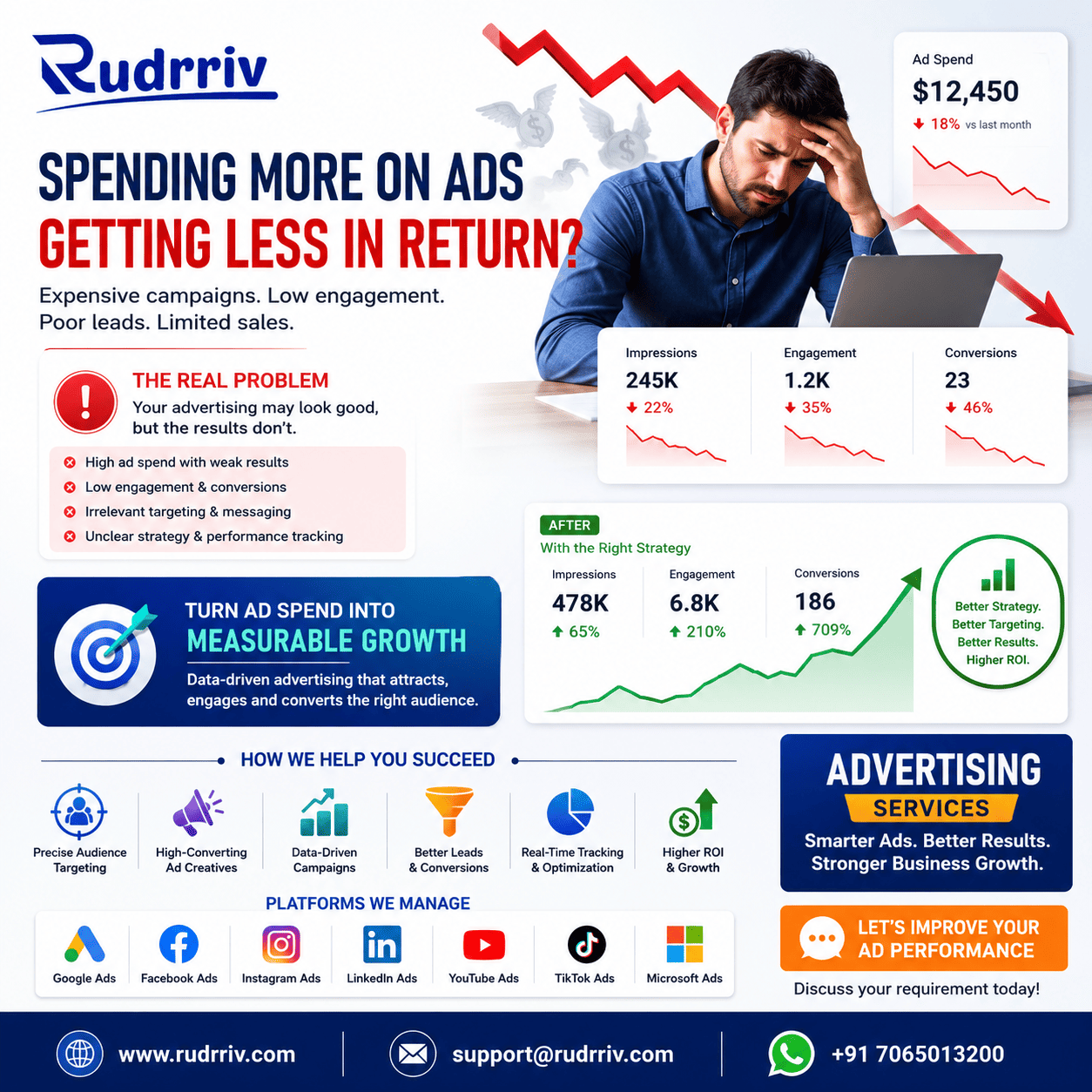
Quick Answer: What to Ask an Advertising Agency
Ask for evidence of how the agency makes five decisions: who to target, what creative to test, how to measure contribution, how money is charged, and how results become next actions. A strong answer names the data, assumptions, owners, tools, thresholds, timelines, and limitations. A weak answer relies on platform automation, broad claims, or a generic monthly dashboard.
Before signing, request a written audience plan, testing framework, measurement map, fee schedule, reporting sample, account-ownership clause, and first-90-day plan. Confirm what your team must supply and what happens when conversion volume is too low for a confident conclusion.
The main caution is attribution. Ad platforms, analytics tools, ecommerce systems, and customer relationship management systems can assign credit differently. Agree in advance which system is used for optimization, which is used for financial evaluation, and how discrepancies will be investigated.
Key Takeaways
- Targeting should start with a customer hypothesis: ask which data supports each audience, which users will be excluded, and how reach will be controlled.
- Creative testing needs a decision rule: every meaningful test should state the hypothesis, variable, primary metric, budget, duration, and stopping condition.
- Attribution is a model, not a fact: require clear definitions for conversions, windows, click and view credit, offline data, and cross-platform reconciliation.
- Fees must be unbundled: separate media, management, production, technology, research, taxes, markups, and third-party costs.
- Reporting should explain decisions: insist on interpretation, actions, risks, and ownership rather than screenshots or unexplained metrics.
- Business stage changes the scope: startups need controlled learning; established organizations need governance, integration, and channel coordination.
- Account ownership protects continuity: the advertiser should retain control of ad accounts, billing, tracking assets, data, creative files, and documentation.
Table of Contents
- Start with business outcomes and decision rights
- Ask how targeting will be built and excluded
- Require a disciplined creative testing plan
- Make attribution assumptions visible
- Separate media spend, fees, and production
- Define reporting that explains decisions
- Compare fit by business stage and capacity
- Set the first 90 days and operating rhythm
- Watch for answers that create avoidable risk
- Summary: what a strong agency answer looks like
Start with Business Outcomes and Decision Rights
Start by asking what business decision the advertising programme must improve. “Generate more sales” is too broad. A useful brief identifies the priority product or service, customer segment, geography, sales cycle, acceptable acquisition economics, conversion event, operational capacity, and time horizon.
Ask the agency to translate that brief into campaign decisions. Which channel is intended to create demand, capture existing demand, retarget known visitors, or support repeat purchase? Which metric will trigger a budget increase, a pause, a creative change, or a landing-page review? Who can approve those changes, and how quickly?
Questions that reveal strategic clarity
- What customer action are we buying, and how is that action verified?
- Which business constraint matters most: demand, conversion rate, margin, inventory, sales capacity, or retention?
- What decisions will the agency make independently, and which require approval?
- What evidence would cause the agency to reduce spend or change the plan?
- How will the agency distinguish a media problem from an offer, website, or sales-process problem?
The best answer connects media activity to a controllable business question and states what advertising cannot solve.
Ask How Targeting Will Be Built and Excluded
A credible targeting plan explains both inclusion and exclusion. Ask how the agency will combine your first-party information—customers, leads, product usage, locations, margins, and sales outcomes—with platform signals such as interests, intent, search terms, placements, and modeled audiences.
The agency should be able to explain why an audience is large enough to deliver but narrow enough to learn from. It should also identify waste controls: existing customers when acquisition is the goal, employees, irrelevant locations, unsuitable age groups where lawful and appropriate, poor placements, low-quality search terms, duplicate audiences, and excessive frequency.
Targeting questions to put in writing
- Which customer data supports each proposed audience?
- What assumptions are the platforms making on our behalf?
- How will broad, automated, lookalike, contextual, keyword, and retargeting audiences be separated or compared?
- Which exclusions will be applied before launch?
- How will frequency, audience overlap, and saturation be monitored?
Example: a startup validating demand
A software startup may assume it should launch broadly across several countries. A better first decision is one market, one use case, two buyer roles, and a lead-quality review. Specialist support can connect campaign audiences with landing-page messaging and sales feedback before spend expands.
Require a Disciplined Creative Testing Plan
Creative testing should produce a decision, not simply a stream of new advertisements. Ask the agency to show its test backlog, hypothesis template, production capacity, variable controls, primary metric, minimum run conditions, and rule for adopting a winner.
Official platform tools can support controlled comparisons. Google Ads describes custom experiments as a way to split traffic and budget between an original campaign and a test, while Meta describes A/B testing as a comparison of versions that change variables such as imagery, copy, audience, or placement. Review the current Google Ads custom experiment guidance and Meta A/B testing guidance for platform-specific setup details.
Questions that separate testing from rotation
- What is the hypothesis, and what single decision will this test inform?
- Which variable is changing: offer, message, format, visual, audience, placement, or landing page?
- What delivery conditions must remain comparable?
- Which metric decides the result, and which metrics are diagnostic only?
- How will creative fatigue and declining marginal performance be detected?
Ask to see a testing log, not only finished ads. The log should preserve the hypothesis, dates, spend, audience, result, limitation, and next action so the same weak idea is not repeatedly tested under a new label.
Make Attribution Assumptions Visible
Attribution should be treated as an agreed measurement system with known limitations. Ask the agency which conversion actions are primary, how duplicates are removed, how click-through and view-through credit is handled, what lookback windows apply, and how offline outcomes such as qualified leads, closed sales, returns, or cancellations are returned to the advertising platforms.
Google Analytics defines attribution as assigning credit to touchpoints along a path to an important action, and Google Ads explains that data-driven attribution uses account data to distribute credit across ad interactions. Meta also provides conversion-lift methods intended to estimate incremental effect. These approaches answer different questions; they should not be presented as interchangeable. See the official explanations of attribution in Google Analytics, data-driven attribution in Google Ads, and Meta Conversion Lift.
| Measurement question | What the agency should define | Why it matters |
|---|---|---|
| What counts as a conversion? | Primary and secondary events, value rules, lead-quality criteria, returns, cancellations, and duplicate handling. | Optimization fails when easy but low-value actions are treated like revenue or qualified demand. |
| Which system is the source of truth? | Platform reporting for bidding, analytics for journey analysis, ecommerce or CRM data for financial evaluation. | Different systems can report different totals and assign credit differently. |
| What attribution settings apply? | Model, click and view windows, cross-device treatment, timezone, currency, and date basis. | Changing settings can change reported performance without changing customer behavior. |
| How is incrementality assessed? | Holdouts, lift studies, geo tests, matched markets, or a documented reason these methods are not yet feasible. | Attributed conversions may include customers who would have converted without the advertising. |
| How are offline outcomes returned? | CRM stages, conversion imports, enhanced conversion methods, consent controls, and reconciliation frequency. | Lead-generation campaigns need feedback beyond the initial form submission. |
The practical rule is to agree on one optimization view and one business-evaluation view. Require the report to explain why they differ rather than forcing them to match artificially.
Example: an ecommerce business
An ecommerce team may see strong platform-reported return while blended revenue or new-customer growth remains flat. Separate prospecting from remarketing, account for discounts and returns, compare new and existing customers, and test whether added spend creates incremental demand.
Separate Media Spend, Fees, and Production Costs
Ask for a complete commercial schedule before comparing proposals. An agency may charge a fixed retainer, percentage of media spend, project fee, hourly fee, performance-related component, or hybrid. None is automatically better. The right question is whether the model supports the work required without rewarding unnecessary spend or leaving essential work outside scope.
| Cost category | Questions to ask | Contract detail to confirm |
|---|---|---|
| Media spend | Who pays the platforms, who controls billing, and are credits or rebates passed through? | Advertiser-owned billing, currency, taxes, payment timing, and spend caps. |
| Agency management | Is the fee fixed, spend-based, hourly, performance-linked, or hybrid? | Included channels, meetings, optimization work, senior oversight, and minimum term. |
| Creative production | How many concepts, formats, revisions, shoots, edits, and localizations are included? | Usage rights, source files, talent costs, reshoots, and change requests. |
| Technology and data | Are ad-serving, attribution, call-tracking, research, feed, or reporting tools extra? | Licences, ownership, renewal dates, data export, and cancellation. |
| Third-party services | Are subcontractors, creators, publishers, or programmatic supply-chain costs marked up? | Disclosure, approval thresholds, invoices, commissions, and conflicts of interest. |
Transparency matters particularly in complex media supply chains. IAB guidance has long emphasized fee visibility, and its 2026 discussion of programmatic transparency calls for clearer fee reconciliation and accountability. Review the IAB discussion of programmatic supply-chain transparency when programmatic buying is in scope.
Define Reporting That Explains Decisions
A useful report explains what changed, why it changed, what was learned, what remains uncertain, and what will happen next. Ask for a sample report before appointment and require the agency to walk through it using a real or anonymized campaign.
Minimum reporting questions
- Which metrics are shown weekly, monthly, and quarterly?
- How are spend, fees, taxes, and credits reconciled?
- How are audience, placement, search-term, geographic, and frequency findings summarized?
- Where are creative tests documented, including inconclusive results?
- How are tracking outages, consent changes, data delays, and model changes disclosed?
- Which recommendations require action from the advertiser, agency, website team, or sales team?
- Can the advertiser access the underlying platform, analytics, and dashboard data directly?
Avoid evaluating an agency on return on ad spend alone. Depending on the business, the report may need qualified-lead rate, new-customer rate, contribution margin, pipeline value, store visits, subscription quality, retention, or assisted conversions. The agency should explain which measures are reliable enough to guide budget and which are directional.
Example: a B2B service company
A B2B company with a long sales cycle may optimize for form volume because revenue is delayed. A better model connects campaigns to CRM stages, separates qualified opportunities from enquiries, and reviews message quality with sales. Analytics or development support may be needed to make that data flow reliable.
Compare Fit by Business Stage and Team Capacity
The same agency can be a strong fit for one organization and a poor fit for another. Compare the proposed operating model with your stage, internal capability, decision speed, and risk tolerance.
- Startup: ask how the agency will limit downside, prioritize hypotheses, and separate market feedback from campaign noise.
- Growing ecommerce business: ask about feeds, promotions, new-customer measurement, creative volume, margin, and remarketing overlap.
- Established multi-market brand: ask about regional governance, brand controls, data standards, incrementality, and budget allocation.
- Lead-generation business: ask how campaigns will connect to lead quality, CRM stages, calls, and offline conversions.
- Internal team needing capacity: define which decisions stay in-house, which specialist gap is being filled, and how knowledge transfer will work.
Compare the named team, not only the agency brand. Confirm who plans, who works in the accounts, who reviews strategy, and how absences are covered.
Set the First 90 Days and Operating Rhythm
A strong first-90-day plan balances foundation work with controlled learning. The agency should show dependencies and acceptance criteria rather than a fixed activity list.
First 30 days: establish control
Confirm goals, conversions, budgets, audiences, exclusions, approvals, ownership, tracking, consent, analytics, feeds, landing pages, creative assets, naming conventions, and the measurement source of truth.
Days 31 to 60: launch and diagnose
Launch prioritized campaigns and a manageable creative test plan. Review delivery, search terms, placements, overlap, frequency, conversion quality, and tracking stability before expanding spend.
Days 61 to 90: decide what deserves scale
Summarize credible findings, inconclusive tests, data limitations, and business feedback. Adopt, revise, or stop campaigns using agreed rules, then set the next creative and measurement priorities.
After 90 days, agree a maintenance rhythm: weekly checks, monthly business reviews, periodic tracking audits, creative refresh planning, audience reviews, quarterly strategy decisions, and documented handover.
Watch for Answers That Create Avoidable Risk
The clearest red flags are not always poor performance claims. They are answers that prevent the advertiser from inspecting how decisions are made.
- “The platform finds the audience automatically.” Automation can be useful, but the agency should still define goals, exclusions, data quality, and evaluation rules.
- “We test everything continuously.” Ask for hypotheses, test logs, comparison conditions, and decisions. Continuous rotation is not automatically controlled testing.
- “Our dashboard is the source of truth.” Ask where the data originates, how it is transformed, what is excluded, and how it reconciles with finance or CRM records.
- “The fee is all-inclusive.” Request a schedule showing media, management, production, tools, third parties, taxes, and out-of-scope work.
- “You do not need platform access.” The advertiser should retain ownership and direct visibility unless a clearly documented exception is necessary.
- “Results are guaranteed.” Advertising outcomes depend on the offer, market, competition, product, website, sales process, data quality, and many external factors.
Do not treat one weak answer as automatic disqualification. Ask for clarification in writing. The risk becomes material when the agency cannot define the assumption, owner, evidence, or remedy.
When Independent Specialist Support Is Useful
Independent support is useful for writing the brief, auditing tracking, reviewing proposals, preparing creative requirements, or building reporting and governance before appointment. It can also fill a specific paid-media, design, analytics, development, or quality-assurance gap.
Rudrriv can structure a defined project, provide a dedicated specialist, or assemble ongoing support around the specific capability gap. Relevant options may include specialist talent, design support, or business solutions where those capabilities directly support advertising planning, creative production, measurement, or implementation.
Summary: What a Strong Agency Answer Looks Like
A strong advertising agency answer is specific enough to govern a real decision. It explains how audiences will be selected and excluded, how creative hypotheses will be tested, how attribution settings and data sources will be reconciled, how fees and media costs are separated, and how each report will lead to an action.
Early-stage businesses may prioritize controlled tests and protected learning budgets. Growing ecommerce or lead-generation teams may need creative throughput, CRM feedback, and commercial measurement. Enterprise teams may prioritize governance, integration, incrementality, and data access.
Before appointment, validate scope, budget, timeline, ownership, tracking, decision rights, reporting access, creative capacity, and handover. Select the agency whose assumptions and work can be inspected.
FAQs on Advertising Agency Targeting and Reporting
What are the key questions to ask an advertising agency about targeting, creative testing, attribution, fees, and reporting?
Ask how the agency will define audiences, test creative, configure tracking, reconcile attribution, separate fees from media spend, and report decisions. Confirm who owns the accounts, data, pixels, creative files, dashboards, and learning history. Put the agreed answers in the scope of work.
How should an advertising agency explain audience targeting?
The agency should explain the customer hypothesis, data sources, geographic limits, behavior signals, exclusions, placements, frequency controls, and refinement plan. It should distinguish platform inferences from first-party knowledge. Ask for a documented audience plan before major spend begins.
What is a credible creative testing process for paid advertising?
A credible process starts with a written hypothesis, defined variable, comparable delivery conditions, primary metric, and stopping rule. It should explain production capacity, fatigue monitoring, and what happens to winners and losers. Routine creative rotation is not automatically an experiment.
Which attribution model should an advertising agency use?
There is no universal model. The agency should document conversions, platform settings, analytics models, lookback windows, click and view credit, offline outcomes, and expected system differences. For larger budgets, ask when lift tests or holdouts are feasible instead of relying only on attributed conversions.
How should advertising agency fees be presented?
Separate agency management, media, creative production, technology, research, third parties, taxes, and markups. The contract should state minimums, change-request rules, cancellation terms, payment timing, and whether fees rise with spend. Compare the work and accountability behind the price.
What should an advertising agency include in monthly reporting?
Monthly reporting should cover spend, conversion quality, cost trends, audience findings, test results, tracking issues, budget changes, decisions, and next priorities. It should reconcile platform data with the agreed source of truth. A dashboard without interpretation and actions is not sufficient.
How do questions change for a startup versus an established brand?
A startup should focus on learning speed, testable audiences, offer validation, creative throughput, and spending limits. An established brand should also ask about channel overlap, brand controls, incrementality, governance, data integration, and internal coordination. The scope should reflect business maturity.
Who should own the advertising accounts and campaign data?
The advertiser should normally own platform accounts, billing, conversion assets, pixels, first-party audiences, creative source files, analytics, dashboards, and documentation. Give the agency role-based access. Confirm exports, naming conventions, access removal, and handover before work begins.
How long should I evaluate an advertising agency before expanding scope?
Use the first 30 to 90 days to evaluate setup quality, tracking reliability, test discipline, communication, and decision clarity. Outcomes may need longer depending on sales cycle, budget, and conversion volume. Expand scope only after the operating foundation is sound.
What are the biggest red flags in an advertising agency proposal?
Red flags include guaranteed returns, vague targeting, no tracking audit, tests without hypotheses, unquestioned platform results, hidden markups, restricted account access, unclear creative ownership, and reports focused on impressions or clicks. Resolve assumptions in writing before signing.
Need help making the agency brief more accountable?
Rudrriv can support a defined review of requirements, creative workflows, measurement needs, account ownership, reporting expectations, or specialist capacity before a wider advertising engagement is approved.
Discuss the requirementAt Rudrriv, we make it easier for businesses to access the right expertise, execute important work, and scale with confidence.