
Digital and Marketing: A Practical Business Strategy Guide
Digital and marketing is the coordinated use of online channels, customer insight, content, technology, and measurement to help a business attract the right audience, support buying decisions, convert demand, and build longer-term customer relationships. People often search the phrase because they know they need stronger online visibility or better campaign performance, but they are unsure which channels to choose, how much to invest, what a provider should deliver, or how to connect marketing activity to real business outcomes.
The difficulty is rarely a lack of possible tactics. A business can run search ads, publish social content, improve search visibility, send email campaigns, build landing pages, produce videos, automate follow-up, and measure hundreds of platform metrics. The harder decision is choosing the right combination for the customer journey, then operating it with clear scope, reliable data, timely approvals, capable specialists, and disciplined review. Without that structure, teams may generate activity without creating qualified demand, or they may spend on media before fixing tracking, landing pages, response processes, or the underlying offer.
For Indian founders, startups, small and medium-sized businesses, ecommerce companies, agencies, professional-service firms, and enterprise teams, practical planning must account for regional diversity, mobile-first behaviour, language needs, local and global competition, payment preferences, sales follow-up, privacy obligations, and differences between metro and non-metro markets. The strategy should also clarify pricing, ownership, access, confidentiality, creative revisions, quality assurance, reporting, and handover. These operational details influence whether a campaign can be improved safely and continuously.
This guide explains how to build an integrated digital marketing strategy, select channels, compare in-house, freelancer, agency, and managed-team models, define a workable statement of work, measure progress, and avoid common budget and delivery mistakes. It also shows when a defined project, dedicated professional, ongoing support arrangement, or managed marketing team may be appropriate. Businesses needing specialist capacity can explore Rudrriv marketing support, outsourcing models, or specialist talent options after defining the requirement.
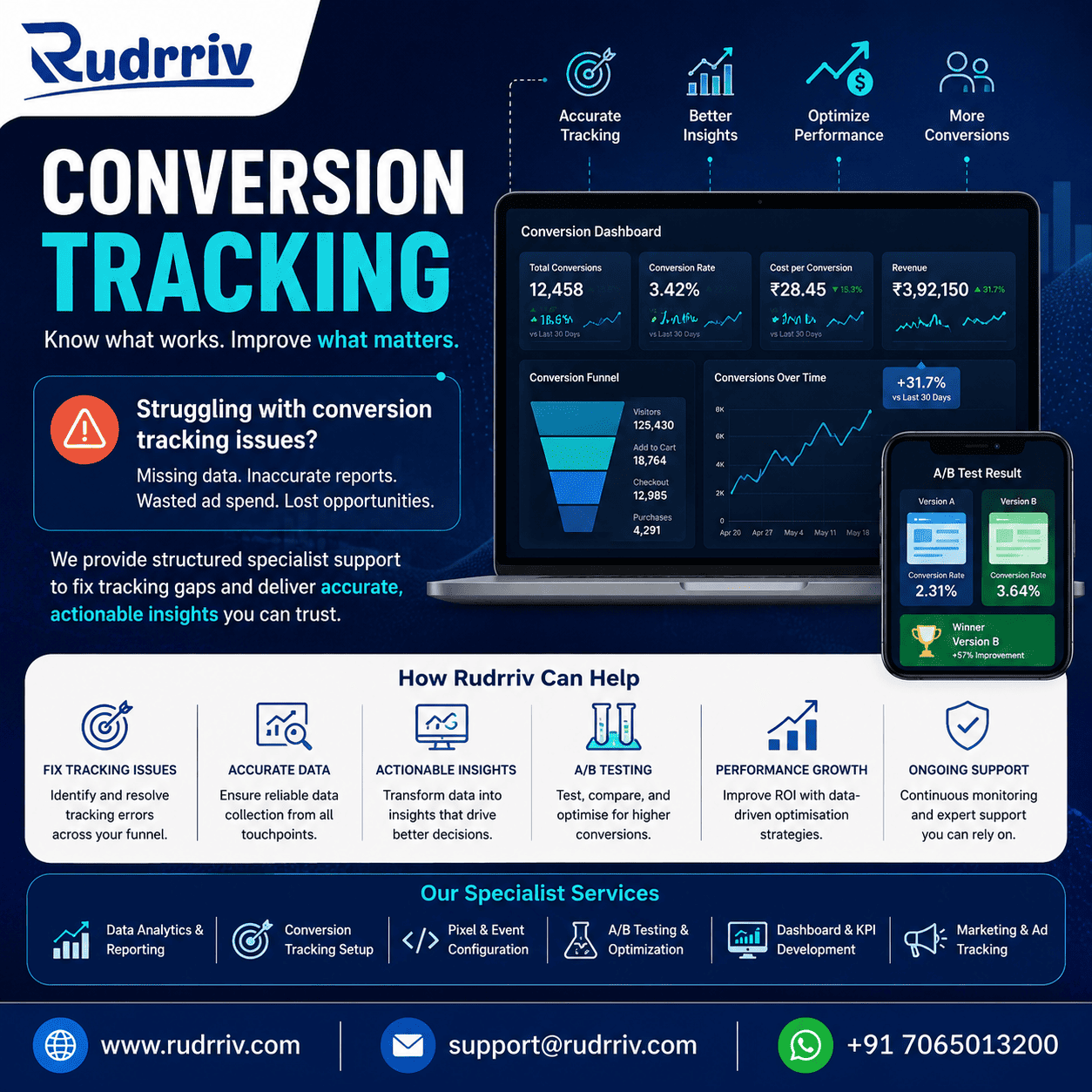
Quick Answer: What Should Digital and Marketing Include?
A useful digital marketing programme should include a clear business objective, defined customer segments, an evidence-based channel mix, relevant content and offers, conversion-ready pages, reliable measurement, named owners, and a regular improvement cycle. Start with the action you want a customer to take, then work backwards through discovery, consideration, decision, onboarding, and retention.
Do not begin by buying every channel or copying a competitor’s campaign. First verify the offer, customer need, website or sales destination, tracking, response capacity, budget, and approval process. Select the smallest channel mix that can test the most important assumptions. For many businesses, this means one demand-capture channel, one trust-building channel, and one retention or follow-up channel.
Before appointing a provider, document deliverables, responsibilities, media spend, platform access, revision rules, reporting, data ownership, quality checks, and handover. Use a paid discovery or 60-to-90-day pilot when the scope or provider relationship is uncertain.
Key Takeaways
- Strategy starts with the customer and business outcome: channels are tools, not the plan.
- Integration matters: search, paid media, content, social, email, landing pages, analytics, and sales follow-up should support one journey.
- Measurement must be designed before scale: define meaningful events and verify tracking before increasing spend.
- Scope should be operational: document deliverables, owners, approvals, timelines, dependencies, revisions, and exclusions.
- Account ownership protects continuity: the business should control its core platforms, data, creative assets, and documentation.
- Choose the engagement model by workload: use a project, freelancer, dedicated professional, agency, or managed team according to breadth and continuity.
- Review quality and business impact: do not rely only on impressions, followers, or click volume.
What This Page Covers
- What digital marketing means in practical business terms.
- How to identify when a business needs external marketing capacity.
- How to select channels and engagement models.
- How to define scope, budget, timeline, communication, and reporting.
- How to compare in-house, freelancer, agency, and managed-team options.
- How to verify deliverables, ownership, quality, and handover.
- How Rudrriv can support relevant marketing requirements.
Table of Contents
- How this guide was prepared
- What digital marketing means
- When a business needs support
- Services and engagement models
- Step-by-step planning process
- Provider model comparison
- Scope, pricing, timeline, and delivery
- Measurement and quality review
- Common mistakes
- Final checklist
How this guide was prepared
This article combines practical campaign planning, provider selection, specialist engagement, project governance, analytics, conversion measurement, account ownership, and delivery-management considerations. Its technical references include the Google SEO Starter Guide, official Google Ads conversion tracking guidance, Google Analytics event documentation, and the Advertising Standards Council of India guidelines.
Platform features, algorithms, advertising policies, privacy expectations, software versions, media costs, and provider capabilities can change. Verify current requirements from authoritative platform, regulatory, contractual, and industry sources before implementation. Rudrriv can assist with requirement discovery, specialist matching, defined project delivery, dedicated professionals, ongoing operational support, and managed teams where those models fit the business need.
What is digital and marketing in a business context?
Digital marketing is the system a business uses to create, capture, convert, and retain demand through digital touchpoints. It combines strategy, content, channels, technology, data, and operations. The term is broad, so the business must translate it into a specific problem and outcome.
For example, “increase online presence” is too vague to manage. A more useful objective is “increase qualified demo requests from Indian mid-market finance teams while maintaining an agreed cost range and improving lead-to-meeting conversion.” That objective helps determine the audience, message, offer, channel mix, landing page, tracking, budget, and sales response process.
Important entities should be clear. A defined project has a fixed outcome, scope, milestones, and acceptance criteria. A dedicated professional provides named capacity within the client’s priorities. Ongoing support covers recurring work through a retained service. A managed team combines several roles with delivery leadership, quality assurance, reporting, and continuity. A statement of work records deliverables, responsibilities, assumptions, exclusions, commercial terms, and handover expectations.
When does a business need digital marketing support?
A business needs external support when its marketing requirement is broader, more specialist, or more continuous than the internal team can deliver reliably. The trigger may be a new product launch, weak lead flow, expensive acquisition, incomplete tracking, an ecommerce expansion, a content backlog, a website redesign, entry into new Indian or international markets, or a need to coordinate creative, media, technology, and analytics.
Signals that support may be useful
- Campaigns run, but nobody can explain which activities create qualified enquiries or sales.
- The business has strong expertise but lacks the time or skills to turn it into useful content and campaigns.
- Paid media is active before landing pages, conversion tracking, or lead follow-up are ready.
- Marketing depends on one employee or freelancer with no documentation or backup.
- Several agencies or internal teams work separately with conflicting priorities and reports.
- Growth requires additional languages, locations, channels, creative volume, or technical integration.
External support is not always required. A focused internal marketer may be enough for a small, stable workload. A short project may solve a specific measurement, campaign, content, or conversion problem. Choose the smallest model that can deliver the outcome with acceptable quality and continuity.
Digital marketing services and engagement models
The right service mix depends on the customer journey and the operational bottleneck. Businesses should not buy a generic package before deciding whether they need demand research, channel strategy, campaign execution, creative production, website conversion work, analytics, marketing operations, or a combination.
| Model | Best for | Typical outputs | Main control |
|---|---|---|---|
| Defined project | Launch, audit, tracking setup, campaign build, website conversion, or content system | Discovery, plan, configured assets, testing, documentation, handover | Acceptance criteria and dependencies |
| Dedicated professional | Embedded capacity with changing weekly priorities | Campaign operations, content coordination, reporting, optimization | Named manager, priorities, and backup coverage |
| Ongoing support | Recurring SEO, paid media, content, social, email, or analytics work | Monthly roadmap, production, optimization, reporting | Quarterly priorities and service expectations |
| Managed marketing team | Multi-channel or multi-market programmes | Cross-functional specialists, governance, quality assurance, performance reporting | Roles, decision rights, escalation, and service levels |
| Advisory support | Capable internal teams needing specialist review | Workshops, audits, strategy, campaign or measurement reviews | Implementation ownership and follow-through |
A good provider should be willing to recommend a smaller engagement when it is sufficient. The objective is to solve the business problem, not to maximize the number of channels or the size of the retainer.
Step-by-step guide to plan and start digital marketing
A disciplined planning process turns broad marketing ambition into work that can be priced, delivered, reviewed, and improved.
Step 1: Define the customer action and business outcome
Choose the primary action: enquiry, purchase, booking, subscription, demo, application, store visit, renewal, or another meaningful event. Add context such as audience, geography, product, sales cycle, acceptable economics, and capacity. This prevents vanity metrics from becoming the goal.
Step 2: Map the customer journey
Document how customers discover the problem, compare options, build trust, decide, and continue after purchase. Identify questions, objections, proof, content, and interactions required at each stage. In India, consider mobile usage, regional language needs, local credibility, assisted sales, WhatsApp or phone follow-up, payment methods, and differences across cities and customer segments where relevant.
Step 3: Audit the current foundation
Review the website, landing pages, analytics, conversion events, CRM or ecommerce data, advertising accounts, email platform, social profiles, content library, brand guidelines, sales response, and current campaign history. Record what works, what is uncertain, and what must be fixed before scaling.
Step 4: Choose channel roles
Assign each channel a clear job. SEO and content may capture existing questions. Paid search may test high-intent demand. Social content and video may build familiarity. Email and remarketing may nurture or retain. Conversion optimization may improve the value of traffic already generated. Avoid overlapping channels with no distinct purpose.
Step 5: Build the measurement plan
Name the events that matter, where they are recorded, who validates them, and how often they are reconciled. Test forms, purchases, calls, bookings, downloads, and offline follow-up. Use platform metrics for optimization but compare them with analytics, CRM, ecommerce, or business records where practical.
Step 6: Prepare a provider brief
Include the business background, audience, markets, offer, challenge, baseline, channels in scope, required deliverables, budget range, timeline, systems, internal resources, approval constraints, and procurement requirements. Ask providers to state assumptions and unknowns.
Step 7: Evaluate capability and working method
Ask who will perform strategy, media, SEO, content, design, analytics, development, and project management. Review relevant work samples, dashboards, briefs, campaign structures, testing approaches, and references. Confirm whether named people are available and how senior review works.
Step 8: Agree scope, governance, and access
Document deliverables, media spend, software costs, owners, approvals, meeting cadence, reporting, security, confidentiality, intellectual-property ownership, revision limits, change control, and exit terms. Grant individual role-based access and keep administrative ownership within the business.
Step 9: Launch a controlled first phase
Use a pilot or first-quarter plan with baseline setup, priority campaigns, content, landing-page improvements, tracking validation, and clear learning goals. Do not scale spend only because campaigns are live. Scale after the team has evidence that targeting, message, destination, tracking, and follow-up are functioning.
Step 10: Review, learn, and reallocate
Hold monthly delivery reviews and quarterly strategy reviews. Stop weak activities, expand useful ones, document learning, and maintain a testing backlog. Marketing should be managed as an evidence-based operating system, not a sequence of disconnected campaigns.
In-house vs freelancer vs agency vs managed team
The correct model depends on breadth, continuity, internal management capacity, and the consequence of delivery gaps. Many businesses use a hybrid structure, with an internal owner supported by external specialists.
| Option | Advantages | Limitations | Best fit |
|---|---|---|---|
| In-house marketer | Strong context, daily access, close sales coordination | Limited specialist depth; hiring and continuity risk | Stable workload needing constant business knowledge |
| Freelancer | Flexible and focused; direct specialist access | Capacity, backup, and cross-discipline limitations | Defined assignments or expert support |
| Agency | Broader skills, tools, and established process | Possible account-layer distance; variable team quality | Ongoing multi-discipline delivery |
| Managed team | Dedicated capacity, governance, quality assurance, continuity | Needs clear priorities and client decision-making | Complex, scaled, or multi-market programmes |
Compare the complete operating model: who sets priorities, who produces work, who approves it, who owns data and accounts, how quality is checked, and how capacity is replaced if a person becomes unavailable.
Scope, pricing, timeline, communication, and delivery
A marketing agreement should make the work inspectable. The provider should explain what is produced, what is advisory, what requires client input, and which outcomes remain uncertain.
Scope and deliverables
Define channel-specific outputs such as research, campaign builds, media management, creative assets, landing pages, content briefs, articles, social posts, email journeys, dashboards, technical tickets, experiments, workshops, and documentation. Include quantities only when they support quality; a target of many posts or ads can encourage low-value production.
Pricing and budget
Separate professional fees, media spend, software, production costs, creators, development, translation, taxes, and other third-party charges. Record budget approval thresholds and pacing rules. When comparing providers, check team composition, senior review, implementation support, creative volume, analytics depth, and meeting load behind the fee.
Timeline and dependencies
Build the schedule around access, research, tracking, creative production, stakeholder approvals, development, platform review, and campaign learning. A campaign can be delayed by incomplete product information, unclear legal approval, unavailable landing pages, or slow lead follow-up. The plan should name these dependencies and their owners.
Communication and reporting
Agree a single project owner, meeting cadence, status format, decision rights, escalation route, and shared repository. Reports should distinguish work completed, results observed, interpretation, risks, pending decisions, and next actions. A dashboard without analysis or accountability is not a complete reporting process.
How to review deliverables, quality, and business impact
Review digital marketing at three levels: delivery quality, customer behaviour, and business contribution. Each level answers a different question and prevents teams from treating platform activity as proof of value.
| Review level | Questions | Evidence |
|---|---|---|
| Delivery | Was agreed work completed correctly and on time? | Project plan, campaign settings, assets, technical tickets, QA records, approvals |
| Customer behaviour | Did the right audience engage and progress? | Qualified traffic, content engagement, form completion, checkout progress, calls, bookings |
| Commercial contribution | Did marketing support valuable outcomes? | Qualified leads, sales acceptance, pipeline, purchases, retention, acquisition trends |
| Learning | What changed because of the evidence? | Test results, decisions, budget reallocation, revised messaging, next experiments |
Quality assurance should include pre-launch checks for targeting, budget, tracking, links, mobile display, brand accuracy, claims, consent, spelling, and landing-page function. After launch, validate event collection, lead routing, campaign status, search terms or placements where relevant, spend pacing, and data consistency.
Common digital marketing mistakes to avoid
- Starting with channels instead of the customer problem: this produces fragmented activity and weak messages.
- Scaling media before tracking and landing pages work: more traffic amplifies existing conversion problems.
- Using one message for every audience: different segments, regions, and journey stages need relevant proof and offers.
- Measuring only vanity metrics: followers, reach, impressions, and clicks may not indicate qualified demand.
- Ignoring sales or service follow-up: slow response can waste leads even when campaigns perform well.
- Giving providers ownership of core accounts: this creates continuity, data, and exit risk.
- Buying unrealistic output volume: large quantities of low-quality content or creative can damage clarity and brand trust.
- Skipping approval and compliance checks: inaccurate claims, missing disclosures, or poor consent practices create avoidable risk.
- Changing too many variables at once: the team cannot learn which action influenced performance.
- Ending without handover: undocumented campaigns, audiences, files, and tracking create future rework.
Practical digital marketing examples
Example 1: Indian B2B services company with low-quality leads
Situation: A professional-services company receives form submissions from paid search, but sales rejects most of them. Common mistake: The team increases budget because the cost per lead appears low. Correct approach: Define the ideal customer, separate high-intent services, revise keywords and exclusions, improve landing-page qualification, connect CRM outcomes, and review lead response time. Support model: A defined analytics and paid-search improvement project can establish the system before ongoing management.
Example 2: Ecommerce brand expanding beyond one channel
Situation: An ecommerce business depends heavily on social advertising and sees unstable acquisition costs. Common mistake: It adds more creative without improving product pages, email retention, search demand, or measurement. Correct approach: Audit product economics, conversion paths, feed quality, search visibility, lifecycle email, repeat purchase, and creative learning. Build a channel portfolio gradually. Support model: A managed team may be useful when paid media, content, design, analytics, and ecommerce operations require continuous coordination.
Example 3: Startup launching a new software product
Situation: A startup wants awareness and demos across India and international markets. Common mistake: It launches broad campaigns before clarifying the audience, proof, onboarding, and sales qualification. Correct approach: Select priority segments, create use-case pages, establish demo tracking, test search and professional-network campaigns, publish expert content, and document sales feedback. Support model: A dedicated marketer supported by specialist content, design, and analytics can balance context with execution depth.
Digital and marketing checklist
- Define the primary customer action and business outcome.
- Identify priority audiences, locations, languages, products, and journey stages.
- Audit the website, tracking, CRM or ecommerce data, accounts, and content assets.
- Select a focused channel mix with a clear role for each channel.
- Document deliverables, quantities, owners, milestones, approvals, and dependencies.
- Separate service fees, media spend, software, production, and third-party costs.
- Confirm account, data, creative, code, and intellectual-property ownership.
- Use named, role-based access and avoid shared credentials.
- Define conversion events, data sources, validation, and reporting cadence.
- Set quality checks, revision limits, change control, and acceptance criteria.
- Agree lead or order follow-up responsibilities and service expectations.
- Prepare an exit and handover plan before work begins.
A practical decision rule
Use internal delivery when the workload is limited and the team has the necessary skills. Use a specialist or defined project for a focused gap. Use ongoing or managed support when several channels, creative assets, technologies, and stakeholders must work together continuously with clear accountability.
How Rudrriv can help
Rudrriv can support businesses that need a clearer path from marketing requirements to accountable delivery. Depending on the need, the engagement may be a defined campaign, analytics, content, SEO, paid-media, or conversion project; a dedicated marketing professional; ongoing operational support; or a managed team combining strategy, channel specialists, creative, analytics, and project coordination.
The starting point is requirement discovery: audience, offer, markets, current performance, systems, budget, timeline, internal capacity, approval constraints, and measurement needs. The work can then be scoped with named responsibilities, milestones, review cycles, access controls, reporting expectations, and handover requirements. Explore marketing services, business solutions, freelancer support, or dedicated specialist options according to the capacity required.
Summary: Digital and marketing
Digital marketing works best when a business connects customer needs, channel roles, content, technology, data, and operations to a defined outcome. The main decision is not whether to use every available platform. It is how to build a focused system that can be delivered, measured, reviewed, and improved.
Before starting, clarify scope, provider selection, timeline, communication, quality assurance, revisions, ownership, delivery verification, and handover. Internal delivery may be enough for a small and stable workload. A freelancer may suit a focused task. An agency or managed team becomes more useful when multiple disciplines, continuous optimization, creative production, data, and stakeholder coordination must operate together.
No channel or provider can guarantee rankings, leads, revenue, savings, or a fixed timeline. Better decisions come from clear requirements, reliable tracking, capable execution, timely client participation, controlled testing, and evidence-based review.
FAQs About Digital and Marketing
What does digital and marketing mean for a business?
Digital and marketing refers to using connected online channels, data, content, technology, and customer experience practices to create awareness, generate demand, support sales, and retain customers. In practice, the work may include search engine optimization, paid advertising, social media, content, email, landing pages, analytics, conversion tracking, and campaign operations. The important point is integration: each activity should support a defined customer journey and business outcome rather than operate as an isolated task. A business should begin with its audience, offer, sales process, priority markets, and measurable actions, then select channels that fit those realities. For example, a B2B services company may rely on search, expert content, LinkedIn, email nurturing, and sales follow-up, while an ecommerce brand may prioritize shopping ads, social creative, product-page optimization, lifecycle email, and repeat-purchase analysis. Rudrriv can help define the requirement and match it with project-based, dedicated-professional, ongoing, or managed-team support when internal capacity is limited.
Which digital marketing channels should a small business start with?
A small business should start with the few channels that most directly connect customer demand to a measurable action. Usually, that means a clear website or landing page, reliable analytics and conversion tracking, one demand-capture channel such as search, and one relationship-building channel such as email or social content. The correct mix depends on how customers discover, evaluate, and buy. An Indian local service business may benefit from local search, Google Business Profile management, customer reviews, and call tracking. A B2B software company may need SEO, paid search, LinkedIn, webinars, and email nurture. The common mistake is opening every channel at once without enough budget, content, or operational capacity to manage them well. Select two or three priorities, define a 90-day test plan, establish baseline metrics, and add channels only after the first system is working and the team can respond to leads or orders consistently.
How do I create an integrated digital marketing strategy?
Create an integrated strategy by linking business goals, customer segments, journey stages, channel roles, content, offers, measurement, and operating responsibilities in one plan. Start with the commercial outcome: qualified enquiries, purchases, subscriptions, bookings, renewals, or another meaningful action. Then map what customers need at awareness, consideration, decision, onboarding, and retention stages. Assign each channel a job. SEO and educational content may build discoverability; paid media may accelerate targeted reach; email may nurture and retain; landing pages may convert; analytics may show where people progress or drop out. Document the campaign calendar, budget, owners, approval process, conversion events, reporting cadence, and testing backlog. Avoid a strategy made only of channel tactics. A useful plan should explain how demand is created, captured, followed up, measured, and improved. Review it monthly for delivery and quarterly for priorities because customer behaviour, platform features, costs, and competition can change.
What should be included in a digital marketing scope of work?
A digital marketing scope of work should define objectives, audiences, markets, channels, deliverables, quantities, responsibilities, milestones, dependencies, review cycles, reporting, ownership, confidentiality, access, and exit arrangements. It should state whether the provider is advising, producing, publishing, optimizing, buying media, configuring technology, or coordinating other teams. Specificity prevents disputes. Instead of saying “social media management,” define platforms, posting frequency, creative formats, community response responsibilities, paid amplification, approval turnaround, and reporting. Instead of “SEO,” define technical review, keyword and page mapping, content briefs, implementation support, internal linking, measurement, and review cadence. Include what is excluded, such as media spend, premium software, photography, legal review, translation, or development. Also define acceptance criteria, revision limits, change control, account ownership, data handling, and handover deliverables. A good scope remains flexible enough for testing but clear enough that both parties can verify what was delivered.
Should I hire a freelancer, agency, in-house marketer, or managed team?
Choose the model that matches scope breadth, continuity, management capacity, and risk. A freelancer can be effective for a focused assignment such as paid-search optimization, copywriting, design, or analytics setup. An in-house marketer provides context and daily coordination but may need specialist support across technical SEO, media buying, creative, automation, or data. An agency offers broader skills and an established process, though the business should verify who will actually work on the account. A managed team is suitable when several disciplines must operate continuously with defined governance, backup coverage, reporting, and delivery management. Compare total operating requirements, not only hourly or monthly fees. Consider briefing time, internal supervision, software, production volume, response speed, quality assurance, and continuity. A hybrid model is common: an internal owner sets priorities while external specialists execute defined work. Run a paid discovery or pilot when the requirement is uncertain or the relationship is untested.
How much does digital marketing support cost?
Digital marketing pricing depends on the required disciplines, market competition, content and creative volume, website complexity, number of campaigns, media spend, languages, locations, technology stack, reporting depth, and level of senior involvement. Common commercial models include a fixed fee for a defined project, monthly retainer for ongoing support, dedicated-professional pricing, hourly advisory support, and managed-team pricing. Media spend, software subscriptions, creator fees, photography, video production, development, translation, and third-party data may be separate. The safest comparison is scope-to-scope rather than fee-to-fee. Ask each provider to identify assumptions, inclusions, exclusions, expected client inputs, revision limits, and change-control rates. In India, prices can vary widely because service depth and team composition differ significantly. A low headline fee may exclude strategy, implementation, creative production, conversion tracking, or senior review. Build a budget that includes execution, measurement, experimentation, and internal follow-up capacity.
How long does digital marketing take to show results?
Digital marketing should produce operational evidence quickly, but commercial outcomes develop at different speeds. Tracking, campaign setup, landing-page fixes, and initial paid-media tests can often be reviewed within weeks. SEO, content authority, lifecycle marketing, and brand demand usually need longer observation because discovery, indexing, trust, sales cycles, seasonality, and competitive response affect performance. Do not wait months without checkpoints. Agree on 30-day setup and baseline milestones, 60-day execution and learning milestones, and 90-day review points. Judge early performance by whether tracking works, campaigns are launched correctly, agreed assets are delivered, leads are handled, tests are documented, and decisions are based on evidence. Then assess qualified traffic, cost per meaningful action, conversion rate, pipeline contribution, order value, retention, and other business-relevant trends. No responsible provider can guarantee leads, revenue, rankings, or a fixed payback period because outcomes depend on the offer, market, budget, customer experience, follow-up, and external platforms.
What metrics should I track beyond clicks and impressions?
Track metrics that connect marketing activity to customer and business outcomes. Useful measures include qualified lead rate, conversion rate, cost per qualified enquiry or purchase, revenue or pipeline influenced where attribution is reliable, landing-page completion rate, repeat purchase, email engagement quality, sales acceptance, lead response time, and customer acquisition trends. Delivery metrics also matter: campaigns launched, assets approved, tests completed, tracking issues resolved, content published, budget pacing, and open dependencies. Use clicks and impressions as diagnostic signals, not final proof of value. A campaign can generate cheap clicks while attracting the wrong audience. Establish a measurement plan that names each important event, its data source, owner, validation method, and reporting frequency. Reconcile platform reports with analytics, CRM, ecommerce, or finance records where practical. Measurement has limitations, especially across devices, consent settings, offline sales, and long buying journeys, so document assumptions rather than presenting attribution as perfect.
How should accounts, data, creative assets, and intellectual property be managed?
The business should retain ownership or administrative control of its domain, website, analytics, tag manager, advertising accounts, social profiles, email platform, CRM, dashboards, creative source files, and key data. External specialists should receive named, role-based, least-privilege access rather than shared passwords or ownership transfers. The contract should state who owns newly created copy, designs, code, data models, audiences, reports, research, and templates after payment, including any licensed third-party elements. Use approval workflows for budget changes, publishing, audience uploads, tracking modifications, and major website edits. Record where files are stored and how versions are controlled. At handover, verify access, export essential data, transfer source files and documentation, remove unnecessary permissions, and confirm ongoing subscription responsibilities. These controls reduce disruption when staff or providers change and help protect confidentiality, customer information, and brand assets.
When can Rudrriv help with digital and marketing support?
Rudrriv can help when a business understands the outcome it wants but lacks the specialist capacity, coordination, or delivery structure to execute consistently. Relevant needs may include a defined campaign or website-conversion project, a dedicated digital marketer, ongoing content and channel operations, or a managed team combining strategy, SEO, paid media, creative, analytics, and project coordination. The engagement should begin with requirement discovery covering audience, offer, markets, current performance, platforms, budget, timeline, internal owners, approvals, access, and success measures. Rudrriv can then support specialist matching, scope definition, milestones, reporting expectations, quality review, and handover. Internal delivery may remain the better option when the workload is small and the business already has the right skills. External support becomes more useful when important work is delayed, several disciplines must work together, campaigns need continuous optimization, or leaders need clearer accountability without building every capability internally.
Need help defining the right digital marketing engagement?
Share your audience, offer, priority markets, current channels, measurement gaps, internal capacity, budget range, and desired business outcome. Rudrriv can help structure a defined project, dedicated-professional arrangement, ongoing support plan, or managed marketing team with clear responsibilities and delivery controls.
Discuss your requirementAt Rudrriv, we make it easier for businesses to access the right expertise, execute important work, and scale with confidence.